Reply To:
Name - Reply Comment
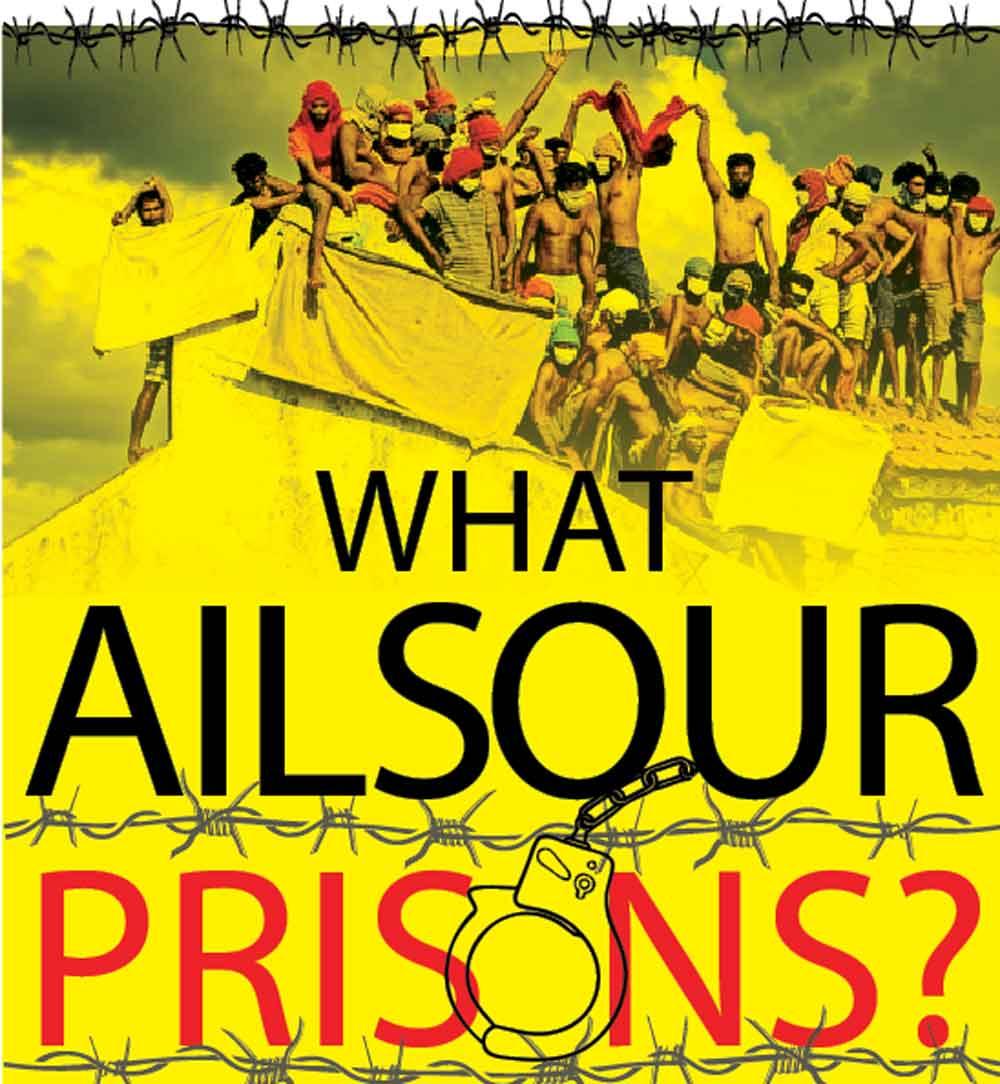
 A prison system designed to accommodate approximately 11,000 persons cannot safely, humanely or sustainably hold around 40,000.
That single reality should compel a serious national conversation.
This is no longer merely a matter of prison administration. It is a crisis of criminal justice policy, public security, institutional capacity, public expenditure and human dignity. It places an extraordinary burden on prison officers, exposes persons in State custody to unacceptable risks, undermines any meaningful prospect of rehabilitation and creates conditions in which a relatively limited disturbance can rapidly become a major security crisis.
When an institution is forced to operate at several times its intended capacity, the consequences are predictable. Human beings are packed into intolerable spaces. Sanitation deteriorates.
When something goes wrong, the easiest response is to blame the prisoners, restore temporary order, appoint a committee and move on.
That may address the immediate incident. It does not address the crisis.
I say this with some familiarity with the system. I have had the privilege, and indeed the burden, of serving as Minister of Justice. I have seen at close quarters the pressures within our prisons, the difficulties faced by prison officers, the consequences of overcrowding, the limitations of ageing infrastructure and the delays and bottlenecks that run through the criminal justice process.
I also know that these problems did not arise yesterday. They accumulated over decades. They cannot be resolved overnight. No single Government created this crisis, and no single Government can resolve it by rhetoric, blame or episodic intervention.
When one part of this chain fails, the consequences are passed to the next.
Ultimately, the prison system receives everyone.
That is why it is inadequate to describe prison overcrowding simply as a shortage of prison buildings. It is also the product of arrest practices, remand culture, restrictive bail laws, forensic delay, prosecutorial delay, trial delay, sentencing policy, drug policy, inadequate rehabilitation and the failure to develop credible alternatives to incarceration.
At the heart of the present crisis lies a deeper problem of legal culture. We need a fundamental paradigm shift in the way remand custody is understood and used.
Remand is not punishment.
It is not a preliminary sentence. It is not a means of demonstrating that the State is tough on crime. It is not a mechanism for satisfying public anger. It is not a device for teaching a suspect a lesson. And it should never be used to impose, indirectly and before trial, a punishment that the law permits only after conviction.
A person in remand custody remains an unconvicted person. The presumption of innocence does not disappear merely because an arrest has taken place or an accusation has been made.
The legitimate purposes of pre-trial detention are narrower.
Remand may be necessary to secure the accused person’s attendance before court. It may be justified where there is a real risk of absconding. It may be necessary where there is credible material showing a genuine risk of interference with witnesses or evidence. In appropriate cases, custody may be required to protect the integrity of an ongoing investigation or to address a clearly demonstrated and serious risk to public safety.
But the key word is necessary.
The question should not be:
“Why should this person be released?”
The proper question is:
“Why is it necessary to keep this unconvicted person in custody?”
This is where a foundational principle assumes practical importance:
Bail must be the rule. Pre-trial detention must be the exception.
There will plainly be cases where remand is necessary. A serious flight risk, credible threats to witnesses, destruction of evidence, interference with an investigation or a demonstrable danger to public safety may justify detention.
But even then, remand must remain linked to purpose.
And that purpose must be periodically reviewed.
A detention order that may have been justified at the beginning of an investigation does not automatically remain justified three months later, six months later or one year later. As evidence is secured, witnesses are interviewed and investigative steps are completed, the reasons for continued detention may diminish.
Continued custody must therefore be capable of continued justification.
The Drug Law Requires Urgent Amendment
One of the areas requiring immediate attention is the legal framework governing drug-related detention and bail.
There should be no jurisdictional vacuum. There should be no indefinite waiting period. Administrative delay should never become a substitute for judicial punishment.
The law should clearly identify the competent court at every stage. It should preserve meaningful judicial discretion. It should provide for periodic review of prolonged detention. It should address unreasonable delay in obtaining scientific reports. It should prevent a person from being left in legal limbo simply because the machinery of the State is slow.
If the State relies upon scientific analysis to sustain a serious prosecution and continued detention, the State must accept a corresponding obligation to obtain that analysis within a reasonable time.
Justice requires the capacity to distinguish.
The proposed new prison complex in the Horana/Millaniya area should be revisited and accelerated as part of a long-term national correctional strategy. Many of our existing prisons are old, overcrowded and fundamentally unsuited to modern correctional administration.
A modern prison complex should not simply consist of more cells.
It should provide proper classification of inmates, different security levels, adequate healthcare, mental health services, drug rehabilitation, vocational training, sanitation, family access, modern surveillance and humane working conditions for prison officers.
But one warning is essential:We cannot build our way out of bad law.
If we construct a new prison while continuing unnecessarily to remand thousands of people, that prison will also fill. A system operating far beyond its intended capacity cannot be restored to health merely by constructing more walls and cells. Infrastructure reform and legal reform must proceed together. Expand Open Prisons
Sri Lanka should substantially expand the use of open prisons and open correctional facilities.
Not every prisoner presents the same risk. Not every convicted person requires the same degree of security.
Suitable low-risk offenders, carefully assessed non-violent offenders, prisoners approaching release and those who demonstrate genuine rehabilitation potential should be considered for open facilities.
Open prisons are not an act of weakness. Properly administered, they are a serious correctional tool. They can combine discipline with productive work, agriculture, vocational development, responsibility and gradual reintegration into society.
Every suitable low-risk prisoner moved out of an unnecessarily high-security environment reduces pressure and allows scarce resources to be concentrated on those who genuinely require secure custody. Introduce House Arrest with Electronic Monitoring
Sri Lanka should enact a proper legal framework for house arrest and electronic monitoring.
For carefully selected accused persons and offenders who do not present a serious danger to society, courts should have the power to impose electronically monitored home detention, curfews, geographical restrictions, exclusion zones, reporting requirements and other enforceable conditions.
This will not be suitable for everyone.
But neither is prison.
Make Community-Based Corrections a Central Part of Sentencing Policy
For suitable minor and non-violent offenders, courts should have credible and properly supervised alternatives including community service, probation, mandatory counselling, vocational programmes, restitution, structured reporting and treatment orders.
Punishment must have a purpose.
If a person can be held accountable, required to work, compelled to repair harm, undergo treatment, acquire skills and remain under supervision without being incarcerated, we should at least ask whether prison is necessary.
Prison should be reserved for those for whom prison is genuinely required. The Remand Population Requires Immediate Attention
Available prison statistics have consistently shown that remand detainees constitute a very substantial share of the prison population. That reality should transform the national debate.
An urgent, time-bound examination of the remand population is necessary. This is a task for the Ministry of Justice, the Attorney General’s Department and the Prisons Department working together, and, where legislative change is required, for Parliament.
This must be undertaken lawfully, transparently and with full respect for the independence of the Judiciary. It is not a call for political interference in individual cases. Nor is it a call to open prison gates indiscriminately.
It is a call to ask whether every person presently occupying space in an impossibly overcrowded prison genuinely needs to remain there.
Priority attention should be given to persons held for prolonged periods without trial, persons awaiting delayed Government Analyst reports, those accused of minor and non-violent offences, persons who remain incarcerated because they cannot satisfy disproportionate bail conditions, elderly and seriously ill detainees, suitable drug-dependent persons who may be diverted into treatment and other low-risk categories for whom lawful alternatives to custody may exist.
No person should remain in prison merely because he is poor.
The State must organise itself accordingly and strengthen the Prison Service. Any serious discussion of this crisis must also speak for prison officers.
They are being asked to manage the consequences of failures that originated far beyond prison walls.
When a system designed for approximately 11,000 persons is required to hold around 40,000, too few officers are inevitably expected to supervise too many inmates in severely congested conditions.
And when something goes wrong, individual officers may find their careers and livelihoods at risk.
Critical vacancies must be addressed. Recruitment and training must be strengthened. Modern surveillance, intelligence and emergency response capacity must be improved. Staff welfare and psychological support must be taken seriously. Prison officers cannot be expected to compensate, through personal risk, for decades of institutional neglect.
This crisis cannot be resolved overnight. We should be candid about that. A prison system operating at several times its intended capacity cannot be returned to normal by one announcement, one amendment, one visit, one committee or one new prison.
But the scale of the problem is not an excuse for paralysis. Meaningful steps can be taken now. The response should be divided into short-term, medium-term and long-term measures.
Short-Term: Relieve the Immediate Pressure
The immediate objective must be to reduce unnecessary pressure without compromising public safety.
First, commence an urgent national assessment of the remand population and identify categories requiring priority judicial attention, while fully respecting judicial independence.
Second, prioritise cases in which persons have remained in custody for prolonged periods awaiting Government Analyst reports.
Third, examine minor and non-violent cases to determine whether continued detention remains genuinely necessary.
Fourth, reconsider disproportionate bail conditions that effectively keep poor persons in prison even after bail has been granted.
Fifth, use existing community-based corrections, probation and other lawful non-custodial mechanisms more effectively.
Sixth, identify suitable drug-dependent persons for structured treatment and rehabilitation.
Seventh, assess appropriate low-risk convicted prisoners for open correctional facilities.
Eighth, address the most acute prison officer shortages through urgent recruitment and deployment measures.
Ninth, introduce transparent digital tracking of delayed Government Analyst reports. Tenth, publish accurate and regular prison population data. These measures will not solve the crisis. But they can begin to relieve the pressure. Medium-Term: Reform the Law and Build Credible Alternatives
The next phase must address the legal and institutional causes of overcrowding.
Section 83 and the wider drug-related bail framework should be reviewed and amended where necessary to remove uncertainty and prevent prolonged detention caused by delayed scientific analysis.
The law should clearly identify the competent court to consider bail at every relevant stage.
There should be a workable mechanism for meaningful judicial consideration of bail pending scientific analysis.
Prolonged pre-trial detention should be subject to meaningful periodic review.
A proper legal framework for house arrest and electronic monitoring should be introduced for carefully defined categories.
Court-supervised drug treatment and rehabilitation should be expanded.
Law and policy should distinguish more intelligently between drug dependency, minor possession and serious commercial trafficking.
Community-based corrections and non-custodial sentencing should become credible, properly supervised alternatives.
Probation, rehabilitation and post-release reintegration must be strengthened.
The objective is not to weaken criminal justice. It is to make it more rational. Long-Term: Build a Modern Correctional System
The long-term answer requires structural reform.
The proposed Horana-Millaniya prison complex should be progressed as part of a modern national correctional strategy.
Open prison capacity should be substantially expanded. Prisoners should be classified intelligently according to risk, offence, vulnerability, behaviour and rehabilitation potential.
Forensic capacity should be modernised. Drug treatment infrastructure should be expanded. Mental health services within the criminal justice system should be strengthened.
Prison officers should be recruited, trained and supported as a professional correctional service.
The State should follow a data guided policy. And the entire criminal justice pipeline should be continuously monitored.
The State has a fundamental duty to protect the public.
Victims matter. Public safety matters. Accountability matters. The rule of law matters.
And a strong State protects the life and dignity of every person whom it takes into its custody.
The Time for a Serious National Conversation Is Now
A prison system designed for approximately 11,000 persons cannot safely, humanely or sustainably hold around 40,000.
Medium-term legal reform can reduce unnecessary incarceration and create credible alternatives.
Long-term institutional reform can build a safer, more rational and more humane correctional system.
What we cannot do is continue exactly as we are and express surprise when the system reaches breaking point.
And we cannot continue to operate a prison system at several times its intended capacity and pretend that this is merely an administrative inconvenience.
The answer is intelligent classification, rational bail policy, urgent amendment of laws that produce unintended injustice, timely forensic analysis, meaningful rehabilitation, open prisons, community-based corrections, electronic monitoring, modern prison infrastructure and a properly resourced prison service.
The true measure of a criminal justice system is not how many people it can arrest, remand or imprison, but whether it can distinguish, with intelligence and fairness, between those who must be detained, those who may safely be supervised, those who should be rehabilitated and those who require treatment rather than incarceration.
The present crisis should become a turning point.
The writer is a former Minister of Finance, Froreign Affairs and Justice of Sri Lanka