Reply To:
Name - Reply Comment
 Courts worldwide have recognised this inherent conflict. India’s Supreme Court refused in 2015 to make manifesto promises legally binding, concluding that the judiciary cannot cure every political system problem, that responsibility belongs to voters
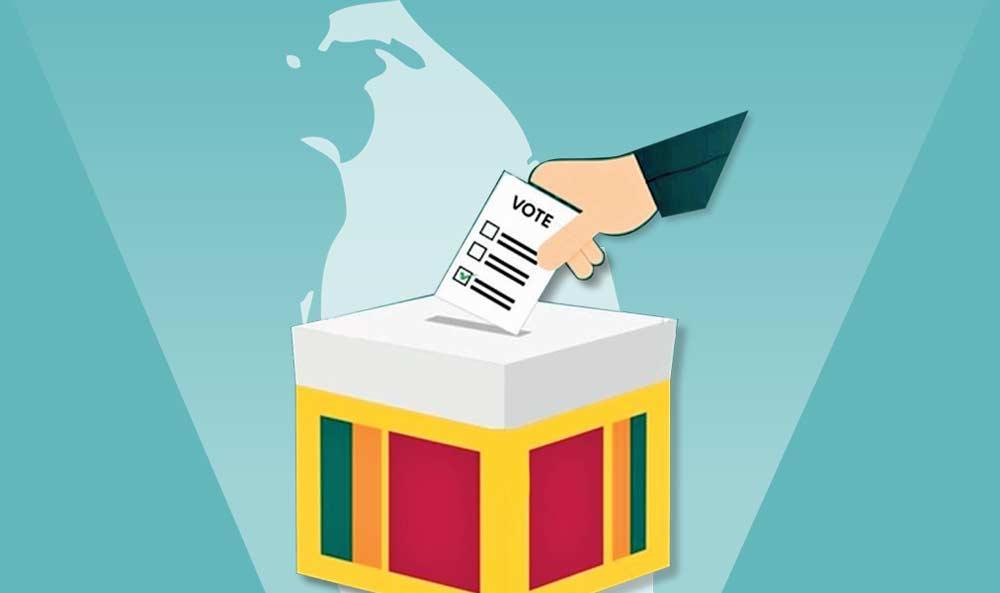
 Every election season brings a familiar ritual: candidates make sweeping pledges about tax cuts, job creation, crime reduction, and economic prosperity. Voters listen, evaluate, and cast their ballots based on these commitments. Yet, once the votes are counted and officials take office, many of these promises quietly disappear, leaving citizens frustrated and democracy weakened. Every political party that has governed this island, without exception, has deployed false promises to secure votes, only to abandon them once power was won. This pattern of betrayal transcends party lines, ideologies, and generations of leaders.
Why Promises Get Broken
The disconnect between campaign rhetoric and governing reality has become a defining feature of modern politics. Research examining South Korean legislators between 2008 and 2012 revealed that promise fulfillment depends heavily on factors voters cannot control: legislative committee assignments, policy area complexities, and individual lawmakers’ parliamentary activity levels. Whether a commitment gets honoured often has less to do with voter expectations and more to do with institutional mechanics.
Sometimes the failure stems not from deliberate deception but from inexperience. Sri Lanka provides a striking recent example. President Anura Kumara Dissanayake and his National People’s Power party swept into office with bold commitments: abolishing the executive presidency, repealing the Online Safety Act and Prevention of Terrorism Act, combating corruption, advancing reconciliation, and protecting minority rights.
Despite commanding a two-thirds parliamentary majority, more than enough legislative power to fulfill these pledges, little was accomplished fifteen months after taking office. Draconian laws remained in force, emblematic murder cases went unpursued, constitutional reforms stalled. According to observers, the new government appeared uncertain about implementation rather than direction, behaving more like an opposition party seeking advice than decisive leaders delivering on promises.
The consequences proved severe. The very constituencies that brought the government to power began turning against it, with political analysts warning that another popular uprising could make the previous aragalaya protests look mild and might turn violent.
The Legal Double Standard Nobody Talks About
What makes this pattern particularly troubling is a stark legal double standard. In most of Canada, lying about a political candidate during elections is illegal, yet candidates themselves face no penalties for lying about their own intentions or records. British Columbia has enacted a weak law requiring voters to pursue costly court cases with minimal penalties even when deception is proven.
This contrasts sharply with corporate regulation. If a Canadian company makes false advertising claims, just six citizens can file a complaint triggering a mandatory Competition Bureau investigation with substantial potential fines. When Sears Canada was found guilty of deceptive advertising in 2005, it paid millions in penalties. Corporate executives who mislead shareholders face legal consequences—thousands of shareholders have successfully sought compensation for losses caused by executive dishonesty.
Politicians have enacted laws requiring taxpayers, immigrants, welfare recipients, court witnesses, lawyers, and other professionals to tell the truth under penalty of law, recognising that lies in these contexts undermine society and cause harm. Yet they steadfastly refuse to apply the same standard to themselves.
As Democracy Watch Canada observes, election candidates, politicians, staff members, appointees, and government officials across the country have repeatedly misled the public through bait-and-switch campaign promises and misleading statements designed to advance partisan agendas, undermining good governance at every level.
Failed Attempts at Reform
Wales recently attempted to address this accountability gap by proposing legislation making it a criminal offense to make false or misleading factual statements intended to help election candidates. The Welsh Labour government presented this as building stronger democratic foundations.
The bill encountered immediate resistance, even from within the governing party. Critics warned that without clear definitions of what constitutes a “false or misleading” statement, the legislation could impose extraordinary limits on free speech. The proposal’s uncertain fate illustrates how difficult it is to regulate political honesty without potentially stifling legitimate debate.
Why Courts Won’t Intervene
Despite widespread public frustration, making campaign commitments legally enforceable faces nearly insurmountable obstacles. Legal accountability would require courts to oversee government and parliamentary operations, effectively giving judges veto power over democratic decision-making.
Courts worldwide have recognised this inherent conflict. India’s Supreme Court refused in 2015 to make manifesto promises legally binding, concluding that the judiciary cannot cure every political system problem, that responsibility belongs to voters. The Allahabad High Court noted in 2022 that no statutory penalty exists for political parties that fail to deliver on manifesto pledges.
British courts have maintained this position for decades. As Lord Denning observed in 1981, political manifestos issued to win votes should not be treated as gospel truth, as they frequently contain proposals that prove completely unworkable in practice.
The Dream World of Modern Manifestos
The manifesto has evolved into a gateway to an impossible dream world, filled with promises as unrealistic as a parent promising a child the moon and stars. Parties that contributed to creating problems present themselves as paragons of virtue, banking on voters’ short memories and tribal party loyalties.
When political parties ignore or reverse their commitments, voters have practically no recourse beyond waiting for the next election cycle. No legal provision ensures that manifestos represent sincere, accountable commitments rather than tactical documents designed merely to win votes. No mechanism exists for mid-term evaluation or recall based on broken promises.
Determining whether unfulfilled promises resulted from deliberate deception or honest miscalculation about financial and practical constraints presents an impossible challenge. A dishonest manifesto causes immediate electoral damage, but proof only emerges after the fact. The available remedies remain familiar and limited: vote against promise-breakers, campaign against them, and hope that embarrassment and electoral consequences will encourage better behaviour. Democracy ultimately depends on citizens’ ability to make informed choices about their representatives, leaving voters holding whatever power they can exercise through the ballot box.
Whether this arrangement adequately protects democratic integrity or enables systematic deception remains an open question. What seems certain is that as long as politicians can make promises without meaningful accountability for breaking them, the disconnect between campaign rhetoric and governing reality will persist, gradually eroding public trust in democratic institutions themselves. This erosion may be precisely what some leaders expect. As Machiavelli observed centuries ago and argued, adhering to promises is not a moral obligation but a strategic decision, a wise ruler cannot and should not keep promises when doing so conflicts with their interests, because others are inherently untrustworthy and will not keep their word either.
In embracing this cynical philosophy, modern politicians may be fulfilling one promise after all: proving that democracy’s greatest threat comes not from external enemies, but from those who exploit its freedoms while refusing to honour its fundamental compact of honest representation.
Conclusion
Voters must recognise this harsh reality: until meaningful accountability mechanisms exist, campaign promises will remain empty words designed to win power, not genuine commitments. Trust cautiously, demand transparency, verify claims, and remember, your vote empowers those who may betray you tomorrow.