Reply To:
Name - Reply Comment
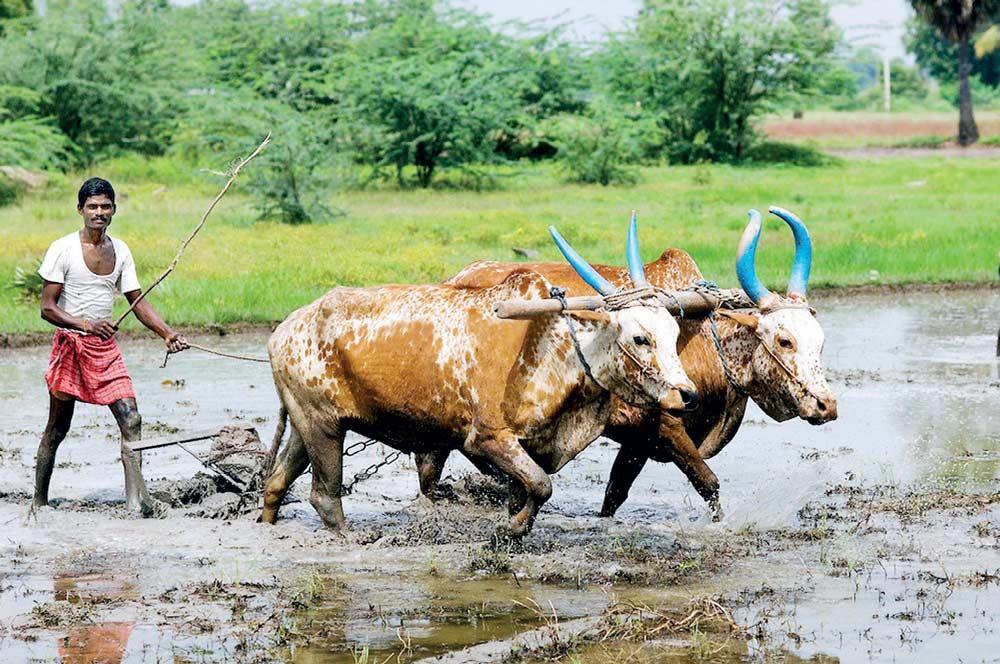
Vap Magula or the ploughing ceremony has a long history
 All the farmers were required to attend the Kanna meetings which were held before the commencement of the season
There is a saying that the farmer is fit to wear the crown when mud is rinsed from his body
 Paddy cultivation is believed to have been begun for the first time in China and the North-East of India during the period 4000 B.C. The cultivation had been expanded to the valleys of rivers in Sri Lanka such as Malwathu oya, Daduru oya, Kala oya and Mahaweli Ganga
 Vap Maha – referring to the period October/November is the chief sowing period of Paddy. This is the end of the rainy season –Wassana kala for Buddhist priests. Parallel to the ceremonies is the Katina held for Buddhist priests.
There is a saying that the farmer is fit to wear the crown when mud is rinsed from his body. Similarly the king becomes a farmer on this day of the ploughing ceremony-“Vap Magula” when he holds the plough and drives the buffaloes.
Paddy cultivation is believed to have been begun for the first time in China and the North-East of India during the period 4000 B.C. The cultivation had been expanded to the valleys of rivers in Sri Lanka such as Malwathu oya, Daduru oya, Kala oya and Mahaweli Ganga. According to Rasavahini there was a track of Paddy fields 500 Kirasa or 1,100 Acres in extent.
The economy of the village depended largely on the success of Paddy cultivation. In the past, agricultural activities had been prosperous to the extent that the land had been cultivated in three seasons in the year.
All the farmers were required to attend the Kanna meetings which were held before the commencement of the season. Collective decisions were taken on important issues such as the date to commence land preparation, first day of water issue, type of crop to be cultivated and the closure of canals. All the participants were allowed to air their views. All the decisions were discussed, debated and final decisions were taken with the consent of each and every farmer. Those who failed to comply with these decisions were punished.
Paddy lands in the village were divided into three tracks. The track closest to the wewa was called “Mal pota”. This track was the main track. The track below it was called “Herana pota” and the portion away from the wewa was called “Asweddum pota”. Small villages had only Mal pota and Herana pota. Stretches of land on either side of the track was called “Wanata”.
Uncultivated land was “Puran keth”and “Malan keth”. Tilling the land which had been let to fallow for some time was called “Aswedduma”, or “Puran keteema” Buffalos, ploughs and yokes were used to plough the land. The hoe or mamotty is still being used to dig the earth. The “Poruwa” made of wood is used to level the land. “Kola Debala” is used to heap up the cut Paddy plants on the threshing floor and “Datta” to remove hay. A poruwa was a clapper making the sound “Takan” to scare birds. The “Bokulla” was used to catch the insects that are harmful to the crops.
Farmers who did not posses land cultivated the land belonging to others and a share of the crop was offered to the land owner. This was the tenants system of cultivation.
Another system was followed in the past to prevent the land being fragmented into impracticable small units. Under this system called “Tattumaru” system, a plot was shared by a number of owners and one got his turn only after few seasons in rotation. In “Kattimaru” one got an individual plot in rotation from two or three other plots shared among the same owners to have equal benefits of the soil.
Vap Magula or the ploughing ceremony has a long history. Kings and nobles participated in agricultural ceremonies in a grand way. There are enough references made on these instances in Mahawansa and Rasavahini. In the history of Buddhism there is a mention about a ploughing ceremony conducted under the patronage of King Suddhodhana, father of prince Siddhartha. As an encouragement to agriculture the king arranged for a ploughing festival. It was indeed a festive occasion for all as both nobles and commoners, decked in gala dresses, participated in the ceremony.
Farmers also adopted a system whereby they could expect bountiful harvests without facing problems of water scarcity during all three seasons in the year with limited water resources in the village tank. “Bettama” is a unique system whereby scarce resources, (arable land and water) are shared by farmers in a certain area. At times when there is a scarcity of water only part of the track is cultivated to conserve water. When water is critically scarce only Mul pota or the track close to the wewa was cultivated collectively by all the farmers in the village. When water was scares but not critical the track below it. Herana pota was also cultivated according to “pangus” (shares they possessed in the whole yaya or track) The crop was shared according to their pangus on the cooperative basis.