Reply To:
Name - Reply Comment

File photo
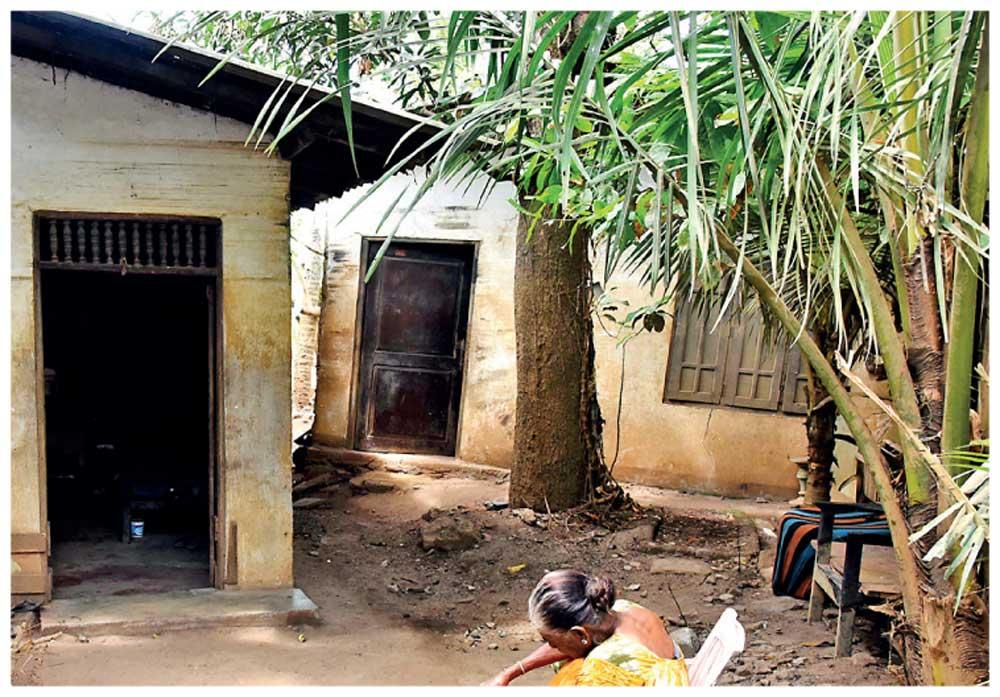
Tilted House
Pix by Nisal Baduge
By Tahaan Jayewardene
Cyclone Ditwah struck our small island nation three months ago, and in its wake the unseen tragedies are many. The cyclone may be over, but the real fight is ongoing. For two families and residents of low-lying Colombo suburb Wellampitiya, submerged after facing catastrophic flooding, Cyclone Ditwah’s impact has created many challenges they are still fighting to overcome.
For Muhammed Nilar and his family, the shock of Ditwah’s impact leaves a heavy burden.
Upon entering their home, Nilar and his children were sitting on the floor going through a few small piles of documents, but despite the intrusion they warmly welcomed us inside. For them, the level of flooding brought on by Ditwah was far greater than what they ever could have imagined. Despite warnings, and assuming the water would go down as it had done in the past, they stayed.
“But this water rose so suddenly,” said Nilar. The flooding started on Friday, November 28 and by evening it was flooded, submerging, and destroying their belongings.
Having experienced the 2016 flooding, they emphasized how truly unimaginable and unexpected such extreme flooding was.
They were about to move into their new house, which they had set up, and had just one week left before it was time to move in when Cyclone Ditwah happened.
Describing their experience, they said that once the water levels rose to the level of their dining table in their old house, they thought that would be it and that all their belongings would be safe. The water kept rising, however, and at that point they left. The water rose to eight feet in their old house submerging even their pantry cupboard. By their new house, which we were all standing in, the water rose to nine feet and inside the house (since the house itself is slightly elevated) rose to about six feet. This was clear from the marks left by the flood still on one of their walls, the rest of the walls all painted over now.
“That house got flooded and this house got flooded,” explained Nilar and his family, adding how both their old and new belongings were submerged.
All their children’s schoolbooks got ruined in the flooding and needed replacing. Their clothes were ruined. None of their belongings caught in the flood could be recovered, since it was all mud soaked and filthy. When the water started receding, it left behind grey and black mud. Nilar’s wife said once the flooding was over and she went to their new house, it was all black – a black mud the same colour as the mud in the canals next to their house.
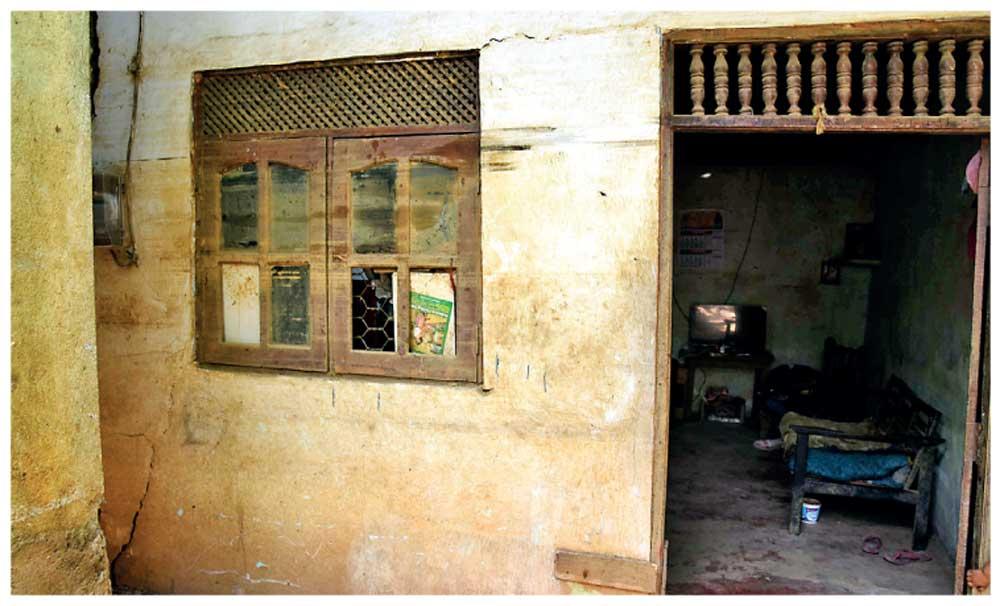
 “Now this is the second time we are painting this whole house,” said Nilar, referring to the new house. They explained that since the cyclone, they have been tirelessly working towards restoring their house.
Nilar’s stainless steel business was lost after Ditwah, since their shop just next door to them was flooded in as well. Nothing was left unaffected.
All of his machinery got submerged. Losing the shop meant losing their source of income. Because the family needed somewhere to live, they explained that they used the income they had from the shop and started restoring their new house.
Nilar explained that he had received the Rs. 25,000 recovery compensation from the government. He said he also received the Rs. 50,000 compensation.
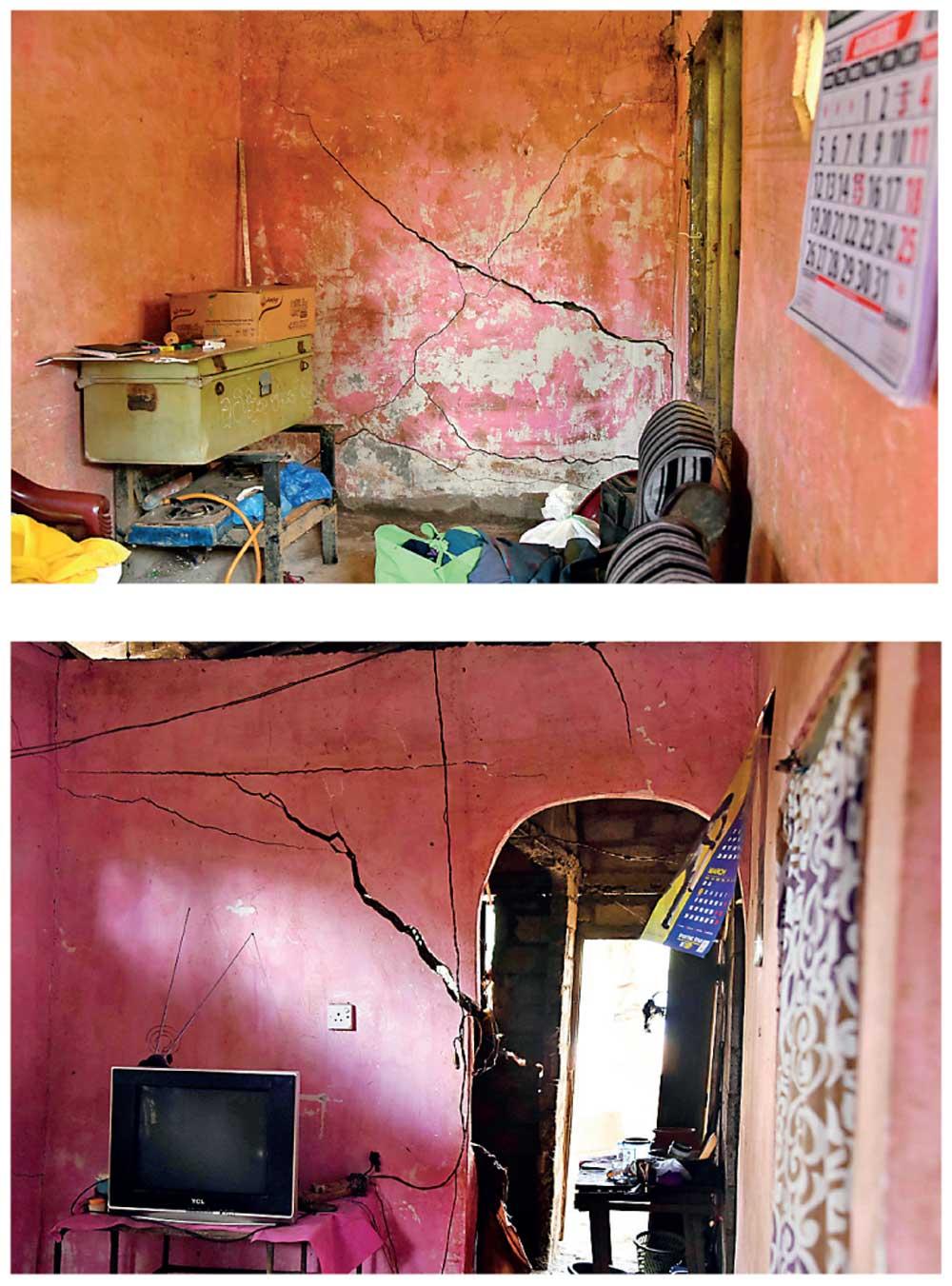
After our visit with Nilar and his family, we came across two other houses that left us speechless. One house was slanted and leaning to one side. The other house had cracked walls and clear brown water marks reaching far higher than expected. Despite being kindly welcomed in by Roshani Wathsala and her family, I braced myself for what we were about to see and hear.
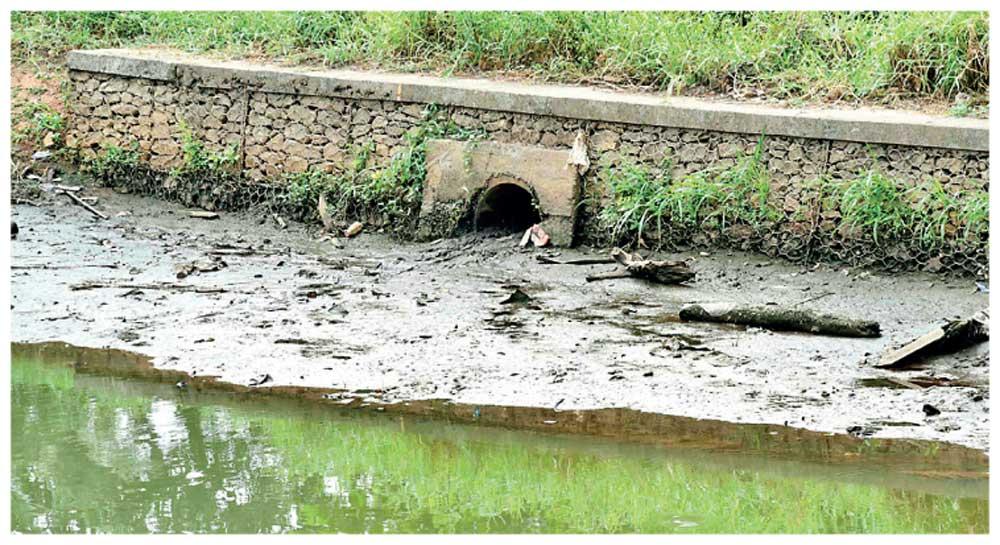
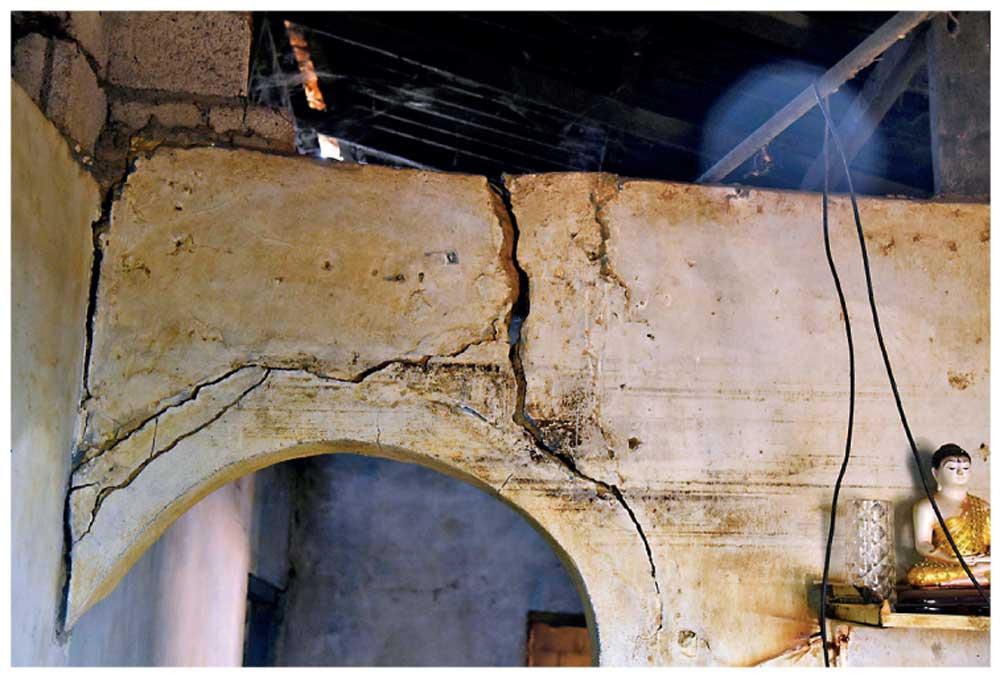
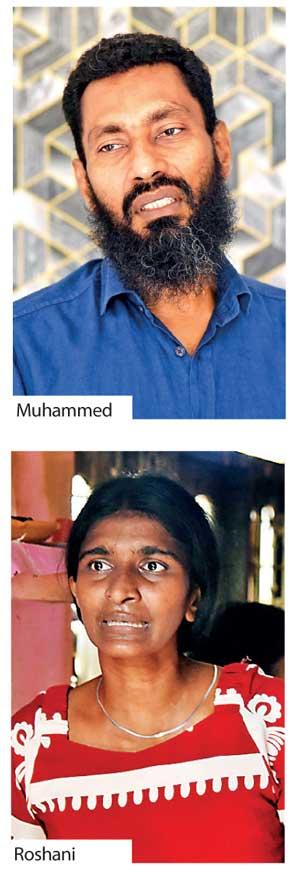 Wathsala and her family lived right next to the canal. Both her and her mother-in-law’s houses were submerged and severely damaged during the cyclone. “The water went up to 12 feet,” Wathsala said, while taking us around her home and pointing out the cracked walls, unmistakable to anyone walking through the front door. The whole house was flooded and went under water, she said, adding that it reached their roof.
Her mother-in-law’s house was so badly damaged, that it is now tilted and leaning to one side, not to mention the severely damaged and cracked walls inside.
It was very dangerous, explained Wathsala, emphasizing how the disaster happened so unexpectedly. The water came in a way that was inconceivable to them. She explained how around 2:30 a.m. the water came gushing in and by 7 a.m. the water level rose to about four feet. By noon, it rose even further causing severe damage. By this point they had received a warning on their phones to evacuate immediately and packed up some clothes to go to Terrence N De Silva Maha Vidyalaya, Kolonnawa. They stayed there for a week, noting how around 400 people were also staying at the school, after their homes were submerged from the cyclone.
On returning there was nothing left to be recovered. She explained that because their house is right next to the canal, all the water drained out through the canal by their house, bringing with it what must have been accumulated dirt from the sourounding area. She added that all their identification documents were all lost in the flood, and that nothing was saved.
Wathsala informed us that they were told not to stay there because of the safety risk.
The Grama Niladari Officer came and told them not to stay, she explained, but that despite the risk they did not have anywhere else to go.
The family was already facing severe hardships when Cyclone Ditwah struck, with her mother-in-law sick in hospital and suffering from chest pain and her husband also struggling with his health. The family was under immense difficulty and stress, only further exacerbated by the disaster.
Wathsala said that they also had received the Rs. 25,000 recovery compensation from the government but added that nothing much could be done with that amount. However, she said that they had not received the Rs. 50,000 yet.
The true tragedy lies in the invisible fights for recovery, by communities of people severely affected by Cyclone Ditwah. For them this is not a nightmare they can wake up from, it is a battle they face every day.