Reply To:
Name - Reply Comment
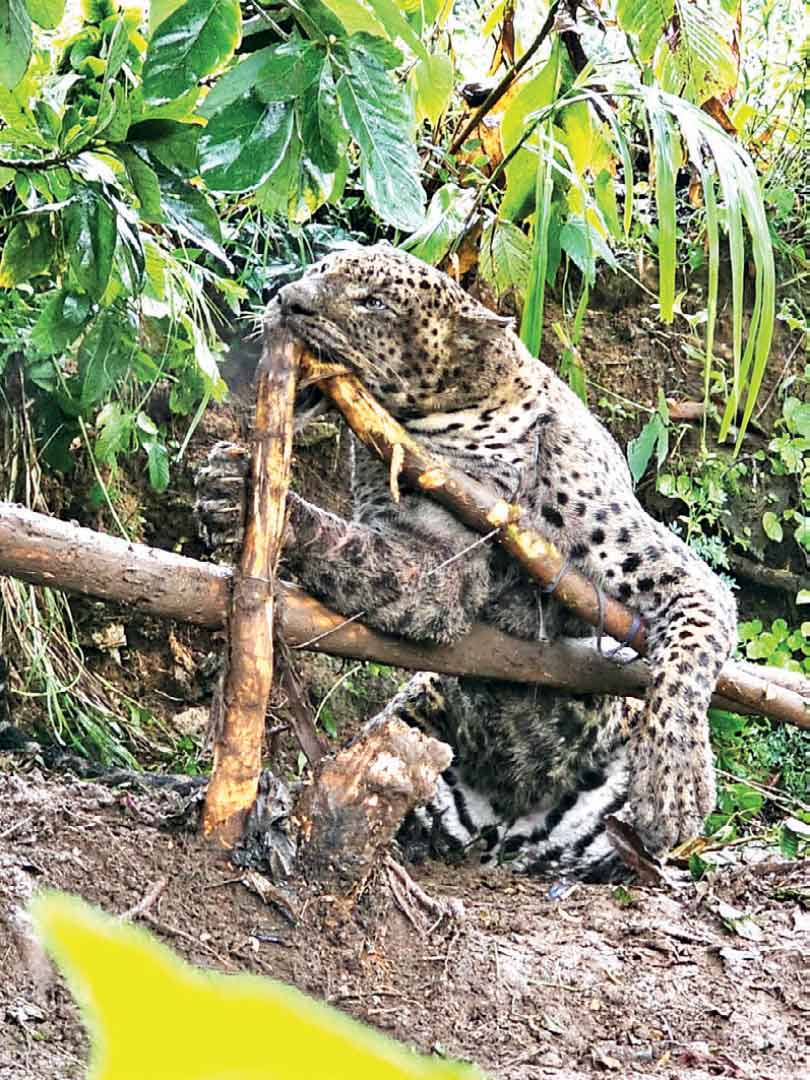
Leopard caught in a trap
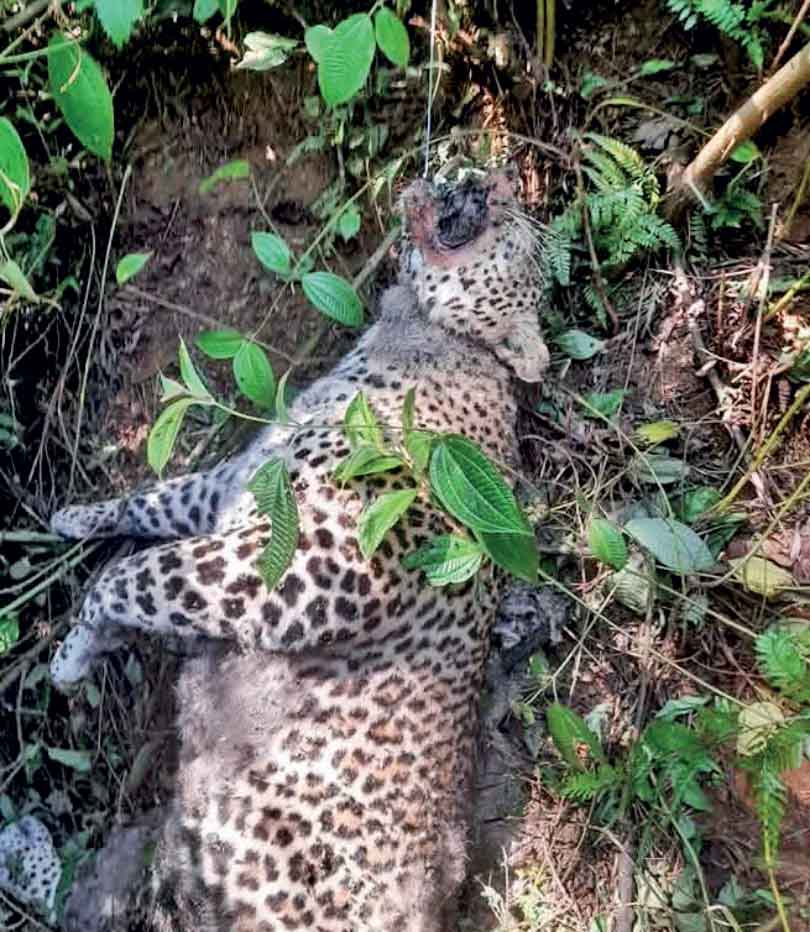
Leopard killed by a trap in Balangoda
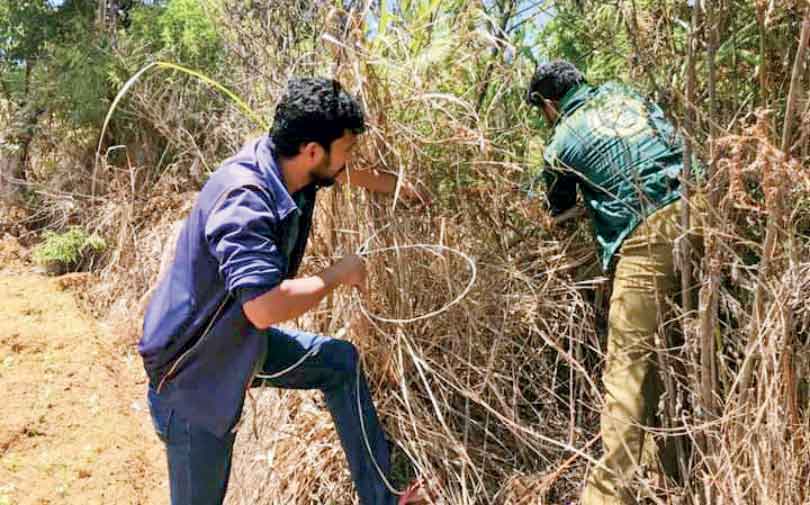
Wildlife officers removing a trap
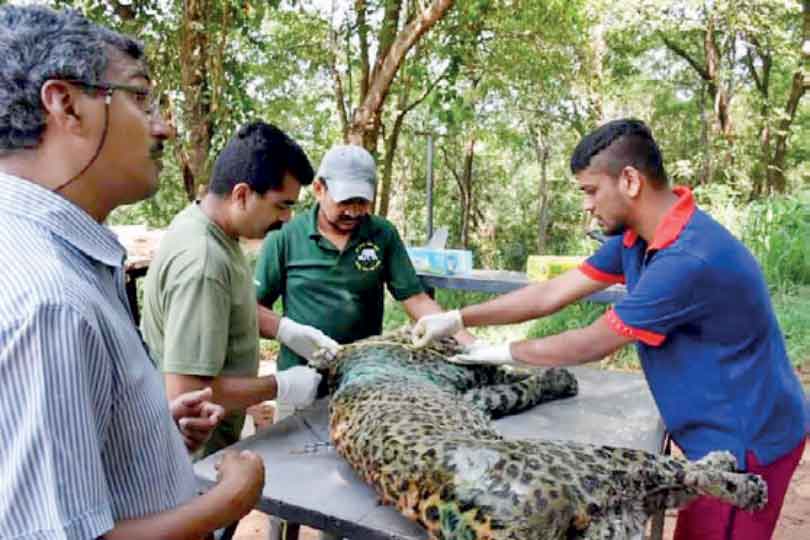
Wildlife officers treating an injured leopard
By Shantha Chandrasiri Hulannuge
The Hill Country leopard (Panthera Pardus Kotiya) is a sub species of leopard native to Sri Lanka, and is now identified as a species facing the threat of extinction.
Sri Lanka’s leopards, along with other leopard species in India, Jawa, Indo china (Vietnam, Laos, Cambodia), Amur (between the Russian Far East and Northern China), Iran, the Arabian peninsula and Africa are considered as endangered.
The Sri Lankan leopard is a predatory mammal endemic to Sri Lanka and not found in any other country.
This species of leopard was spread all over the country in the past; today, they live mostly in Wilpattu, Kumana and Yala National parks. Some are found in the Horton Plains, Hakgala, Sinharaja and Samanala forest reserves and in tea estates in the Nuwara Eliya district..
A recent survey carried out by a group of researchers of the Biological Science Faculty of the Sri Jayawardana University has revealed that the Kumana national park is the abode of the second largest leopard population in the world.
Unfortunately, it is a widespread practice of poachers to lay traps to hunt down wild animals. This cowardly practice has been going on unchecked mostly in upcountry estates. The endangered leopards often fall prey to these traps.
Al least 12 hill country leopards died in 2023, plus 14 more in 2024, owing to human activities. Five of them died in traps, and others were either shot dead or met with accidents. More than ten hill country leopards have died during the last several months of the year.
Wildlife officers say there is an acute need for a veterinary care hospital or a veterinary surgeon for the hillcounry regions to tranquilise an injured leopard or any other animal caught in a trap and to provide treatment to save its life.
Cases of hill country leopards that died in traps have been reported mostly from Nallathanniya and Hakgala Wildlife Zones. The most number of deaths this year were reported from the Hakgala Wildlife Zone. Deaths of several hill coountry leopards have been reported from Nallathanniya and Gampola Wildlife Zones as well. However, it is a matter of serious concern that the authorities have not yet focussed attention on the need of an a veterinary care hospital for these wildlife zones.
.Statistically, the death rate of hill country leopards has increased in alarming proportions since 2010, particluarly for want of veterinary surgeons to rush to the scene and provide treament.
The nearest Veterianry Unit is at Rannenigala and a veterinary surgeon who taken about four hours to arrive cannot be expected to save the life of an injured leopard in a trap. Itis imperative that a well equipped veterinary unit should be established in Kotagala or Thalawakele areas.
Environmentalists have pointed out that poachers laying traps to hunt animals should be subjected to deterrant punishments; or else, they would resort to the same practice.
There are several reasons as to why people lay traps. Some are simply trying to protect their crops from wild animals.
But others kill animals to sell the meat. There is a smaller group of poachers who target hill country leopards. Whatever the reason, the fact is that animals caught in traps die a painful death.
Wildlife officers have pointed out that leopard fatalities caused by unwittingly biting on the illegal explosive device called ‘Hakka Patas’ have been increasing parallel to fatalities caused by traps. They pointed out that leopards are killed for their teeth and nails, the sale of which is another contraband trade in the hill country.
Meanwhile, the Department of Wildlife has laid down a programme to manage the death of this endagered species of animal. The abodes and breeding grounds of hill country leopards will be identified and an effective method of communication would be implemented unter the proposed programme.
It is commendable that the Department of Wildlife has focused on implementing a plan that includes public awareness campaigns and creating awareness among estate managements.
Another step taken by the department at present is to remove traps laid by poachers.
However, the relevant authorities should focus greater attention of the safety of hill country leopards and those living in other areas as well.
Leopards are a part of the environment and the equilibrium of environment depends largely on their existence. It directly affects human life as well. The entire ecological system would collapse in case animals become extinct. But, unless urgent protective steps are taken, the Sri Lankan leopard would go down the annals of history as an extinct animal species soon.