Reply To:
Name - Reply Comment
No alternative arrangements, other than the assistance of guides, have been made so far for tourists, entering the forest to view the waterfall
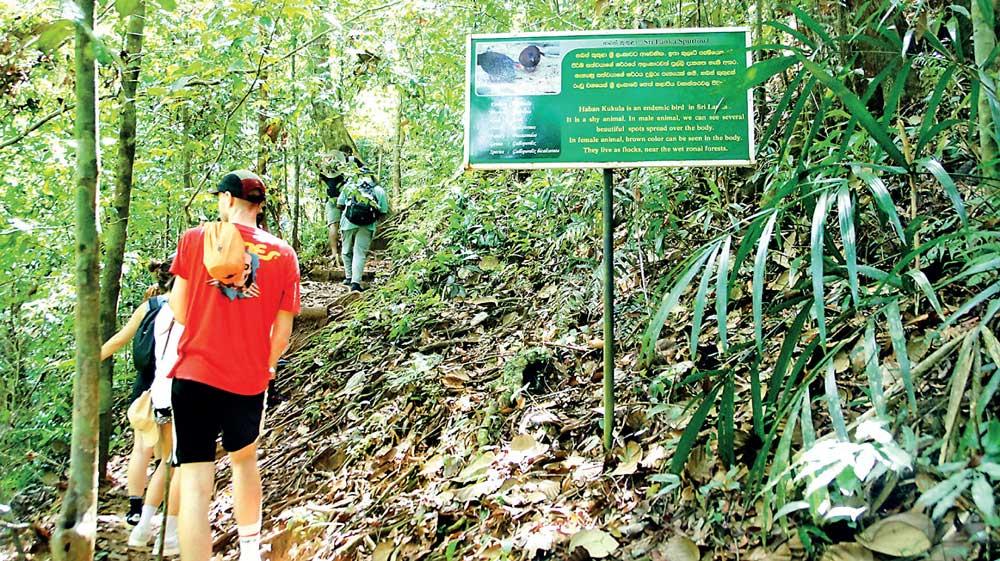
Tourists intending do a hike to Sinharaja often face significant difficulties due to the lack of service facilities that cater to their basic needs
By Sudharika Gurusinghe
in Lankagama
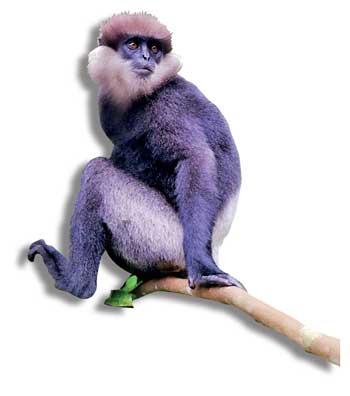 |
| Visitors making a trip to Sinharaja can experience the witnessing of Sri Lanka’s best of flora |
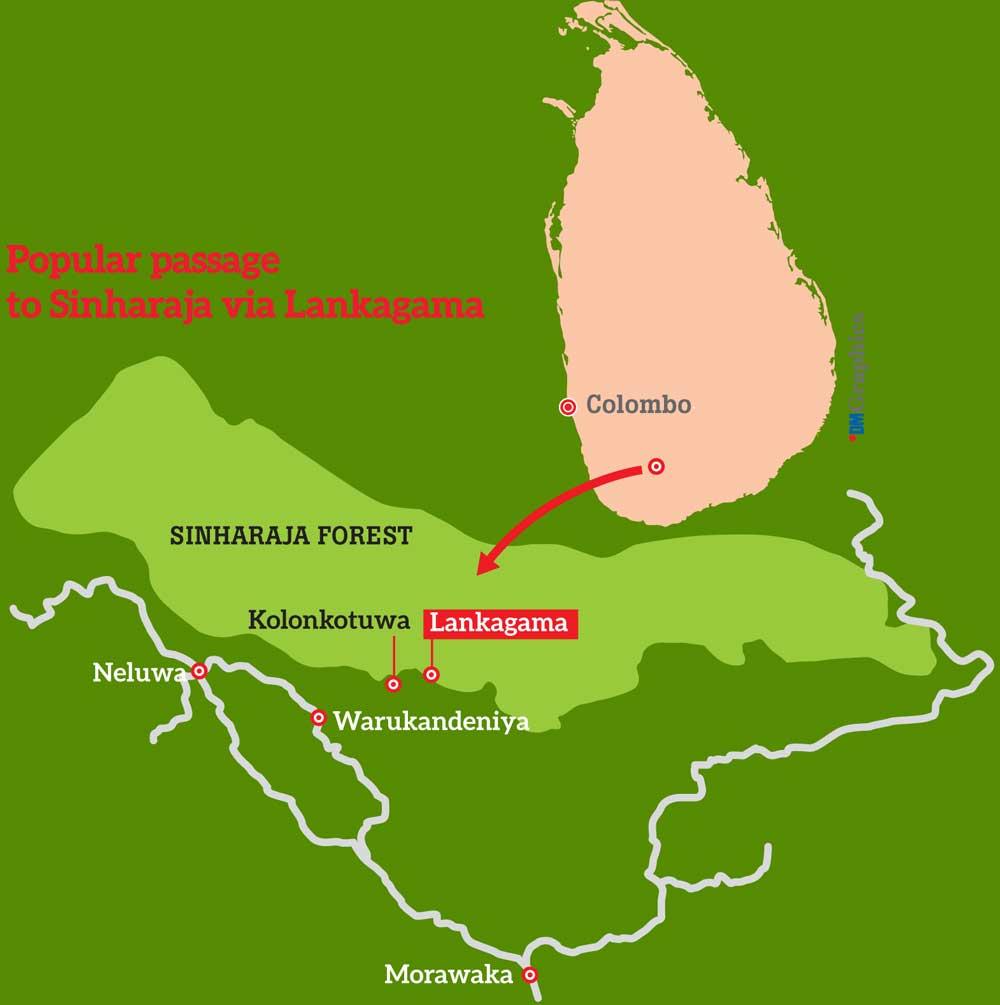
Sinharaja Forest Reserve, which borders Ratnapura, Galle, and Matara districts, covers an area of 11,187 hectares. There are approximately twenty-two villages surrounding the forest, including the recently highlighted village of Lankagama. Located within Neluwa Divisional Secretariat Division of Galle District, Lankagama has gained attention as a new gateway to Sinharaja. Not far from Lankagama are the villages of Kolonkotuwa, Wadugedara, Nilweligama, Pitadeniya and Warukandeniya. Among them, Kolonkotuwa and Warukandeniya are situated within the Sinharaja Forest itself and are accessible only by travelling on existing footpaths.
The villagers, who primarily made their living off Kithul jaggery, jackfruit and breadfruit also engaged in hunting wild animals. At present, tea cultivation has expanded into areas close to the Sinharaja Forest. Sinhagala, one of the highest peaks in Sinharaja, is located near Lankagama. In the past, pilgrims from Morawakkorale and Galle Korala regions used the route through Sinhagala in Lankagama to reach Sri Pada. According to local folklore, a lion once lived at Sinhagala and used to attack people. It is said that a giant named Lankanatha killed the lion, and the stone he used for this purpose is still visible today at that location. The cave, where the lion lived, came to be known as Sinhagala, and the area where the giant resided eventually became known as Lankagama.
Recently, in addition to the Kudawa entrance, the Lankagama entrance has emerged as a new access point to the Sinharaja Forest. It has gained significant attention from both local and foreign tourists. Every day, a large number of visitors arrive through this entrance, but is must be said that the available facilities are not satisfactory. The Lankagama entrance is the only location in South Asia where visitors can view seven beautiful waterfalls within the shortest distance and in the least amount of time. The seven main waterfalls that can be explored from this entrance are Brahmana Ella, Thattu Ella, Uran Wetunu Ella, Nuga Deka Ella, Gal Oruwa Ella, Duwili Ella, and Hariyawa Ella.
The story behind
Brahmana Waterfall
Among these beautiful waterfalls, Brahmana Ella—standing 17 meters tall—is the first that visitors encounter. According to legend, a Brahmin from India once journeyed to Sri Lanka after learning from an ancient treasure book about a treasure near Nidhan Gal Poththa in Gin Ganga. The Brahmin eventually settled in a nearby village after entering wedlock and raised a family. He had a son, whom he trained from a young age to dive and remain underwater for long periods, with the ultimate goal of retrieving the treasure from the depths of Gin Ganga. When the time came, the Brahmin used his son’s skills to recover the treasure. However, in exchange for the treasure, a sacrifice had to be made to a spirit guarding it. The Brahmin, fulfilling this condition, beheaded his own son and cast his body into the river. He then set off toward Deniyaya, carrying with him the golden wax gourd he had obtained as the treasure.
While on his journey, the Brahmin lost his way in the forest during the night. He encountered a villager who had entered the Sinharaja Forest for toddy tapping.
The villager kindly invited the Brahmin to his home, offered him food and drink and allowed him to spend the night. However, the villager grew suspicious, as the Brahmin never let go of the bag he carried. After the Brahmin had fallen asleep, he opened the bag. Inside, he found a golden wax gourd. The villager began to desire the treasure for himself. The next morning, as the Brahmin prepared to leave, the villager offered to accompany him, pretending to help him navigate in case he got lost again.
During their journey, they had to pass a waterfall flowing through the forest. According to folklore, the villager travelling with the intention of obtaining the golden wax gourd, pushed the Brahmin, along with the treasure, into the waterfall and killed him. Thinking that the other villagers would see the Brahmin’s dead body, the villager returned home intending to come back later to search for the golden wax gourd. Folklore states that although the villager thoroughly searched the area around the waterfall later, he had not found the treasure. This waterfall was originally known as the place where the Brahmin was killed, but later became famous as Brahmana Waterfall.
There is also a similar fascinating folklore about Uran Wetuna Ella. At one time, vast areas of land were used for chena cultivation in the Sinharaja Forest. However, wild boars frequently invaded and destroyed the crops, causing great concern among the villagers. One day, the farmers grouped together, surrounded the herd of wild boars, and chased them down the waterfall, killing them in the process. Since then, the location became known as the waterfall where pigs fell (Uran Wetuna Ella). According to legend, there is also a gem deposit located nearby. Gal Oru Ella, which is uniquely shaped like a boat is the only waterfall in Sri Lanka naturally formed in this manner. It can only be observed when one looks down from the top of the fall. With a fall of about 50 feet deep, Gal Oru Ella holds a prominent place among the seven waterfalls of Lankagama. Folklore tells of King Walagamba mining gems in Sinharaja. The king is said to have discovered large gemstones. During a battle with the Chola forces, it is believed that the gems were scattered in a swamp filled with coral swirl flowers. Legend goes further to state that, in an effort to protect the treasure, the king ordered one of his royal servants to be beheaded at the site. The servant’s spirit is believed to have remained there as a guardian of the treasure. The gem deposit is still there, and it is said that some individuals have stumbled upon gems by chance while exploring the area. The Sri Lanka spurfowl, barking deer, various butterfly species, snakes and many types of birds can be observed in this area. Tourists coming to Sinharaja can also enjoy unique experiences at the waterfalls. These include bathing, photography, video recording, and even foot massages provided by endemic fish—all free of charge. No matter how beautiful the experience may be, the Forest Department of Sri Lanka has only made a mediocre effort to ensure the safety of tourists visiting the waterfalls. There are no signboards warning about the depth or danger of the waterfalls, and the paths leading to them are naturally hazardous. It appears that the department has not implemented any programme to properly inform either local or foreign tourists about the potential risks involved.
No first aid team
Visitors are unable to at least obtain any booklet or route map containing detailed information about the waterfalls. A fee of Rs. 125 is charged from local tourists and Rs. 1,245 from foreign tourists who visit the area. However, apart from collecting these fees, there is no commitment to provide adequate facilities to visitors. If a tourist visiting the waterfall happens to meet with an accident, there is no proper medical response procedure in place to bring down the injured person safely. Injured tourists must be carried down by other visitors, as there is no first aid team or access to essential medical supplies on-site. While Lankagama does have a medical centre, the doctor is only available on weekdays. Residents of Lankagama maintained that the doctor arrives only at his convenience and remains only until around 2:00 p.m. The doctor does not report to the medical centre on Saturdays and Sundays. The residents also pointed out that in the event of a long weekend, the doctor does not attend the medical centre during this period. In case of an injury, the nearest hospital is in Neluwa, which is 14 kilometres away from Lankagama. Locals also reported that hiring a three-wheeler to travel to Neluwa could cost around Rs. 2,000. The tour guides have established an organization called ‘Sinharaja Sumithuro’, through which they provide guiding services to tourists. However, some guides only take tourists to view the waterfalls and do not share the historical stories and detailed information associated with them—possibly due to a lack of knowledge. One guide mentioned that with proper government regulation, the quality of service provided to tourists visiting Lankagama could be significantly improved. One villager maintained that, to date, there is no official government website provides information about the Lankagama entrance. Even basic facilities such as a rest room for guides waiting to assist tourists are not available. No alternative arrangements, other than the assistance of guides, have been made so far for tourists, entering the forest to view the waterfall. Public awareness about the Lankagama entrance is only created through unofficial channels, such as websites and Facebook pages maintained by tourist guides and hotel owners. As a result, a significant number of local and foreign tourists now visit the waterfalls via the Lankagama route. Tourists visiting this area often face significant difficulties due to the lack of service facilities that cater to their basic needs. Furthermore, there is no organised system to support local residents involved in the Kithul industry to sell their products. The people from Lankagama Grama Niladhari Division, which consists of about 270 families, are struggling to market their produce. The influx of tourists presents a valuable opportunity to boost the daily income for these families. However, no formal mechanism appear to be in place to aid their businesses and boost the economy.
Message to tourists
There is an important message for tourists who visit the beautiful waterfalls of Sinharaja—especially those entering through the Lankagama entrance. It is essential to experience these waterfalls in a way that respects and preserves the ecosystem. Visitors are also encouraged to wear brown or green, instead of dark colours. This is because animals in the reserve are known to be startled or frightened by dark-coloured clothing. During the attempts made by this newspaper to contact Director General of the Department of Forest Conservation, Nishantha Edirisinghe, via his office number 0112 866631, a staff member told us that the Director General was in his office and asked us to keep waiting. Later, another officer stated that he was not in the office. The phone number we were eventually given turned out to be incorrect. Similarly, despite making several attempts, this newspaper was unable to reach the doctor in charge at the Lankagama Medical Centre.
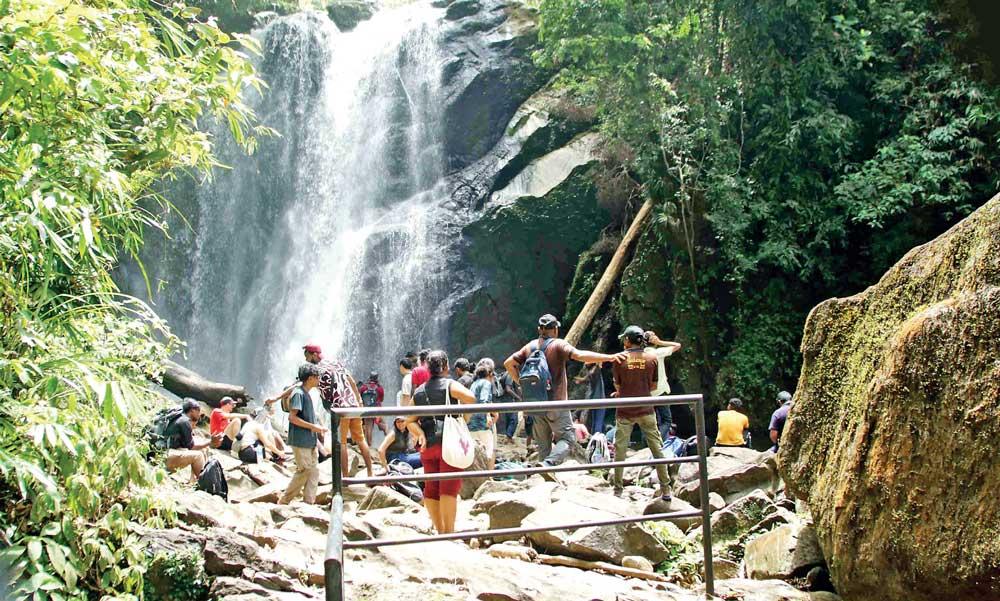
No matter how beautiful the experience may be, the Forest Department of Sri Lanka has only made a mediocre effort to ensure the safety of tourists visiting the waterfalls. Here visitors are seen at Duwili Ella
Recently, in addition to the Kudawa entrance, the Lankagama entrance has emerged as a new access point to the Sinharaja Forest. It has gained significant attention from both local and foreign tourists.
The Lankagama entrance is the only location in South Asia where visitors can view seven beautiful waterfalls within the shortest distance and in the least amount of time. The seven main waterfalls are Brahmana Ella, Thattu Ella, Uran Wetunu Ella, Nuga Deka Ella, Gal Oruwa Ella, Duwili Ella, and Hariyawa Ella