Reply To:
Name - Reply Comment
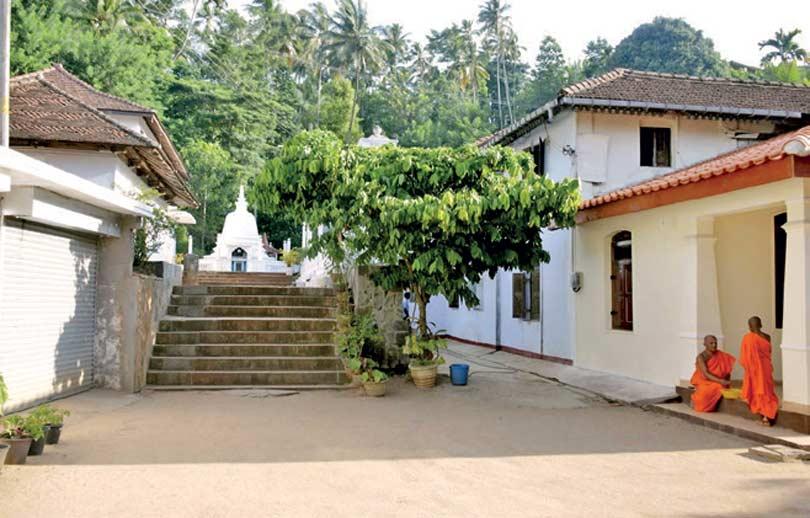
Asgiri Maha Viharaya is associated with rich Buddhist traditions
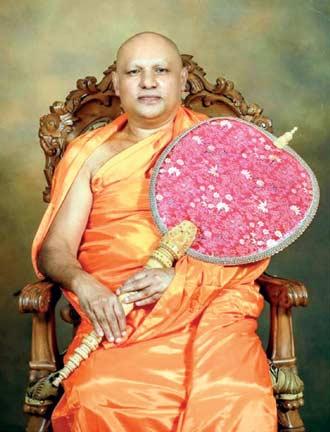
 President Anura Kumara Dissanayake would induct the Anunayake of Asgiri Maha Viharaya Ven. Panditha Narampanawa Ananda Thera who is also the Director of the Asgiri Maha Viharaya Privena.
Asgiri Maha Viharaya claims its lineage from the ‘Asgiri Talpotha’ - the history of the Maha Vihayara.
Even during the time of Gautama Buddha, there were two sections of monks, the Text learning monks (granthadhura) and those engaged in deep meditational practice ( Vidarshana dhura )
|
Ven. Panditha Narampanawa Ananda Thera |
During the Kandyan period it was also found that Asgiri Maha Viharaya consisted of meditation monks and the Poyamaluwa group consisting of text learning monks.
During the Anuradhapura period, it is believed that monks belonging to the Thuparama tradition practised ‘insight’ meditation in the forest reserves of Dimbulagala. In this context, Dimbulagala Maha Kashyappa Thera is placed in a high pedestal in the Buddhist history of the country.
In the course of time, an institution for forest dwelling monks was developed and named ‘Walasgala’. The name for this institute derived because of ‘the mountain of bears’.
The chief monk of the Institution was Dipankara Maha Thera, who comes from the lineage of Dimbulagala Maha Kashyapa Thera. He was trained to cover a number of forest hermitages in the country. There were many erudite scholarly monks like Palabatgala Vnaratne Maha Thera, who could be termed as an accomplished Meditation monk of the highest order.
Dambulla Cave Temple, the Aloka Cave Temple, Mulkirigala Cave Temple, Vakirigala Cave Temple, Lenagala Cave Temple, the Rasseruva Cave Temple and the Leeniyagla Cave Temple belongs to the Meditative monks. It is so even today. The core group of monks belongs to Asgiri Maha Viharaya.
History indicates that King Panditha Parakramabahu of Kurunegala built a forest Hermitage in a location not too far nor too close by from the City of Sirivardhanapura (now Kandy) in about 1855 of the Buddhist era. It was offered it to the fraternity of monks led by Vanaratne Maha Thera as a dwelling place for the Walasgala Hermitage in Yapahuwa. This later came to be known as the Asgiri Temple.
There are other traditions which name ‘Asgiri’ first with King Weera Wickrama or Wickramabahu III who reigned in Kandy. This king built a Temple at the foot of a Palmyrah Tree at Asgiriya Mountain. Its name was changed to Asgiri Viharaya and this same King named the Temple as Asgiriya in honour of his mother Queen Chandrawathie who was popularly known as the ‘Lady of Asgiriya’ ‘as she hailed from the Asgiriya of Matale District.
When King Wimaladharmasuriya was constructing a city wall around the city of Kandy, a large section of the Monastic buildings came into the precincts of the city. What remains is a small portion of those buildings.
It is recorded that the first monastic set of buildings were built in the premises of the present Trinity College and the Chapel had been built in this area.
It is for a monk coming with this background that the Act of Appointment will be made by President Anura Kumara Dissanayake to the Anunayake of Asgiri Panditha Narampanwa Ananda Thera at the Historic Audience Hall amidst a large and distinguished gathering. Acting Diyawadana Nilame Pradeep Nilanga Dela would head the Basnayake Nilames to witness the offering of this Buddhist title to this Maha Thera.
During the British administration and even later, the Act of Appointment was handed over to the Mahanayakas and Anunayakas at the King’s Pavilion (the present Janadipathi Mandiraya). It was the Governor General after independence who broke this rule and made arrangements to offer the Act of appointment at the Historic Audience Hall in keeping with the dignity of office.
For a reason unknown, the Act of appointment was once held at the new Wing of the Sri Dalada Maligawa.
It is also recorded that in 1954, when Queen Elizabeth visited Sri Lanka, a “Watapatha” was presented to the Mahanayaka’s and Anunayakas at the Sri Dalada Malgawa as a token of respect.
(The source material for this article was obtained from scripts penned, in Sinhala, by Ven. Palipanne Chandananda, who was Mahanayake of Asgiri Temple in 1955)