Reply To:
Name - Reply Comment
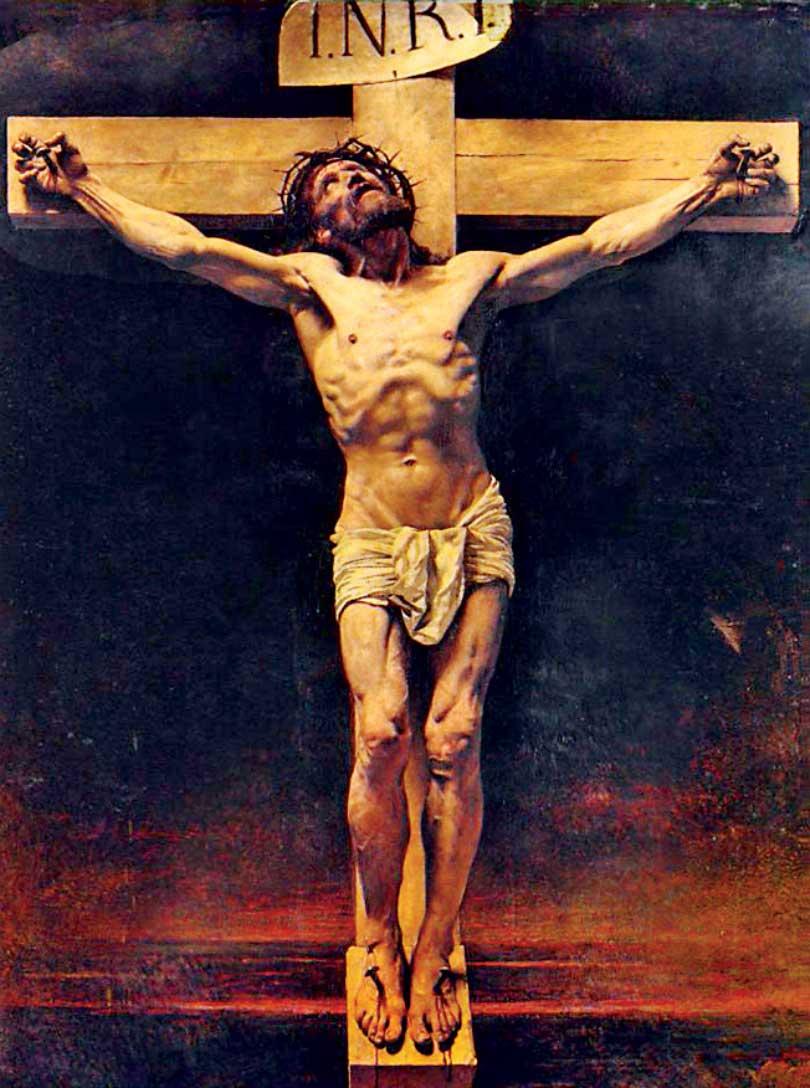
We hail Thee, Saviour and Lord, Thy Cross ever be adored!
 On this Good Friday, as millions observe the anniversary of a Roman execution two millennia ago, a haunting question hangs over the church pews and the city streets alike: If God is good, why do the innocent suffer?
It is the oldest wound in the human psyche. We can almost wrap our heads around ‘poetic justice’ – the idea that bad actions lead to bad outcomes. But when a child falls ill, when a natural disaster levels a village, or when the kindest soul in the neighbourhood faces a terminal diagnosis, our collective sense of fairness shatters. Philosophers call this the ‘Theodicy’ – the attempt to vindicate Divine goodness in the face of existence’s undeniable cruelty.
A primary Theological pillar for understanding suffering is the concept of ‘Free Will’. To create a world capable of genuine love, Theologians argue, God had to create a world capable of genuine harm. Love that is programmed is not love; it is automation.
In a secular context, this is often discussed as the ‘Cost of Autonomy’. If the universe were a place where gravity only worked when it would not hurt someone, or where fire only provided warmth, but never burned, the laws of physics would be inconsistent. A predictable, autonomous world requires a set of rules that apply to everyone – the just and the unjust alike.
C.S. Lewis, the 20th-century scholar and author, famously noted in The Problem of Pain: “God whispered in our pleasures, spoke in our conscience, but shouts in our pains: it is His megaphone to rouse a deaf world.”
From a secular perspective, this mirrors our understanding of biological and social evolution. Without the capacity for things to go ‘wrong’, there is no impetus for growth, no necessity for courage, and no definition for ‘right’. However, this does not fully explain the ‘just’ person who suffers through no fault of their own.
The Refiner’s Fire: Growth through Agony
Theology often points to the ‘Refiner’s Fire’ – the idea that suffering, while not ‘good’ in itself, is a medium through which the human spirit is tempered. The Holy Bible captures this sentiment in the Letter of Saint Paul to the Romans: “Not only so, but we also glory in our sufferings, because we know that suffering produces perseverance; perseverance, character; and character, hope” (Romans 5:3-4).
Secular thinkers often echo this ‘Soul-making Theology’. Viktor Frankl, a psychiatrist and Holocaust survivor, observed in Man’s Search for Meaning that those who survived the camps were often those who could find a ‘why’ for their suffering. He argued that “to live is to suffer, to survive is to find some meaning in the suffering.”
This does not mean that God ‘sends’ suffering only as a test – a common misconception that paints the Divine as a cruel lab technician. Rather, it suggests that in a broken world, the Divine capacity for ‘redemption’ means that no pain is ever truly wasted if it can be transformed into empathy or strength.
The ‘God Who Weeps’: A Good Friday Perspective
The unique claim of the Good Friday narrative is not that God explains away suffering, but that God truly participates in it.
Most ancient religions depicted gods as distant, impassive beings who toyed with human lives. Christianity flipped this script. The central image of Christian faith is not a throne, but a Cross. It is the image of a ‘Just Man’ – God Incarnate – dying a slow, agonising death.
Theologians argue that on the Cross, the ‘just’ suffered the ultimate injustice. As God is found in the Person of Jesus, then God is not a distant watchmaker looking down at a broken world with indifference. Instead, God is the victim of the state, the man betrayed by his friends, and the body feeling the sting of the lash.
As the German Theologian Jürgen Moltmann suggested, we do not worship a ‘Pathos-less God’. We worship a God Who is ‘Crucified alongside us’. When the innocent suffer, the Theological claim is that God is not the one inflicting the pain, but the one enduring it with them.
The Secular Mirror: Solidarity in the Dark
Even for the non-believer, the narrative of Good Friday holds a profound secular truth: there is a peculiar dignity in the ‘Suffering Servant’ (cf. Prophet Isaiah 52:13-53:12).
Consider the writings of Albert Camus, one of the most influential thinkers of the 20th century, particularly in The Plague. He suggests that in a world that often seems absurd and cruel, the only logical response is to work together to lessen suffering, even if we know we cannot defeat death itself. He writes: “There are more things to admire in men than to despise.”
When we see the ‘just’ suffer today – the healthcare worker who dies serving others, the whistleblower who loses everything for the truth – we are seeing a secular version of the Good Friday story. Their suffering is not ‘right’, but their response to it creates a moral gravity that pulls the rest of humanity toward goodness.
The Limits of Logic: The Silence of Job
We must be honest: No essay can provide a ‘fix’ for the grief of a parent or the pain of the persecuted. Intellectual answers often feel like ash in the mouth of someone in the midst of a crisis.
The Book of Job, the Holy Bible’s central text on innocent suffering, is also a very honest book in the canon. Job loses his children, his wealth, and his health. He demands an audience with God to ask ‘Why’? When God finally speaks, He does not offer a philosophical defence. Instead, He points to the complexity of the cosmos. “Where were you when I laid the earth’s foundation? Tell me, if you understand” (Book of Job 38:4).
It is a humbling reminder that our vantage point is microscopic. What looks like a tangled mess of threads from the back of a tapestry may be a masterpiece from the front. From a secular standpoint, this aligns with our scientific understanding of the universe – a vast, complex system where local tragedies are often the byproduct of larger, necessary laws of physics and biology.
The Existential Choice
If we cannot find a satisfying ‘Why’, we must turn to the ‘How’!
Good Friday is followed by the silence of Holy Saturday – the space between tragedy and hope. In that silence, we are forced to decide what kind of people we will be.
 Do we succumb to nihilism, deciding that since the world is unfair, nothing matters?
Do we cling to a false optimism, pretending that everything happens for a reason?
Or do we embrace ‘Tragic Hope’, acknowledging the horror of the Cross while working toward the renewal of the world?
The ‘just’ who suffer often become our greatest teachers. They show us that while we cannot control the arrival of pain, we can certainly control our reaction to it. They prove that human dignity is not something that is given by circumstances, but something that is forged in the face of them.
The Response to the ‘Why’
Ultimately, the ‘secular’ and the ‘sacred’ meet at the crossroads of ‘Action’. If we cannot fully explain why the innocent suffer, we can certainly decide how we respond to it.
The ‘goodness’ of God – or the ‘goodness’ of humanity – is often seen not in lightning bolts from Heaven, but in the hands of the neighbours who bring food, the doctors who fight disease, and the activists who demand justice.
As we walk through the shadow of this Good Friday, perhaps the ‘why’ remains a mystery so that the ‘how’ – how we love one another in the dark – can become our primary purpose! Thus, the Cross of Our Lord Jesus Christ is a constant reminder that even in the deepest suffering, we are not alone. There is a presence in the pain, and there is a morning coming, even if we cannot yet see the sun on the horizon!
(The writer is attached to the Catholic Bishop’s House, Kurunegala)