
Reply To:
Name - Reply Comment
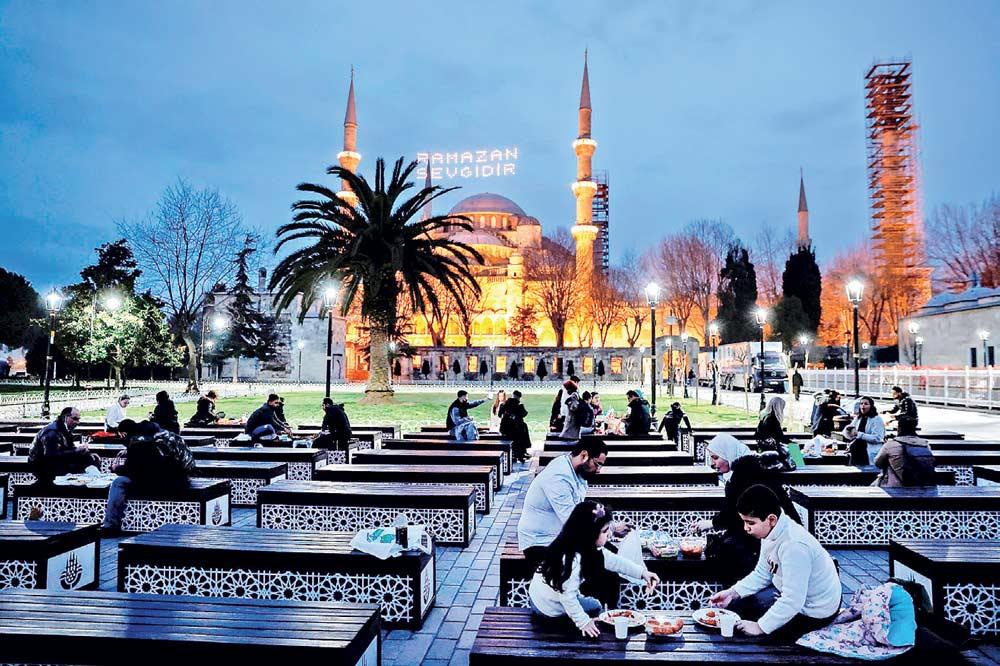
Fasting is one of the five pillars of Islam, designed to bring believers closer to Almighty God and to remind them of the hardships faced by those less fortunate (Pic credits to Daily Sabah)
 Fasting in Islam is a month-long training in self-discipline that frees the soul from desires and material greed
The science speaks for itself- fasting helps in improving health, including weight loss, preventing cancer and strengthening heart health
Businesses in Muslim-majority countries adjust working hours and practices, showcasing how spiritual observance shapes economic activity
Ancient philosophers like Hippocrates and Plato recognised fasting’s rejuvenating effects, predating modern scientific validation of its health benefits
Ramadan fosters compassion and community bonding, with Muslims coming together for meals and prayer while emphasising charity to those less fortunate
 Fasting during the blessed month of Ramadan is one of the most important duties of a Muslim. It is an act of devotion to their Creator and is obligatory for every Muslim who is both physically and mentally well. Observing the fast is one of the five pillars of Islam, designed to bring believers closer to Almighty God and to remind them of the hardships faced by those less fortunate. It helps to reinforce a genuine love for God, as those who truly love him understand the essence of selflessness. Fasting, is a month-long training in self-discipline that frees the soul from desires and material greed. It teaches that our carnal desires should serve us, since God has given us the power to control them.
|
Muslims come together to observe the fast, share pre-dawn meals, and break their fast at the time of adhan (call to prayer) of the Maghrib prayer |
The Qur’an states, “O, you who believe! Observing As-Saum (the fasting) is prescribed for you as it was prescribed for those before you, that you may become Al-Muttaqin (the righteous)” [V.2:183].
“Fasting is the first principle of medicine; fast and see the strength of the spirit reveal itself” – Rumi, a 13th-century Persian poet.
While abstaining from food and drink is an important part of fasting, it is equally crucial to avoid sinful behaviour such as lying, cursing, and backbiting, as these actions can nullify the benefits of the fast. Often overlooked, this aspect of fasting allows a person to purify not only the body but also the mind and soul. The experience of fasting—going without food and water from dawn to dusk for a month, cultivates empathy for those in hunger and nurtures qualities like patience, gratitude and humility. If a person fasts without understanding its true meaning or with indifference, they miss out on its deeper benefits and divine support granted to them. Fasting is mandatory for adult Muslims, except for those who are ill, elderly, pregnant, breastfeeding, menstruating or travelling.
History, Theology and Health Benefits
Historically, fasting was recognised for its health benefits by early philosophers and healers. Figures like Hippocrates, Plato, Socrates, Aristotle, Paracelsus and Galen praised fasting for its rejuvenating effects. Evidence suggests that ancient civilisations have used methods of ‘starvation’ to help their bodies recover, like the Egyptians and Greeks who understood the healing power of fasting and often used it to treat diseases. Even before the rise of advanced civilisations, hunter-gatherer societies practiced intermittent fasting and benefited from its health-promoting properties.
Fasting is a practice found across many religions and philosophies, including Christianity, Judaism, Islam, Buddhism, Hinduism and Taoism, all of which use fasting for spiritual purification, penance, or personal sacrifice. Throughout history, great religious figures have fasted, achieving significant spiritual growth. Gautama Buddha in Buddhism, Jesus (pbuh), David (pbuh) and Moses (pbuh) in Christianity and Islam are a few notable examples.
Modern science has begun to uncover the numerous benefits of fasting, which are now being recognised by physicians worldwide. Fasting is praised as a remedy for many modern ailments, enhancing both physical and mental well-being. It promotes weight loss by breaking down fatty tissues and boosting metabolism, stabilises blood sugar by reducing insulin resistance and strengthens heart health by improving blood pressure and cholesterol levels. Studies have shown that fasting also helps in the prevention of cancer by reducing tumor growth and the prevention of neurodegenerative disorders. The body has a unique ability to adapt and heal from within, thus, fasting assists in this process and improves overall health.
Community and Social Impact
A strong sense of community bonding is enhanced during Ramadan, as Muslims come together to observe the fast, share pre-dawn meals, and break their fast together. Muslims dedicate time to reading the Qur’an, giving zakat (charity) and engaging in Taraweeh (special night prayers) during this holy month. Many businesses and organisations run by Muslims around the world adjust their working hours during Ramadan to accommodate religious observances. In Muslim-majority countries, offices are legally required to reduce working hours, and many restaurants close during the daytime.
Furthermore, by experiencing deprivation firsthand, individuals gain a deeper understanding of poverty and hardship. This fosters gratitude for God’s provisions and kindness toward those in need. This is why the practice of Zakat, or obligatory charity, is particularly emphasised during Ramadan. Muslims are required to donate 2.5% of their total wealth to the less fortunate, supporting the spirit of compassion and generosity during this blessed month.