Reply To:
Name - Reply Comment
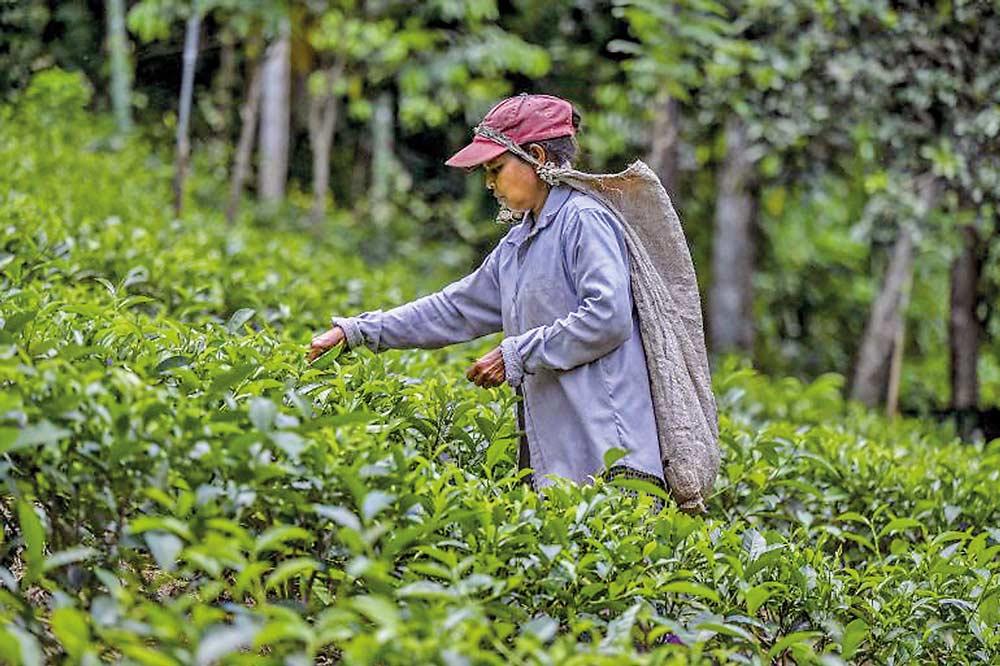
The average estate worker is over 45, with no new generation waiting to replace them—a stark reality facing Sri Lanka’s once-thriving plantation sector. Image source: AFP
 The average age of an estate worker today is well above 45, and the sector has no young labour force willing to take up field work
When the Regional Plantation Companies took over estate management in the early 1990s, the plantation sector was producing around 180,000 metric tonnes of tea. Last year, that sector produced around 70,000 metric tonnes
Sri Lanka has lost more than half its plantation tea output over a period of thirty years, and as a nation, we barely noticed
 For more than a century, Ceylon Tea was not just an export crop, it was the main foreign exchange earner for the country. It was a national inheritance—an agricultural engine left behind by British planters who, whatever one may say of colonial exploitation, built an industrial and managerial system of extraordinary discipline. They did something else rarely acknowledged today: they trained Ceylonese (Sri Lankan) superintendents and estate managers to run those plantations with the same precision and discipline when the British eventually departed. After independence and through the early years of nationalisation, these Sri Lankan planters maintained excellent agricultural standards, meticulous field supervision, and efficient manufacturing. The standards remained high even as costs rose through labor salary hikes, because these managers had been trained by those who knew that the industry’s success depended on uncompromising discipline from leaf to auction. Yet today, the same plantation sector that once fed our economy has collapsed to a shadow of its former self. And the most remarkable part is this: Sri Lanka has lost more than half its plantation tea output over a period of thirty years, and as a nation, we barely noticed.
A Decline Hidden in Plain Sight
When the Regional Plantation Companies (RPCs) took over estate management in the early 1990s, the plantation sector was producing around 180,000 metric tonnes of tea. Last year, that sector produced around 70,000 metric tonnes. That is not a mild decline. It is a structural collapse.
So why is the country not alarmed?
Because the fall in production has been masked by the rise of tea smallholders, who expanded their output and kept Sri Lanka’s total annual production near the 200,000 metric ton mark. The national figure stayed stable, and the illusion of a functioning plantation sector remained intact.
The RPC Profit Paradox
If production has fallen so drastically, how is it that several plantation companies reported billion-rupee profits and paid handsome dividends and bonuses?
The uncomfortable answer is this:
These profits were achieved not by strengthening the estates, but by extracting value from a dying asset.
To control the Cost of Production (COP), RPCs reduced their resident workforce through golden handshakes and strict no-recruitment policies. The average age of an estate worker today is well above 45, and the sector has no young labour force willing to take up field work.
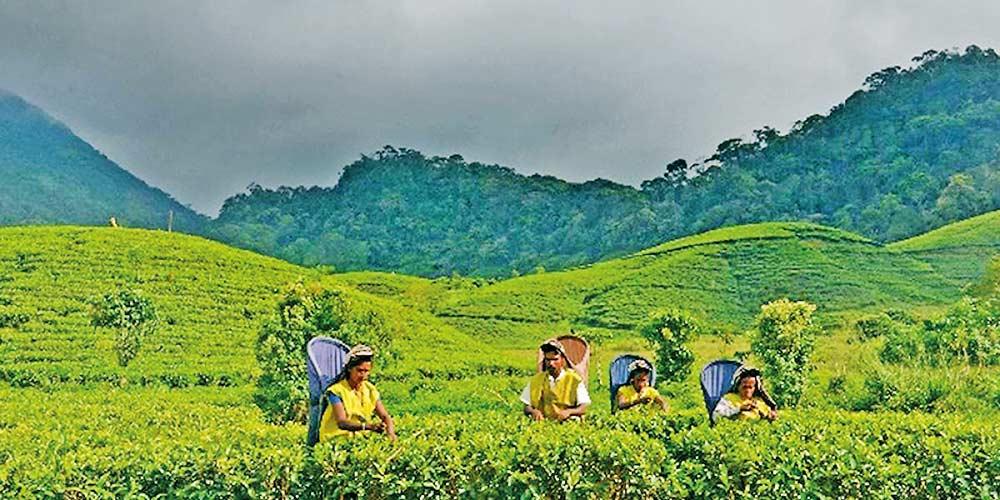
To compensate, many companies outsourced plucking, resulting in what any old-school planter would call unacceptable harvesting standards. The once famous “two leaves and a bud” became three, four, or five leaves—often without a bud at all. The raw material deteriorated, and so did the output.
Other consequences followed:
And yet, profits continue—because the industry is not being developed. It is being harvested down to its roots.
Why This Cannot Be Reversed
Some believe that all it would take to restore Ceylon tea to its old glory is better management, stronger policy, or a return to the values of the past. That is a comforting idea, but it ignores the fundamentals.
 A true revival would require:
None of these conditions exist today.
Even if wages were substantially raised, there are not enough workers willing to return to estate labour work. Training new workers requires experienced trainers, whose knowledge is already disappearing. And in a world of lower-cost producers—Kenya, India, Vietnam—who will invest billions in an uncertain recovery?
The old plantation system depended on structural advantages that no longer exist: cheap land, cheap labour, reliable reinvestment, and a stable export market. Those conditions are gone, permanently.
A Reckoning Long Avoided
Successive governments must also answer for this outcome. The decline did not happen out of sight. It happened in silence. Policymakers saw shareholder returns, tax receipts, and export totals and assumed the model was intact.
It was not intact. It was being slowly dismantled.
Sri Lanka did not manage an agricultural sector. It presided over a long liquidation—an asset stripped in slow motion.
We require, at minimum:
The Strategic Pivot Sri Lanka Must Make
If the best days of large-estate tea are behind us, what then?
Sri Lanka must now shift from the illusion of commodity revival to value-driven, specialty-based tea economics, where smallholders and artisanal producers have already shown promise. Equally, we must look beyond tea to new sectors,—technology, services, tourism, renewable energy—rather than pretending one plantation crop will carry us into the future.
In terms of agriculture, coffee could be developed to replace tea. Needs much less labor. Coffee was first introduced in the 18th century.
The Illusion Ends Here
Ceylon tea earned this nation foreign exchange, identity, and pride. But today, we stand in a different century, in a different world. The industry’s decline is not a temporary misfortune. It is a structural reality.
The sooner we stop romanticising what cannot be restored, the sooner we can build what might still succeed.
The great tea estates will not return to their pristine glory. But Sri Lanka’s future can still be prosperous—if we finally choose to see what is right before us.
Key takeaways
The writer is a Former Chairman State Plantations Board 2, Director Board VI, CEO Kelani Valley Plantations Ltd., Senior Visiting Agent, Senior Superintendent and Advisor to the Ministry of Plantation Industries in 2017-2018 and again in 2021.

The writer can be contacted by email; [email protected]