Reply To:
Name - Reply Comment
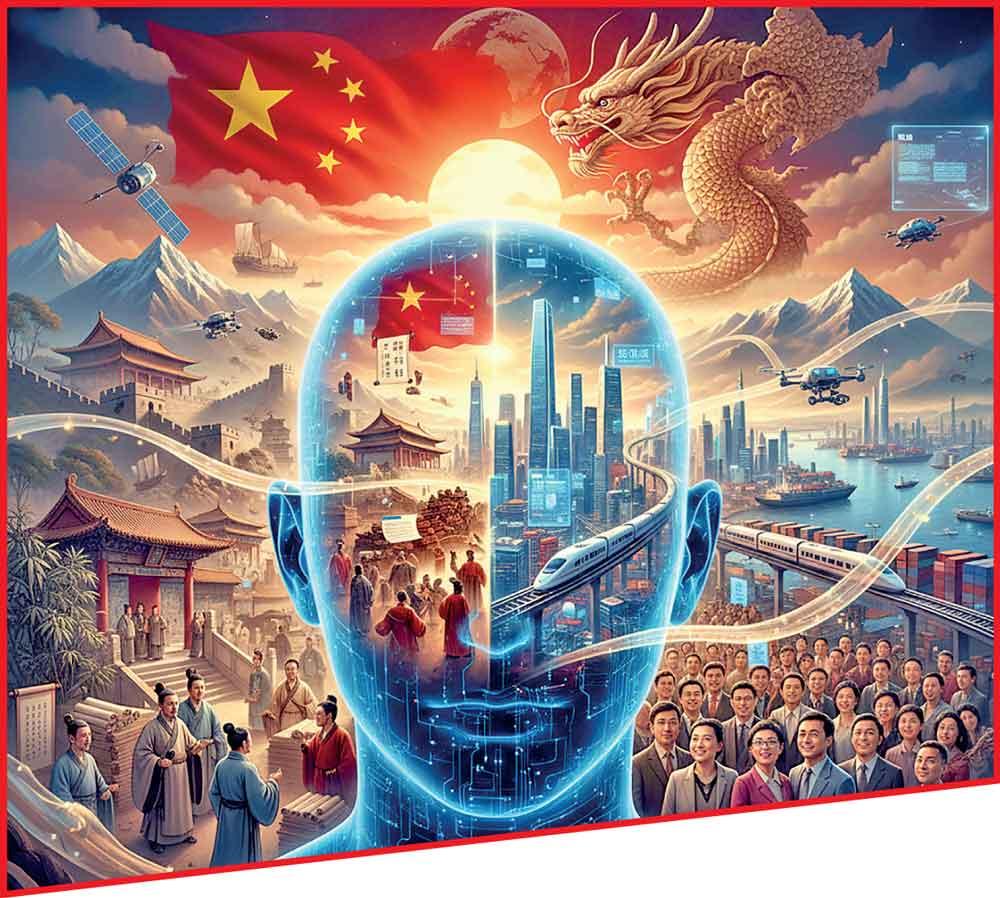
 In the fast-changing world of the 21st century, few stories are as remarkable as the rise of China. Nations grow and decline, ideas change and societies transform. Yet understanding the inner character of a nation – its “psyche” – is never simple. It is shaped by history, culture, beliefs and the everyday lives of ordinary people.
China presents one of the most fascinating examples of this process. A country with one of the oldest civilizations on earth, China has experienced dramatic shifts in fortune over thousands of years. In recent decades, however, its transformation has been nothing short of extraordinary. For this reason, many observers describe the present era as “the Century of China.”
To understand modern China, one must first look back. Long before Europe became the center of global power, China was already a leading civilization. Until the 17th century, it was among the richest and most advanced societies in the world. Historians estimate that China once accounted for nearly a quarter of global economic output.
But history was not always kind. The 19th century brought a painful period of decline. Foreign invasions, unequal treaties and the Opium Wars weakened the nation. China lost territory, confidence and international standing. What followed was a long era often remembered as a “century of humiliation.”
Yet China did not remain broken. After the establishment of a unified state in the mid-20th century, the country slowly rebuilt itself. Strong national leadership, economic reforms and social discipline helped to lay new foundations. Step by step, China began to rise again. Today it is a central player in global affairs, confident and influential.
One of the clearest signs of China’s resurgence is its focus on education and knowledge. The country now has more than 3,100 universities and higher learning institutions. Every year, around six million students graduate, including nearly three million engineers. This vast pool of skilled manpower has powered China’s technological revolution. In recent years, China has become the world leader in registering new patents, showing its growing strength in innovation and research.
Economic progress has been even more striking. Only a few decades ago, China was counted among the poorest countries in the world. Around 90 percent of its people lived in extreme poverty. Today, China is the world’s second-largest economy, surpassed only by the United States. Chinese-made products are found in homes and markets across the globe. From smartphones to high-speed trains, from robotics to Artificial Intelligence, China has become a technological powerhouse.
A major reason for this success is China’s huge domestic market and its ability to produce goods on an enormous scale. The country has mastered the art of large-scale manufacturing and built complex supply chains that connect factories, cities and ports in an efficient network.
Infrastructure development has played a vital role in this progress. Over the past few decades, China has constructed highways, bridges, airports, seaports and high-speed rail systems at breathtaking speed. Modern bullet trains link distant provinces. Subways and expressways connect expanding cities. Rural areas are tied to urban centers through new roads and communication networks. Even advanced drone technology is used for transport and delivery in some regions.
China has also revived the ancient Silk Road idea in a modern form, creating new land and sea routes that link Asia, Europe and Africa. These networks have strengthened trade and increased China’s influence far beyond its borders.
The social results of this development are clear. Poverty, once widespread, has almost vanished. In 1978 nearly nine out of ten Chinese citizens lived below the poverty line. By 2025, that figure has fallen close to zero. At the same time, a large and confident middle class has emerged, giving China one of the strongest consumer markets in the world.
Still, Chinese leaders often remind the world that economic growth alone is not enough. True development, they argue, must improve the overall quality of life. It should expand people’s freedoms, opportunities and abilities. Education, health care, social stability and cultural harmony are considered just as important as income levels.
This raises a deeper question: what drives the Chinese people to pursue national progress with such determination? Why does social unity remain so strong in such a vast and diverse country?
The answer lies in China’s unique cultural mindset. Around the world, societies differ in their values. Western cultures often emphasize individual achievement. In South and Southeast Asia, the family tends to be the center of life. In China, however, the focus has traditionally been on the community.
For centuries, Confucian philosophy has shaped Chinese thinking. Respect for elders, loyalty to society, discipline and collective responsibility are deeply rooted values. Personal success is admired, but it is expected to serve the greater good. The individual is seen as part of a larger whole.
This community-oriented outlook has helped China maintain social stability and pursue long-term national goals. It has encouraged people to accept shared sacrifices and work together for common progress. Many scholars believe that this mindset has been a key factor behind China’s rapid economic growth and relatively balanced distribution of resources.
Modern Chinese thinkers express their national vision in simple but powerful terms: “the greatest share of wealth for the greatest number of people, and the opportunity for peaceful and harmonious living.” This idea guides both domestic policies and China’s approach to international relations.
The story of China’s rise from poverty to global power is one of the most important developments of modern history. It shows how deeply culture and national character can influence economic and social success.
As the world moves further into the 21st century, China’s experience offers important lessons. Whether admired or debated, its journey demonstrates the power of unity, long-term planning and a strong sense of collective purpose.
For nations seeking progress and stability, the psyche of this emerging giant remains a source of inspiration – and a subject worthy of close attention.