 Kamanthi Wickramasinghe
 Reply To:
Name - Reply Comment
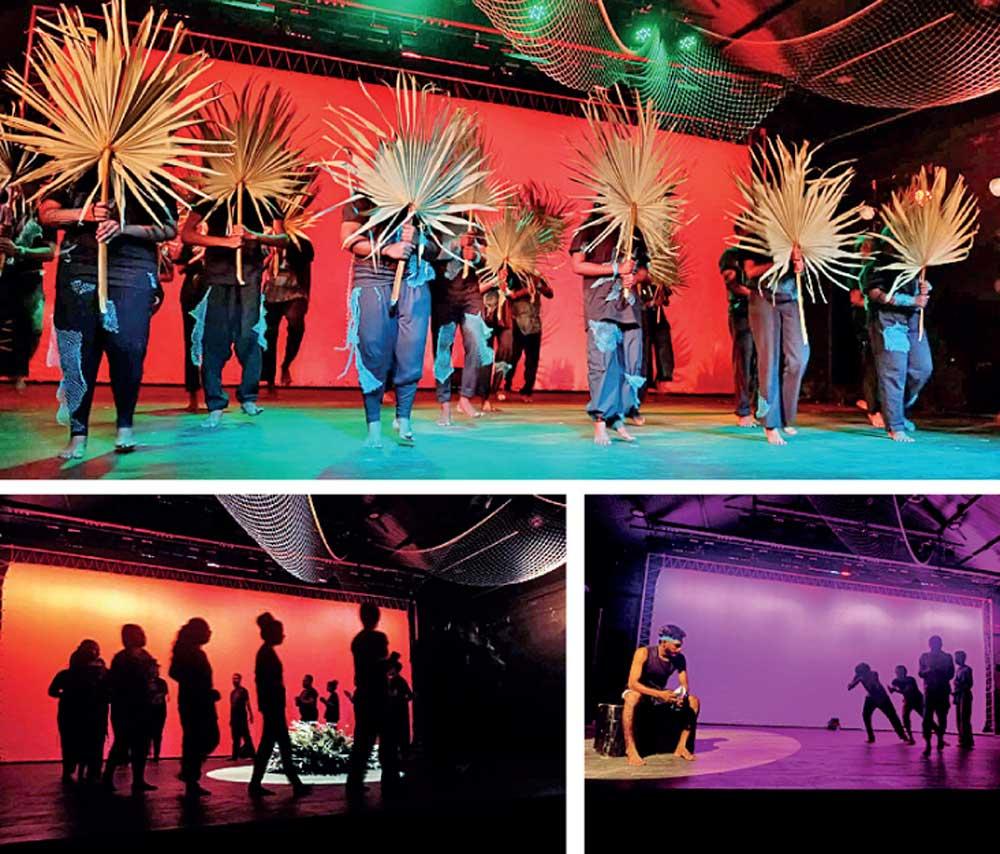
A majority of the performers were from Mannar dramatising their own experiences. Pics by Kithsiri De Mel
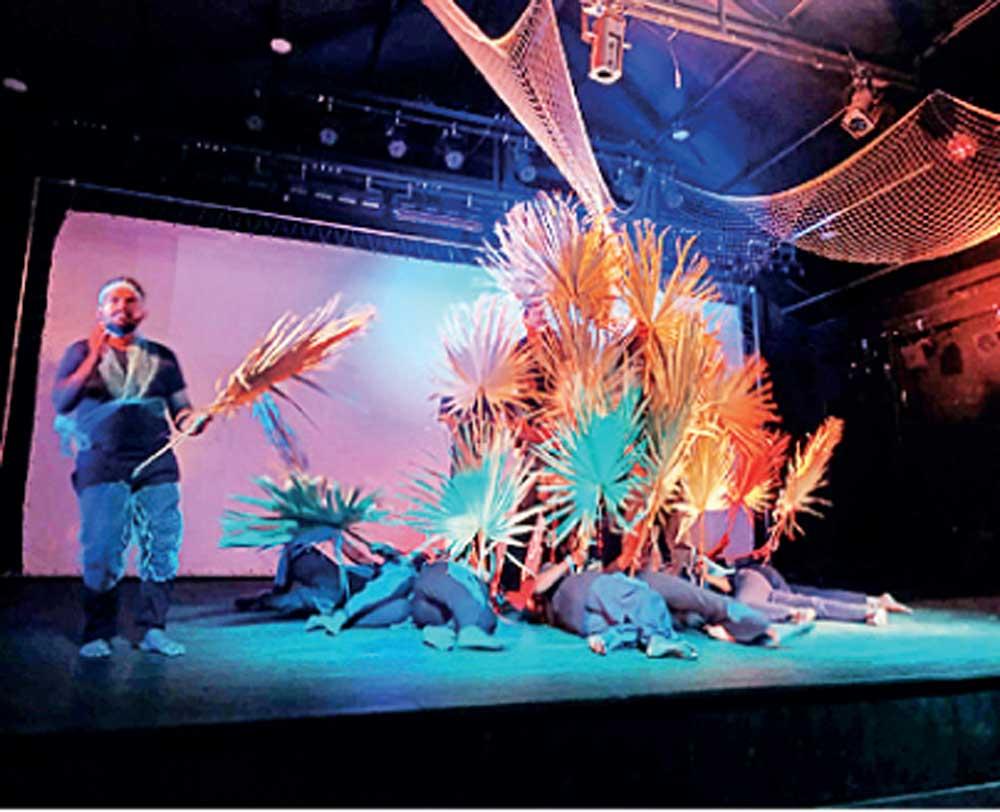
A powerful rendition of theatre, movement, music and storytelling brought to life ‘Stories of the Sea: Voice of Mannar’ at the Kamatha, BMICH on Sunday (7). At the heart of this performance were the stories of coastal communities in Mannar. It reflected on their memories, livelihoods, impact of climate change on their lives and how they are bouncing back as a resilient community.
The performance was the result of a collaborative creative process involving artists from across the region, and community members from Mannar, initiated by Greenpeace South Asia. The creative process was supported by the Stages Theatre Group, Sri Lanka, BERU Art and Cultural Foundation, India and Adavi Arts Collective, India.
Inspired by ‘Alaikadal’, a dance drama event that showcased the traditional lifestyles of the coastal fishing community of Dhanushkodi, Tamil Nadu, directed by Junafar Juno and staged in Mannar recently, the community members in Mannar were trained to bring their stories to life. What was quite unique about this performance is that a majority of the performers were from Mannar who have experienced the gamut of these issues first hand.
Mannar was once a city bustling with life, having a rich history of its own, from being an ancient port that attracted Roman, Greek, Arab and Chinese traders to a town that was known the world over for its pearl fisheries. But today, Mannar, particularly Mannar Island, is at a crossroads, becoming highly vulnerable to climate change as well as shortsighted developmental projects.
The performers narrated stories from their childhood. One performer spoke of the sound of his grandmother making tamarind paste. “But today, this pleasant sound has been overrun by the noise of the wind turbines along Mannar’s coastline,” he said.
He satirically indicated that there’s energy in the clouds but people are in the dark, and that many homes depend on candlelight despite government’s promises of generating electricity. “A candle is doing the task of a ministry,” he added.
Another performer recalled how the sea used to be miles away from her home. “Today, the sea has come to our doorstep,” she said in an emotional tone, highlighting issues pertaining to coastal erosion and vulnerabilities faced by coastal communities.
One performance indicated the decline in fish populations in the area. “There was a time when our fishing nets were full of fish. But now there’s more seaweed and around six tiny fish,” said another performer.
The performance was designed in a way to make the audience reflect on how people themselves have destroyed coastal areas. It highlighted how governments have given these people false promises, taken away their ancestral lands and cheated villagers in the East. Another performance highlighted issues pertaining to saltwater intrusion into groundwater.
“The sea is part of our life and our identity,” noted R. Sheran, a community performer from Mannar, while adding that this performance was a great opportunity for them to share their stories.
Speaking to the Daily Mirror, actor, filmmaker and director Ruvin De Silva said that the initial idea was to bring this theatre company from India to come and perform in Sri Lanka.
“But instead of coming to Colombo, we thought of taking that performance to Mannar to inspire the local community. Then we thought of keeping a few members from this theatre company here to train the community members. We always wanted to tell the stories of Mannar and we thought theatre would be a great tool to bring out this message. So the Indian team performed their original production in Mannar and the very next day we started this training process. Everything happened in a short span of about two weeks. Everyone who performed today are from Mannar, and around four of them are from Colombo. The main artistes were from India and Sri Lanka both, so it was a big collaboration,” he added.
He said that their objective is to see that these stories travel around the country. “It’s a coastal story and it relates to a lot of coastal communities, and even people from urban areas and policymakers,” he noted.
The performance was showcased in view of World Oceans Day which fell on Monday (8). Simultaneously, a new report was launched by Greenpeace South Asia titled ‘Global Ocean Justice Now: Making the Case for a Human Rights-Based Approach to Marine Conservation’, founded in long-standing collaborating with impacted communities. The report warns that the global target to protect at least 30% of the world’s oceans and other vital ecosystems by 2030 is on a path to failure, unless governments place human rights at the centre of marine conservation.
Greenpeace South Asia urges state parties and all individuals to recognise the longstanding connection between people and the ocean, and the need to preserve ocean ecosystems.
When people of Mannar heard that more wind turbines would be installed on Mannar Island, they got together and staged a protest that continued for over 100 days, until the government reversed its decision. The performers ended their performance by indicating that they are a resilient community and would stand together against all odds.