Reply To:
Name - Reply Comment
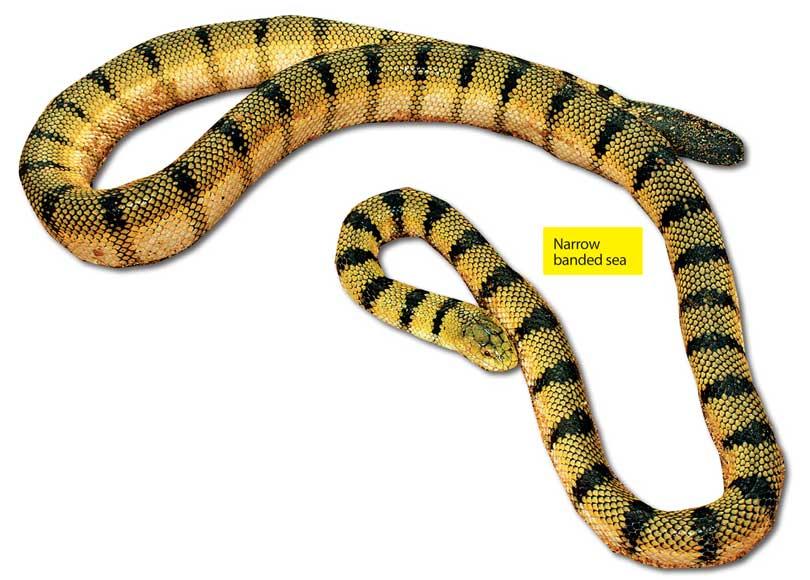
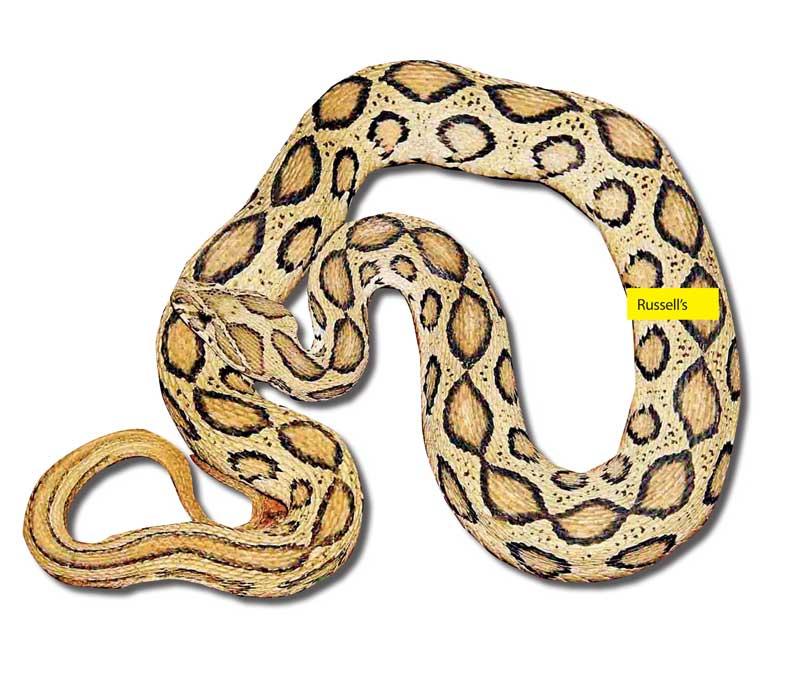
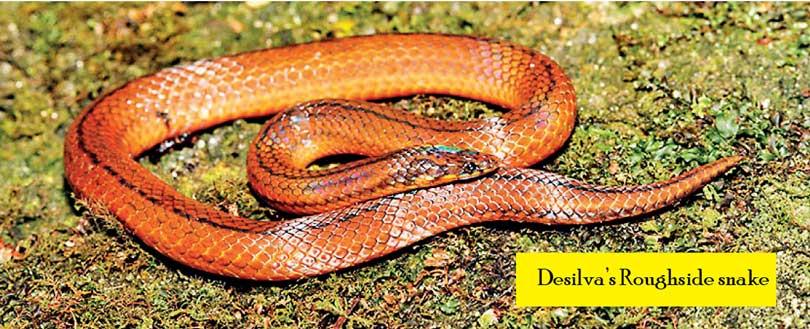
 |
 |
 |
Snakes are perhaps the most feared creatures that slither on earth, with many bludgeoned to death during chance encounters with humans. However, attitudes toward killing snakes have seemingly shifted in the past decade, with many in the younger generation showing more curiosity about these creatures, shared Dr. Kanishka Ukuwela, Senior Lecturer in Zoology at the Rajarata University. “I don’t think there are any studies on the trends in killing snakes in Sri Lanka, but I have observed a slight shift in people’s perception and attitudes towards snakes, especially among the current generation. Rather than killing snakes, they want to identify the snake first and then decide what needs to be done with it. This is probably due to the rise of Facebook groups where people immediately post photos of snakes found in their homes or neighbourhoods, trying to get them identified. This is a good trend, I suppose,” Dr. Ukuwela remarked. Even in rural areas such as Anuradhapura and beyond, where snakebites are common, Dr. Ukuwela believes that attitudes are slowly shifting in a positive direction, although more venomous species may still be killed. “But there is at least an initial attempt to identify the snake,” he noted. Sri Lanka is home to a total of 110 identified species of snakes. Of these, 59 are endemic, and 37 species are currently threatened with extinction, according to Dr. Ukuwela.
Rescuing snakes slithering into homes
Since he was just 15 years old, Bhasuru Prabashwara has been rescuing serpents that creep into homes within the Colombo District. Documenting each rescue on his Facebook page, he now receives at least three to four calls a day seeking his help.
“Among venomous snakes, most calls are for rescuing spectacled cobras, while Russell’s vipers are rare. Apart from that, we also get calls about wolf snakes and rat snakes. In those cases, we inform people that they are harmless and advise them to keep doors and windows open so the snake can find its way out. Thanks to social media, many people are aware that it’s not good to kill snakes,” Prabashwara stated.
Driven by his love for animals, especially snakes, he pursued his studies in natural science, specialising in zoology. He also conducts lectures on snakes for tour guides at the Sri Lanka Institute of Tourism and Hospitality Management.
Balancing the ecosystem
Snakes are often depicted as vicious creatures waiting for any opportunity to attack humans, but in reality, they play an integral role in the ecosystem.
“They are carnivores, so they are part of the food chain, and in turn they become prey to other animals such as birds, fish and reptiles like monitor lizards,” Dr. Ukuwela noted.
“Snakes are the top predators of rodents,” explained Dr. Anslem De Silva, prominent biologist, herpetologist, and author of several books and publications on reptiles in Sri Lanka. He added: “As you know, rodents can cause plagues, destroy grain, and also be a menace to humans. In India, during colonial rule, the British promised a cash reward for those who killed snakes. This led to an increase in snake killings. Within just a year, the rodent population had increased and consumed more grain than what was produced in that year. A plague also spread. Thus, it shows that snakes play a major role in maintaining the ecological balance by controlling rodents.”
Emphasising that killing snakes harms the environment, Prof. Sampath Seneviratne, Professor of Zoology at the University of Colombo, pointed out that snakes are the true workers keeping rodent numbers down in cities and villages. “The reduction of snakes in urban areas is why we see so many mice and rats. Owls and snakes are the true pest controllers. Each owl will consume large numbers of rodents, especially the smaller ones,” he explained.
He further noted that Sri Lanka also benefits from snake-based tourism, with ophiologists arriving on the island to study snakes, chameleons, reptiles and lizards. “So there is both an environmental and an economic benefit from snakes,” he remarked.
Meanwhile, Dr. Ukuwela added that all organisms are interlinked, and removing one could destabilise the entire ecosystem. He underscored that the full extent of snakes’ contributions to the ecosystem may not even have been studied yet.
Fear of bites leading to killing of snakes?
According to Dr. Anslem De Silva, most people kill snakes out of fear of snakebites, which can result in death. If a person is bitten by a snake, the family and neighbours would no doubt kill the snake on sight.
Dr. Anslem De Silva also noted that roadkills should be factored in when discussing snake deaths. “Due to rapid urbanisation, roads are being built. Studies have shown that roadkills are a major threat not only to snakes but also to amphibians, lizards, turtles, and even elephants. Many snakes are run over by vehicles and killed. Strangely, in the past few years my colleagues and I have observed fewer roadkills, perhaps due to a decline in the snake population. When the Mahaweli Project began, I did a consultancy on snakebites and snakes. I found that most drivers involved in the project deliberately ran over snakes when they saw one on the road.”
Together with one of his herpetology students, Dr. Anslem De Silva conducted a study between March and December 2006 in Mihintale to observe patterns of reptile mortality due to road traffic. The study revealed that of 136 reptiles killed, 110 were snakes.
He further noted that habitat fragmentation and the use of agrochemicals are also significant threats to snake populations.
Evolutionary fear of snakes driving kills?
There may be an evolutionary aspect that drives some people to kill snakes, said Prof. Anjana Silva, Chair Professor of Parasitology at Rajarata University. “According to research, certain primates, even those that have never seen a snake in their lives, show fear when they encounter one for the first time,” he stated.
This is because, as Prof. Anjana Silva explained: “The early primates evolved a fear for warning signals in the form of potentially harmful triangular shapes such as teeth, claws or spikes, not for snakes per se. It is hypothesised that this adaptation was in turn exploited by snakes in their anti-predatory threat display as a triangular head.”
Meanwhile, Dr. Ukuwela noted that children are not afraid of snakes, which may indicate that fear of snakes is not a genetic predisposition. However, monkeys that have been raised entirely in captivity still display fear when exposed to snakes. “Parents usually instill the fear of snakes in their children, often as a way of keeping them indoors,” he explained.
Speaking of fear of snakes being inherited, Prof. Anjana Silva observed that the neural pathways that allow the expression of fear may take time to develop. “Although fear may be inherited, expressing it could take time,” he said. However, he stressed that these are among various hypotheses put forward, which means that they may not be necessarily true.
Are snakes killed out of necessity?
According to Prof. Anjana Silva, snakebites are a major issue in rural Sri Lanka, with around 400 bites per 100,000 people each year,. Although not all snakebites result in envenoming (leading to toxic effects of venom) the numbers are still high, at around 150 envenomings per 100,000 annually.
“Of all species of snakes in Sri Lanka, only a few are venomous,” Prof. Silva explained. “But the issue is that while most of the non-venomous snakes are distributed in forests and areas away from human habitats, the few venomous snakes — particularly, Russell’s vipers, hump-nosed vipers, kraits and cobras— are found around human settlements and cultivations. Russell’s vipers are common in cultivations; hump-nosed vipers are found in home gardens; kraits slither into partially built houses, often biting people who sleep on the floor, who are mostly farmers; and cobras are found around cities and towns as they feed on rats and mice.”
In dry zones like Anuradhapura, where Prof. Anjana Silva works studying snakebites, encounters with venomous snakes are so much a part of daily life that people have seen or experienced them throughout their entire lives. “So naturally, they take extreme measures to prevent it from happening, and that is, killing a snake when they see one so that they can protect themselves and those around,” he emphasised.
“Snakebites are not accidents but rather the result of the overlap of three factors: first, an abundance of habitats of venomous snakes; second, humans carrying out their daily activities in snake habitats; and third, the climate which favours activities of both humans and snakes,” Prof. Silva noted. “During months between the agricultural seasons— where the rainfall is low, when paddy has already been harvested and fewer people are engaged in cultivation — snakebites are less common due to reduced exposure. When the rains begin and people return to the fields, we see a surge in patients admitted with snakebites. This is because environmental factors such as temperature and moisture provide ideal conditions for snakes, causing them to emerge in search of prey while the number of humans engaging in daily activities within these habitats also increase. Therefore, it is the overlap of these factors that leads to snakebites,” he explained.
From a conservation perspective, Prof. Anjana Silva pointed out that most snakes that are found around human settlements and are responsible for envenoming are not species threatened by extinction, but are quite common non-endemic species. “However, this doesn’t mean they should be killed,” he stressed further.
No snakebite prevention programmes
According to Prof. Anjana Silva, snakebites are a preventable issue,. “Most vipers are ambush predators and they hide while looking for their prey. They hide among leaf litter and wait until a prey draws near; but when people move around, they could step on a snake and get bitten. This is preventable if they wore protective footwear. When collecting firewood, they should be encouraged to use long-handled tools. Then, the issue of snakebites will be minimised. But the problem is that there are no snakebite prevention programmes to educate the people who are most affected by this. One reason for this is the lack of research to understand what drives snakebites. With sufficient research, prevention programmes could be developed.”
He further underscored that the lack of research into snakebites is because this is an issue that affects only the most underprivileged communities in rural Sri Lanka. “For instance, public awareness about dengue is reasonable; but the public knows little to nothing about snakebites. Snakebites may not have epidemic potential like dengue. However, when there are no outbreaks, the number of dengue patients and snakebite patients per year are largely comparable. Yet among the general public, snakebite isn’t considered a big issue. For those in Colombo and other major cities, snakebites aren’t a problem — even the richest person in Colombo can fall victim to dengue, because dengue affects everyone across all socio-economic levels. But when it comes to snakebites, it is a poor man’s disease. That’s why there are no prevention programmes and no one is investing in them,” he stressed.
Do dead snakes draw other snakes in?
There is a common belief that the scent of a dead snake attracts other snakes to the same location. As a result, many people burn the carcass, while some pour milk over it to mask the scent, before burying it or discarding it far away from their homes. The Daily Mirror asked Dr. Ukuwela if there is there any truth to this. He stated that there could be.
“Snakes communicate with others of their species by indicating their presence through the release of certain chemicals called pheromones. This happens especially between the sexes, where the female emits pheromones that attract the males, particularly during the breeding season. If a female is killed during this season, the carcass will still emit the scent, which can draw in males. That is the reason behind the practice of burning the carcass,” Dr. Ukuwela explained.