Reply To:
Name - Reply Comment
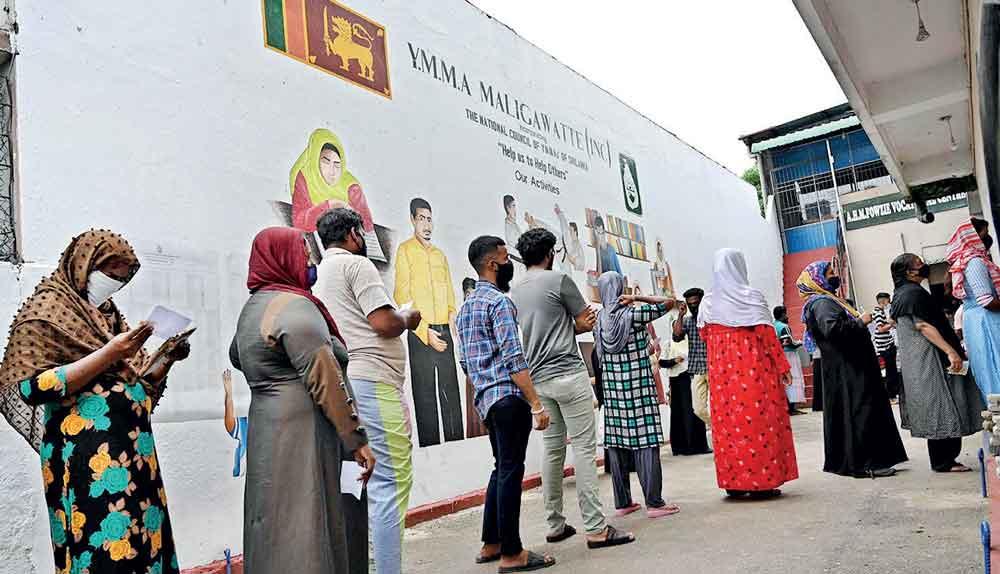
Women voters at a polling station
 Women are counted to meet quotas, but excluded from meaningful participation and leadership
Within the old guard of national parties, minority women must compete with minority men for representation and party positions
While minority women contribute significantly to Sri Lanka’s economy they remain largely invisible in politics
By Mirudhula Thambiah
A newly launched study on minority women’s political representation in Sri Lanka highlights a persistent democratic gap, where women are counted to meet quotas, but excluded from meaningful participation and leadership. The research warns that without structural reforms within political parties and stronger advocacy, increased numbers alone will not convert into real political power.
Recently, “Between tokenism and invisibility: Minority women’s political representation in Sri Lanka”, a research conducted by the Centre for Development and Emergency Practice (CENDEP) at Oxford Brookes University, in partnership with Minority Rights Group (MRG), Eastern Social Development Foundation (ESDF), Human Development Organisation (HDO) and Sri Lanka Development Journalist Forum (SDJF) was launched.
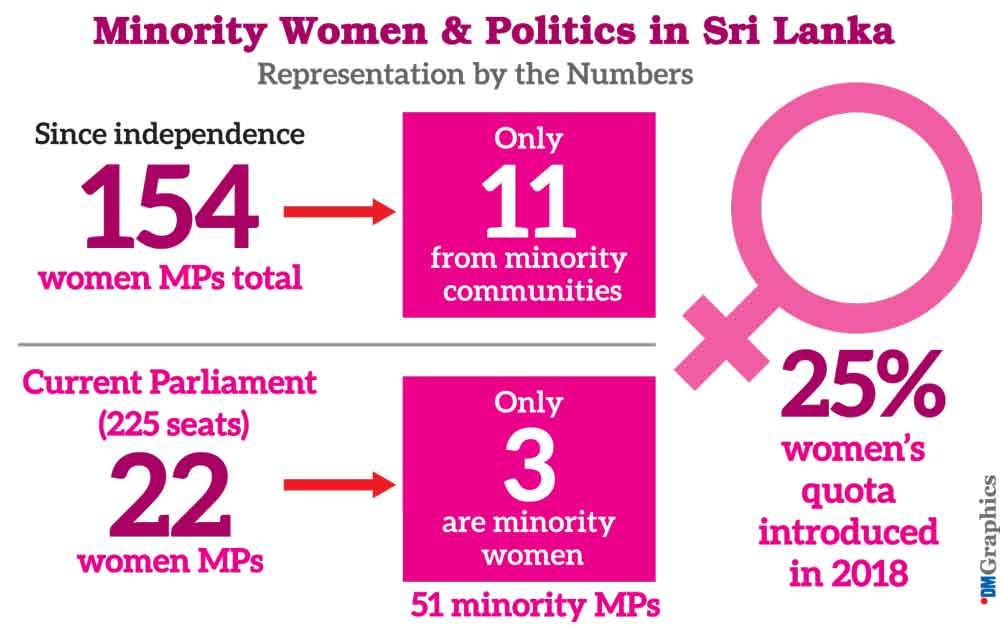
This research was Co-authored by Farah Mihlar, Akeela Shadhique and Dharsika Sivapragasam. The report highlights that minority women in Sri Lanka face multiple, intersecting challenges in political participation. Their ethnic, religious and caste identities intersect with gender, creating obstacles that limit both their entry into and success within electoral politics. While minority women contribute significantly to Sri Lanka’s economy through tea exports, remittances and leadership in sectors such as media, law, civil society and education, they remain largely invisible in politics. The research pointed out that since independence, of the 154 parliamentary seats held by women, only 11 have been from ethnic minority communities. In the current 225 member parliament, just three women are from minority communities, out of 22 women and 51 minority representatives. Except in isolated cases, where women enter parliament through the legacy of their husbands, they are used symbolically by mainstream national parties to demonstrate diversity or to meet the 25 percent quota for women’s representation introduced in 2018. The research highlights that this tokenistic approach doesn’t convert into substantive political influence or leadership opportunities. Within the old guard of national parties, minority women must compete with minority men for representation and party positions, making it extremely difficult to advance.
The research states that the 2024 victory of the National People’s Power (NPP) brought a significant increase in women’s representation, fielding 20 of the 22 women parliamentarians. Yet, only three of these women are from minority communities.
Barriers beyond numbers
In Sri Lanka, women from minority communities continue to face an uphill battle for political representation, often included as tokens rather than decision makers.
Explaining the findings, one of the Co-authors, Dharsika Sivapragasam, who is also the Human Rights and Legal Associate of Human Development Organisation (HDO), said that although women are counted numerically in political structures, real power continues to remain with men. “Technically, when we count men and women together, men are representing and women are being tokens in politics,” she said.
Within political parties, Sivapragasam said, women are often included merely to meet quota requirements rather than to participate in decision making. “Party leaders are just including women to fill up the quota, both at the local level and the national level,” she said. She added that women are frequently assigned organisational roles such as coordinating community events, programmes and cultural activities, while being excluded from leadership and policy discussions. “They are not included in decision making. Whatever the situation is, they are just being there as a token, not as representatives from the community level,” she said.
At the family level, Sivapragasam said women often require approval from male relatives for even basic mobility or public engagement. “Starting from the family, women have to get approval from men for any kind of exposure. It could be the husband, father or brother. She has to get approval from them,” she said.
 “Party leaders are just including women to fill up the quota, both at the local level and the national level. They are not included in decision making. Whatever the situation is, they are just being there as a token, not as representatives from the community
level “ - Dharsika Sivapragasam, Human Rights and Legal Associate of Human Development Organisation
She explained that financial dependence further restricts women’s independence, particularly among minority communities.
“Minority women are dependent on family men. Due to financial barriers, they can’t act independently,” she explained.
She noted that the research also found that religious and cultural norms act as strong deterrents, with political participation often viewed as inappropriate for women. Sivapragasam said interviews with women from Muslim, Christian and Hindu communities revealed that religious leaders and communities frequently treat their political involvement as a stigma. Referring specifically to the Malaiyaha Tamil community, she described it as a “culturally packed” community where women entering politics face verbal abuse and harassment. “They hear comments like, you are a woman, you should stay with the family,” she said. Sivapragasam pointed out that one of the most serious findings of the study relates to harassment and bullying within political parties.
In the Northern and Eastern Provinces, women politicians often come from families affected by the war. “Most of the minority women politicians from there have a war background. Their motive is to serve their community,” she said.
Sivapragasam highlighted that the study also documented cases of cyberbullying, including one former woman candidate whose photographs were morphed and circulated on social media by male candidates from an opposing party. Despite this, Sivapragasam said the woman continued in politics and later served as a local council member.
She said that the research argued that quotas alone are insufficient if women continue to be sidelined. “We want representation, not just women to show off as a token,” Sivapragasam said.
Akeela Shadhique, Co- author of this research and a Human Rights and Legal Practitioner, recalls a story from the field that illustrates how women, even when welcomed into party spaces often find their voices sidelined. She recalled the experience of a woman from a minority community who entered politics with genuine hope and commitment, encouraged by party leaders during a period when the local government quota made women’s participation mandatory. According to Shadhique, the woman initially believed she would be able to represent her community meaningfully. However, she soon realised that while her presence was welcomed, her voice wasn’t. Shadhique said, explaining that although the woman was included in meetings, photographs and public appearances, her opinions particularly when she raised issues affecting her community were repeatedly ignored.
“When she wrote about issues affecting her community, her opinions were clearly ignored,” she said, adding that the woman later described her role as purely symbolic. “She said that she was just included as a token, not like a real representation,” Shadhique added.
“Alongside political marginalisation, the woman also faced intense pressure from within her family and community,” said Shadhique stressing that while it was considered normal for men to attend late night political meetings, the same behaviour by a woman triggered gossip, rumours and moral scrutiny. “When she did the same, rumours were spread, questioning her character and morality,” she said.
Over time, the emotional toll of constant surveillance, judgement and speculation became overwhelming, Shadhique explained stating that despite being given early assurances of support by party leadership, the woman gradually began to withdraw. “She quietly disappeared,” Shadhique said, noting that the withdrawal was not due to a lack of ability or commitment. “She was a woman with full potential, but she was backing away from the party because of the fear she had and also the lack of protection,” she said.
Shadhique said the woman ultimately left politics because she was never allowed to participate beyond being a symbol. She described the experience as one that highlighted how genuine leadership potential is being lost. “This story has left a lasting impact because we are losing real leadership,” Shadhique added.
Reflecting on observations that did not make it into the final report, Shadhique said “one of the most troubling patterns I noticed was the degree of control exercised over women during the research process itself. In several instances, women required permission from party leaders to give interviews and in some cases, party representatives remained nearby throughout the interview. This created an environment where women were present, but they were not fully free to speak,” she said.
Sri Lanka Coordinator for the Minority Rights Group (MRP), Vyshnavi Manogaran explained how structured support and advocacy can help amplify their voices.
Regarding the implementation of the report’s recommendations, Manogaran said the organisation engages in advocacy meetings with political parties, the election commission and the women’s caucus in Parliament. Minority representatives are included in these meetings and they can directly present their issues to stakeholders. She highlighted positive outcomes from initial engagements with women parliamentarians, who expressed willingness to support grassroots level initiatives. “They will try to help us through the Grama Sevaka level or Divisional Secretariat level. Through those levels, they can arrange training that would help the minority community at the grassroots level,” she said.
Constitutional space and reforms
While advocacy can help amplify minority women’s voices, the question of lasting change ultimately turns to legal frameworks, constitutional space and the structural design of Sri Lanka’s political system.
Programme Director of SLDF and lawyer Azad Mustaffa said there is no legal barrier preventing minority women or women in general from entering politics in Sri Lanka, stressing that the real obstacles are structural, not legal.“ The legal provisions and the laws are open, so there is no impediment. But the problem is with the structural restrictions,” he added.
Pointing to political party structures, Mustaffa said women are systematically excluded from decision making roles. “If you look at the political parties, there is no woman in the decision making position. Women are not given a decision making option. This is the political situation in Sri Lanka,” he added. He also highlighted a clear imbalance between women’s political representation and their numerical strength as voters. “If you look at the statistics of women representation at the local level, provincial level and the national level, there is an imbalance when you compare with the voters. If you look at the voting base, women are higher than men,” he said.
According to Mustaffa, addressing this imbalance requires temporary mechanisms, supported by legal reform. “In order to mitigate this imbalance, we have to have some temporary mechanism,” he said. He argued that while such mechanisms currently lack legal provision, constitutional space exists to introduce them.
“There is no provision for a temporary mechanism legally. For that, we need some reforms,” he noted. Citing Article 12 of the Constitution, Mustaffa said such measures would not amount to any bias. “Article 12 of the constitution clearly indicates that in order to maintain the equality of vulnerable people, enacting special laws to mitigate the gap won’t be a violation,” he noted.
He explained that the Constitution itself allows special provisions to protect vulnerable groups. “Some can argue there is a violation of Article 12. But in Article 12 itself, it says in order to protect the vulnerable people, enacting special provisions will not be a discrimination on the basis of age, race or gender,” he added.
Mustaffa stated that he is advocating with the Election Commission (EC) to have a gender segregated data.
Patriarchy Challenge
Beyond legal mechanisms and reforms, deeper patriarchal norms embedded across political parties and society continue to shape who gains power. Political commentator Prof. Jayadeva Uyangoda said that exclusion of women from politics has already been known for many years and that the situation has not improved significantly. “Whether minority or majority, Sri Lankan society is a deeply patriarchal society. Whether Sinhala, Muslim, Christian or Buddhist, it is patriarchal,” he added.
He said political parties are very patriarchal and parliament is an exceedingly patriarchal institution. “Political parties are dominated by men and men’s interests. Even the very few women who have been allowed to join political parties and enter parliament have been enabled because of the patriarchal structures. For example, when the husband dies, the wife gets a chance. When the father dies, the daughter gets a chance. It’s all patriarchal,” he pointed out.
He said that only the National People’s Power (NPP) has shown some change and improvement in the 2024 election, but it’s inadequate. “NPP also has not totally liberated itself from those patriarchal traditions of political parties,” he said.
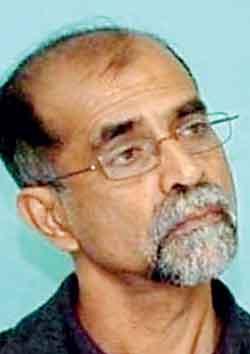 “Political parties are dominated by men and men’s interests. Even the very few women who have been allowed to join political parties and enter parliament have been enabled because of the patriarchal structures. For example, when the husband dies, the wife gets a chance”
- Prof. Jayadeva Uyangoda, Political commentator
Prof. Uyangoda stated, “Even in the left parties like Communist Party and Lanka Sama Samaja Party (LSSP), there are few women who are allowed, who could become parliamentarians. They happen to be wives, family members of male party leaders. Once again, left parties have been patriarchal,”
Further explaining the long term issue, he said, “Look at the trade unions. Almost all of the trade unions are very patriarchal. Just the patriarchy is the main reason,”
Commenting on the mechanism to increase minority women’s representation in politics, he stressed that political parties have to give up their patriarchal structures and ideologies. Minority societies will also have to liberate themselves from patriarchal societies. “It is as much as a Sinhala Buddhist society has the same challenge. I don’t necessarily say that it’s a problem with minority parties. It’s a problem with all political parties. I don’t agree with framing this as a minority problem,” he added.
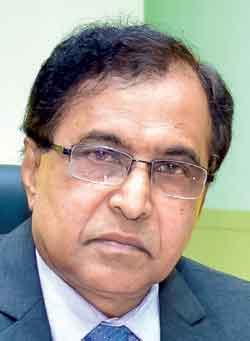 While patriarchal structures limit women’s participation, the Election Commission (EC) proposes that the women’s representation quota be extended to Parliament as well.
When queried by the Daily Mirror in regard to the mechanism, the EC would adopt to enhance women’s representation in politics, its Chairman R.M.A.L. Rathnayake stated that a 25 per cent women’s representation quota had already been allocated in local government. He noted that the new electoral system (amendment) for provincial councils had also introduced a women’s quota and opined that a similar quota should be extended to the parliamentary system as well.
“But there are problems with the nomination of women in local government. Naming of women representatives is included in the local government only because it’s implemented by law,” he added.