Reply To:
Name - Reply Comment
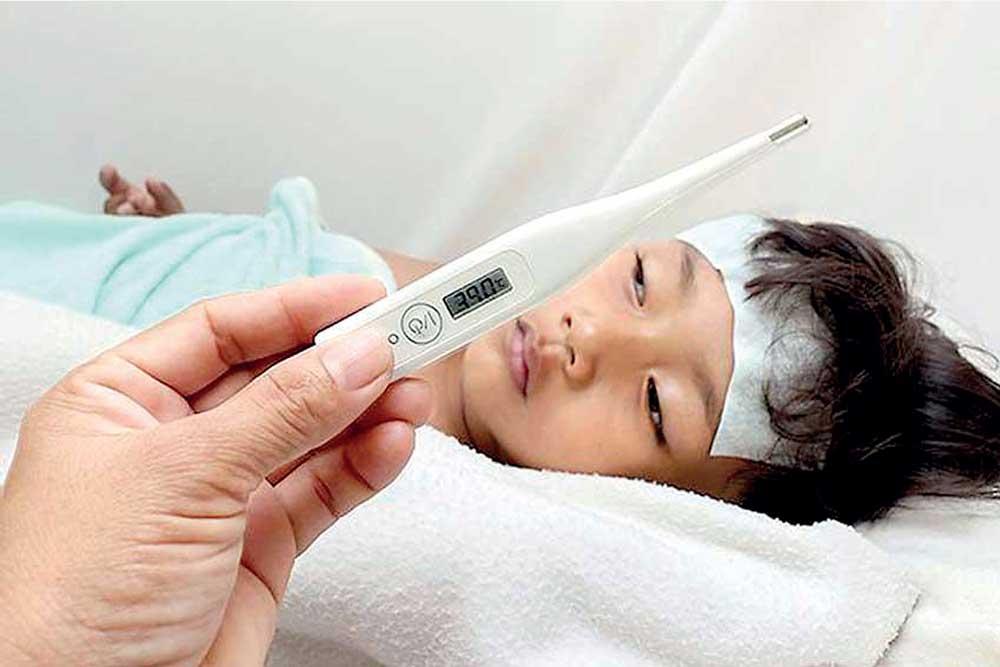
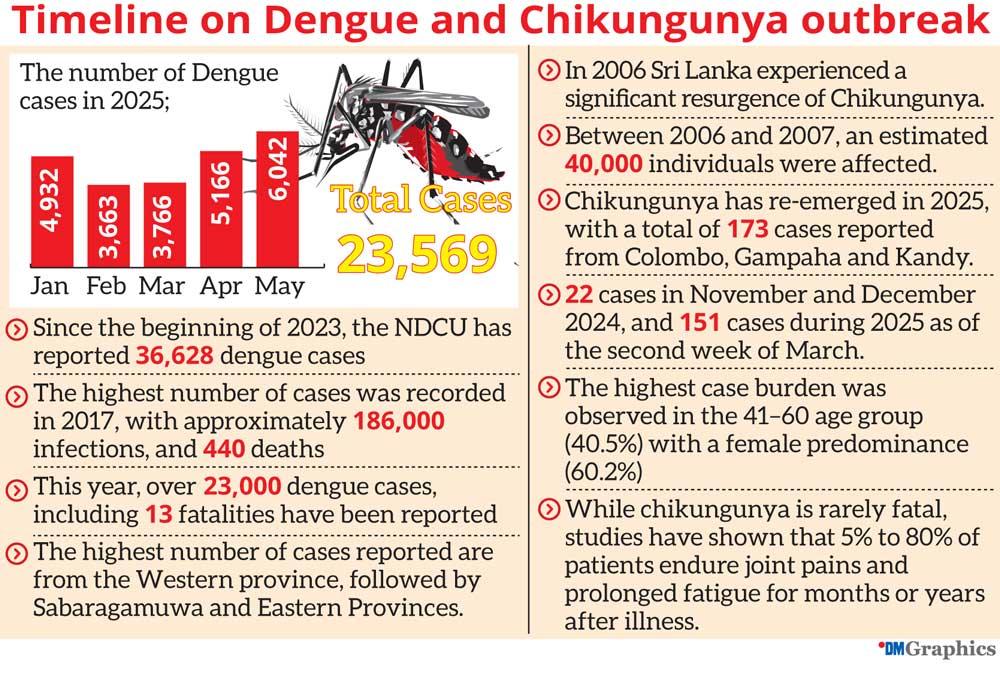
Dengue has currently reached epidemic proportions, with over 23,000 cases reported nationwide this year
 Sri Lanka is currently facing a grave public health crisis as the country has been witnessing a surge in the number of Chikungunya and Dengue cases during recent months, particularly in Colombo and Gampaha districts. Medical experts have stated that dengue has now reached epidemic proportions, with over 23,000 cases reported nationwide so far this year. This surge is largely attributed to adverse weather conditions, especially the onset of the monsoon rains, which create ideal breeding grounds for mosquitoes.

As a tropical country, Sri Lanka is particularly vulnerable to vector-borne diseases. Dengue is widespread not only in Sri Lanka but throughout the South Asian region, and in 2023, the World Health Organization classified it as a Grade 3 public health emergency”
- Dr. Preshila Samaraweera, Consultant community physician, NDCU, MOH
Moreover, COVID-19 has re-surfaced, increasing the risk of dangerous co-infections that could potentially impact Sri Lanka’s healthcare system, leading to the loss of countless lives. Many have criticised the government for their delayed responses and failure to act effectively, as there is a risk of the epidemic escalating into an island-wide catastrophe.
Dengue on the rise
The Epidemiology Unit, Ministry of Health (MOH) states that since the beginning of 2023, the National Dengue Control Unit (NDCU) has reported 36,628 dengue cases (by 24th May). The transmission of the Dengue virus is caused by the female mosquitoes of Aedes aegypti and Aedes albopictus. Many dengue infections are asymptomatic or result in mild illness. However, in some cases, the disease can progress to a more severe disease or even prove fatal. While there is no specific treatment for dengue, early detection and timely access to proper medical care can significantly reduce the risk of death.
Dr. Preshila Samaraweera, Consultant community physician, NDCU, MOH explained that the Western Province has reported the highest number of cases to date, followed by Sabaragamuwa and Eastern Provinces. “The peak was in 2017, when approximately 186,000 infections and 440 deaths were recorded. This year, among the thousands infected, there have been 13 reported fatalities. In addition to Colombo and Gampaha, Ratnapura has also experienced a surge in cases. Notably, a dengue outbreak at Ratnapura Teaching Hospital affected the medical staff, which appears to have been linked to ongoing construction activities within the hospital complex,” she remarked.
Over the years, the Western Province has consistently reported high case numbers due to factors such as climate change, rapid urbanisation, and poor solid waste management. Dr. Samaraweera said, “As a tropical country, Sri Lanka is particularly vulnerable to vector-borne diseases. Dengue is widespread not only in Sri Lanka but throughout the South Asian region, and in 2023, the World Health Organization classified it as a Grade 3 public health emergency. Nevertheless, it is important to highlight that Sri Lanka has the lowest dengue mortality rate in the region. I believe the government has made efforts to strengthen the healthcare system, but there remain areas requiring improvement, particularly in preventive measures, where the general public play a crucial role.”
She further explained that mosquito breeding sites are commonly found in many households and in the immediate surroundings of infected patients. “A mosquito completes its lifecycle within 7 to 10 days, and as little as 5 milliliters of clean water is enough for breeding. Thus, if people inspect their premises once a week, we can effectively control dengue by eliminating these breeding sites. This effort should extend beyond individual homes to include surrounding areas such as schools, religious institutions, and drainage systems. People must be more responsible when disposing garbage and remain vigilant about maintaining a clean environment,” she said.
Some of the most common symptoms of dengue include high fever, nausea, muscle and joint pain. “If fever persists for over two days, it is better to seek medical advice and undergo a full blood count to confirm whether it is dengue. While some patients may recover on their own, those who develop dengue hemorrhagic fever need immediate medical attention due to plasma leakage in the body. This condition can lead to life-threatening complications, including kidney failure, and even death. Therefore, it is crucial to seek appropriate treatment as soon as dengue is detected,” Dr. Samaraweera remarked.
As part of a special dengue eradication programme, health authorities have issued red notices for nearly 4,000 locations across 15 districts. Mosquito breeding grounds were found in over 31,000 premises—including schools and construction sites. It was recently reported that several state-owned lands within the Colombo Municipal Council (CMC) area have become dumping sites, strewn with garbage and stagnant water. The NDCU has issued a stern warning to local authorities to immediately clear mosquito breeding sites from public spaces and neglected private lands.
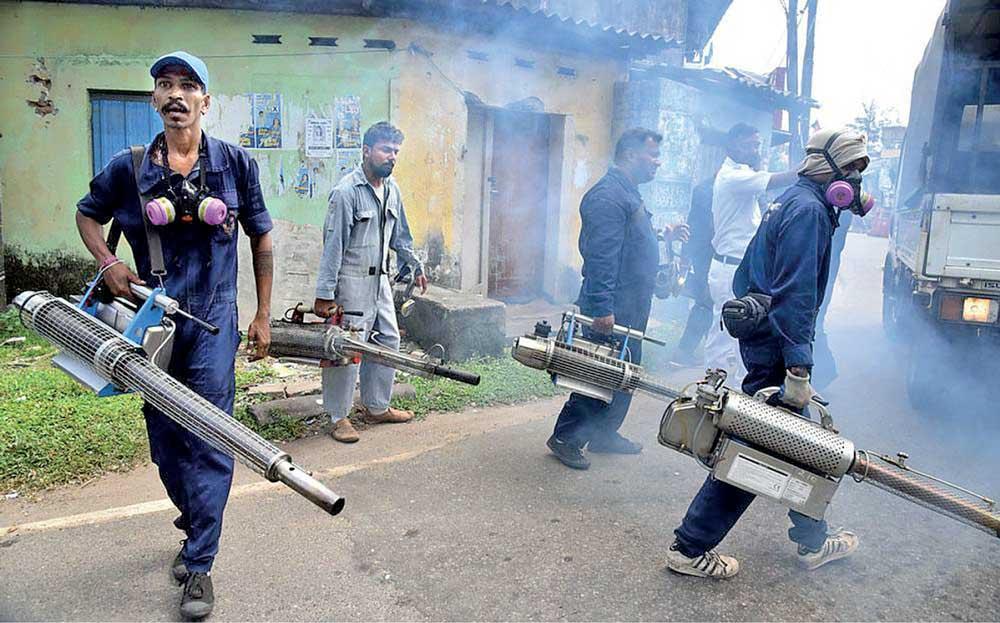
The outbreak of the Chikungunya virus is said to be the worst resurgence in nearly two decades, with around 173 cases being reported so far this year
Chikungunya resurgence
The Epidemiology Unit, MOH states that Chikungunya is a vector-borne viral disease, characterised by abrupt onset of fever, severe joint pain and rash. Chikungunya virus is transmitted to humans via the bite of an infected mosquito, particularly Aedes aegypti and Aedes albopictus. While chikungunya is rarely fatal, studies have shown that 5% to 80% of patients endure joint pains and prolonged fatigue for months or years after illness. Pregnant women, children, and those with chronic illnesses are advised to take extra precautions.
In 2006, Sri Lanka experienced a major resurgence of Chikungunya after several decades of epidemiological silence. Between 2006 and 2007, an estimated 40,000 individuals were affected. It was reported that the current outbreak of the virus is the worst resurgence in nearly two decades. So far this year, 173 cases have been reported from healthcare institutions in Colombo, Gampaha, and Kandy. According to comments made by Prof. Neelika Malavige to the media, the whole-genome sequencing using the Oxford Nanopore analysis system has identified the circulating virus strain as belonging to the Indian Ocean lineage, similar to strains found in other South Asian countries.
In her final remarks, Dr. Samaraweera advised the public to avoid self-medicating if they show symptoms of dengue or chikungunya and to seek prompt medical attention for early detection and treatment. “The MOH is actively conducting awareness programmes and clean-up campaigns. When a dengue patient is admitted to any hospital in the country, the MOH is notified within a few minutes, allowing for swift implementation of preventive measures. However, we need collective support, and urge the public to remain vigilant about their surroundings. If everyone takes responsibility, we can effectively mitigate this threat,” she concluded.