Reply To:
Name - Reply Comment
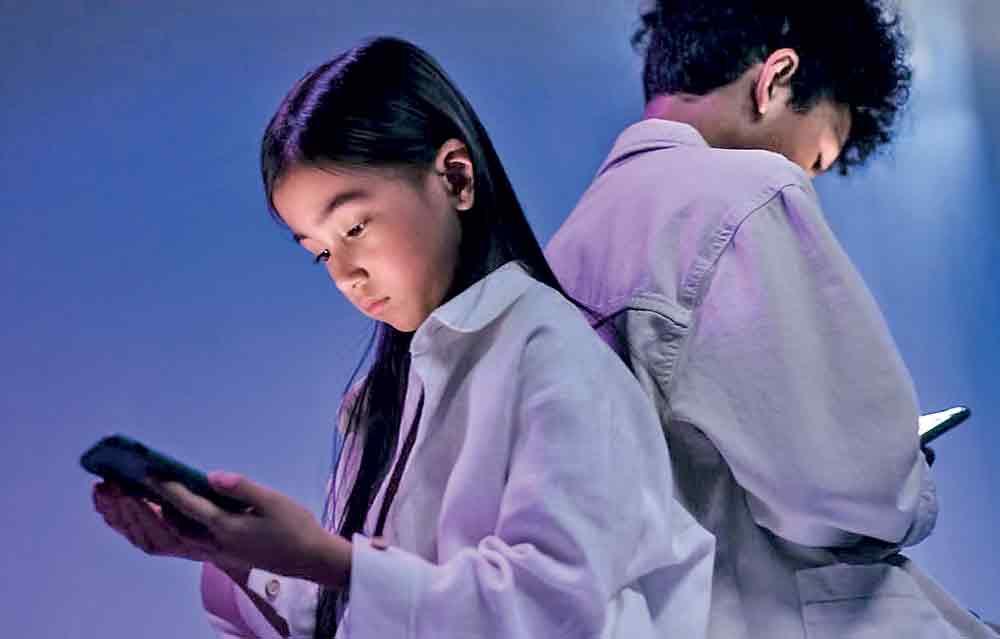

A generation ago, parents worried about the influences that entered their homes through television. Today, most children carry a device in their pocket that can expose them to addiction, cyberbullying, pornography, predatory behaviour, misinformation, gambling, violence, and harmful content at any hour of the day.
As an educator who has spent decades working with young people, I have witnessed a dramatic change in the behaviour, attention spans, emotional wellbeing, and social interactions of children. Many of the most serious issues faced by schools today have one common denominator: Excessive and uncontrolled exposure to social media.
The time has come for Sri Lanka to introduce legislation that prohibits children under the age of 16 from using social media platforms. This is not a radical proposal. It is a “must necessary” child protection measure. Several countries have already recognised the dangers social media poses to children.
Australia has passed legislation introducing some of the world’s strongest restrictions on social media access for minors. Further, Indonesia, Malaysia, UAE, China, Brazil, Portugal, France, and the US states of Nebraska and Virginia have already banned social media for under 15 or under 16 children. UK, Spain, Italy, Germany, Denmark, Norway, Greece, Slovenia, Czechia and New Zealand are discussing legislation to this effect, and most of these countries are ready to implement bans by 2027. Other countries in Europe are debating similar measures. Governments, health experts, educators, and child psychologists increasingly agree that unrestricted social media use is causing significant harm to children’s development.
Sri Lanka should not wait until the damage becomes irreversible.
The Mental Health Crisis Among Young People
Research from around the world has linked excessive social media use to increased rates of anxiety, depression, loneliness, self-harm, sleep deprivation, and low self-esteem among adolescents.
Children are exposed daily to unrealistic images of beauty, wealth, popularity, and success. They constantly compare themselves with carefully edited versions of other people’s lives. The result is a generation that often feels inadequate, anxious, and emotionally fragile.
Many students today struggle to concentrate for extended periods. Teachers report declining attention spans and increasing difficulty engaging students in meaningful learning.
Social media companies profit from capturing and holding children’s attention. Their algorithms are specifically designed to maximise engagement, not to protect children’s wellbeing.
Children are not developmentally equipped to resist these sophisticated psychological techniques.
In previous generations, bullying often ended when a child returned home from school.
Today, bullying follows children into their bedrooms.
Cruel messages, public humiliation, exclusion from online groups, fake accounts, manipulated photographs, and anonymous harassment have become common experiences for many young people. Schools across Sri Lanka are increasingly forced to deal with conflicts that originate on social media platforms and then spill into classrooms.
The emotional consequences can be devastating.
Teachers and parents are engaged in an increasingly difficult battle for children’s attention.
Students frequently report checking their phones dozens, and sometimes hundreds, of times each day. Homework is interrupted by notifications. Reading habits are declining. Deep concentration is being replaced by constant distraction.
Educational achievement requires patience, focus, critical thinking, and perseverance.
Social media encourages the opposite: instant gratification, endless scrolling, and constant stimulation.
The long-term consequences for learning are profound.
Children Are Being Exposed to Harmful Content
Despite promises by technology companies, children continue to encounter content involving violence, pornography, self-harm, drug use, hate speech, and dangerous online challenges. Even when parents attempt to supervise their children, harmful material can reach them through algorithms, peer sharing, or seemingly innocent searches.
No responsible society would permit such unrestricted access to harmful influences in the physical world. We should not tolerate it in the digital world either.
Many parents recognise the dangers but feel powerless.
If one parent restricts social media while everyone else’s children continue using it, their child often feels isolated and disadvantaged.
This creates enormous social pressure on families.
Government action can solve this collective problem by establishing clear national standards that protect all children equally. Seatbelt laws, tobacco restrictions, and alcohol age limits were introduced because society recognised that children require protection.
Social media should be viewed through the same lens.
Some argue that social media is necessary for communication. Children can communicate through phone calls, text messages, school platforms, and supervised digital tools without requiring access to addictive social networking platforms. Others argue that enforcement is difficult.
However, difficulty is not a reason for inaction. Governments around the world are increasingly developing age-verification systems and legal obligations for technology companies. We do not abandon laws simply because enforcement requires effort.
Some claim that social media helps children learn.
While the internet offers extraordinary educational opportunities, social media and education are not the same thing. Children can access educational resources without being exposed to the harmful features of social networking platforms.
A National Call to Action
Sri Lanka has always valued education, family, and the wellbeing of children.
We now face a defining choice.
Will we allow powerful global technology companies to shape the minds of our children without meaningful safeguards? Or will we act courageously to protect the next generation?
I urge the Government of Sri Lanka to:
a. Ban social media access for children under the age of 16.
b. Require robust age-verification systems for all social media platforms.
c. Impose significant penalties on companies that fail to protect children.
d. Introduce nationwide digital literacy programmes for parents and students.
e. Support schools in creating healthy technology-use policies.
History will judge societies not by how quickly they adopted new technologies, but by how wisely they protected their children from harm.
The evidence is growing. The consequences are visible in our homes and schools. The responsibility is ours.
For the sake of Sri Lanka’s children, the time to act is now.
Dr. Mohan Lal Grero is Founder, Lyceum International Schools