 Kamanthi Wickramasinghe
 Reply To:
Name - Reply Comment
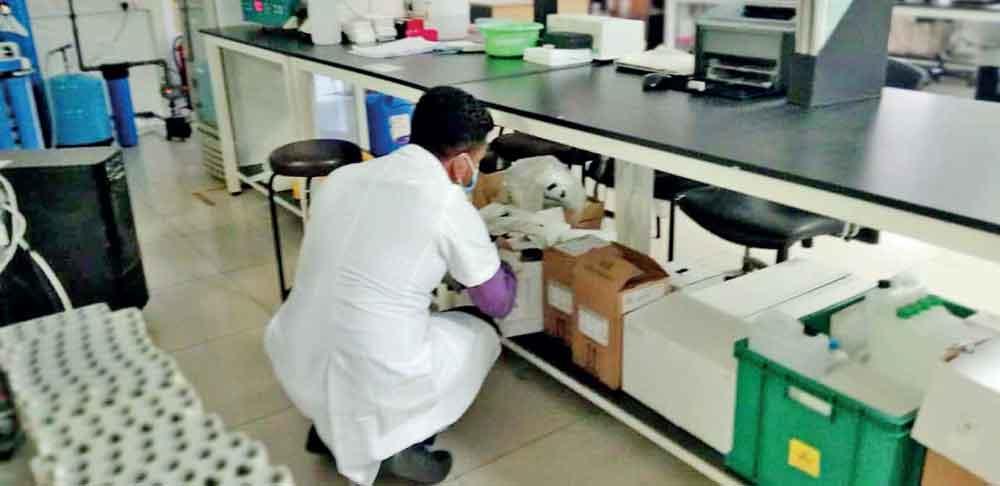
Investigating officers inspecting laboratories (Pix courtesy CAA)
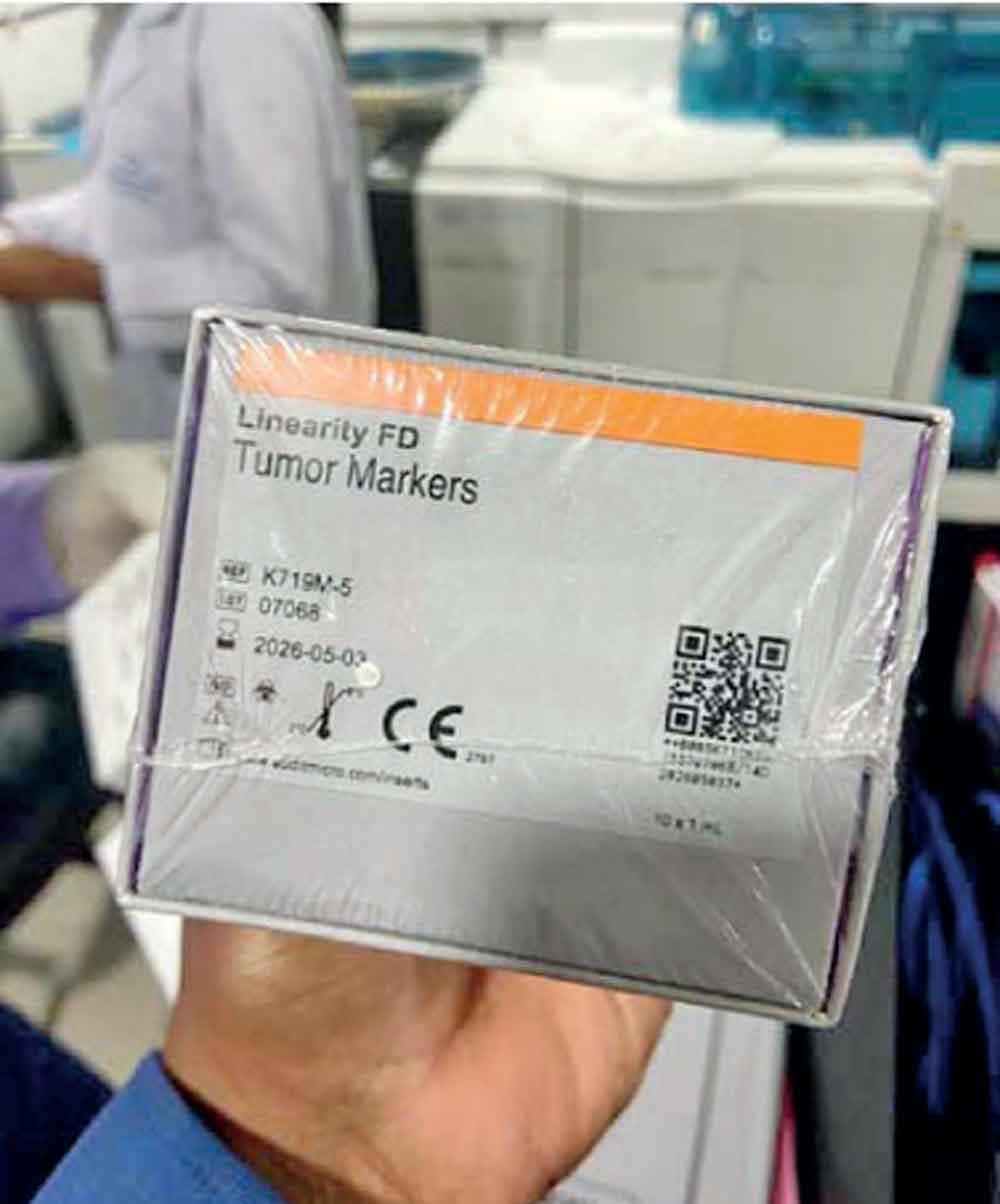
The picture shows an expired item detected during a raid at a laboratory
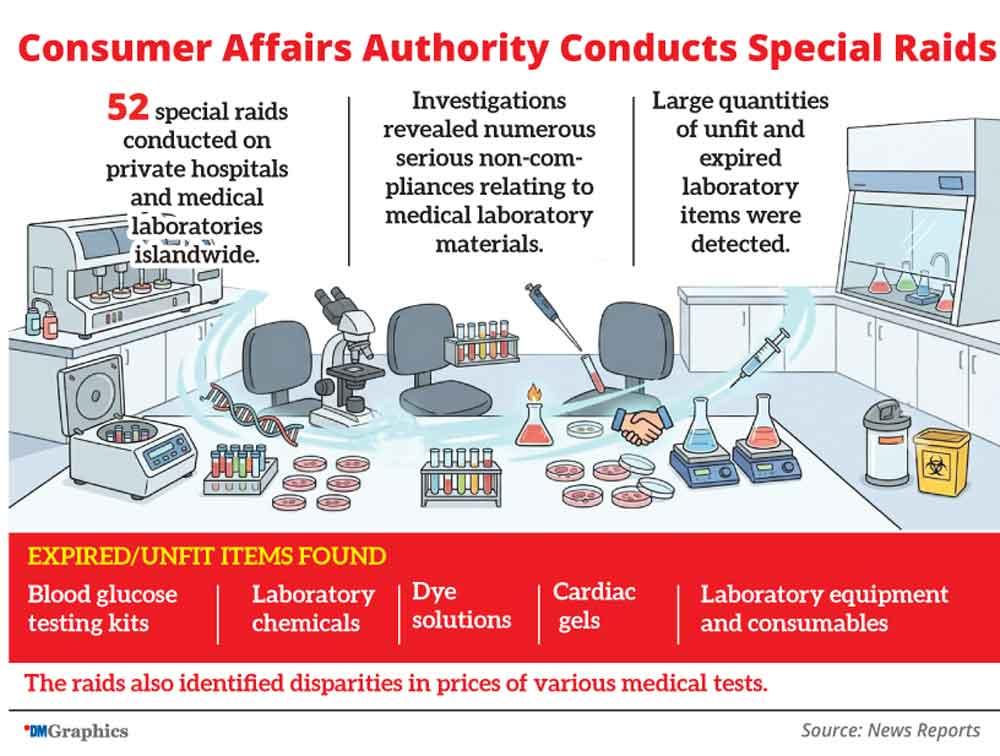
 The Consumer Affairs Authority (CAA) recently conducted 52 special raids targeting private hospitals and medical laboratories islandwide. Investigations had revealed numerous serious non-compliances relating to medical laboratory materials used for patient testing and treatment. A large quantity of unfit and expired medical laboratory items too were discovered. Items identified as unfit for use included blood glucose testing kits, various laboratory chemicals, gels used for cardiac patients, dye solutions and numerous other laboratory equipment and consumables. The raids also identified disparities in prices of various medical tests.
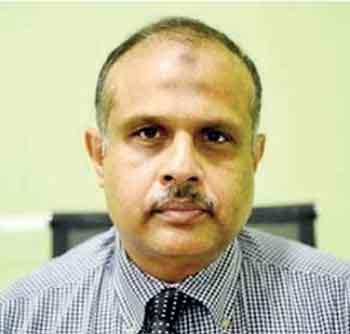 |
| Dr. Ruvaiz Haniffa |
Adherence to standards, a must
According to Dr. Ruvaiz Haniffa, Consultant Community Physician and former President of the Sri Lanka Medical Association, errant test results have massive impacts on clinical decisions. He referred to a real life example where one of his patients had reported with a liver test report indicating an elevated liver function. “But three months ago her liver functions were normal. This patient is on statin drugs for cholesterol, which means the liver function needs to be monitored. But I’m getting this huge figure and she has already paid for the tests. This particular test costs around Rs. 7000 and I have to repeat the test because I’m not sure about the results,” he said.
As a medic who practises at the primary care level, Dr. Haniffa needs to take decisions depending on data obtained from medical tests. “So it’s important that we maintain the standards. But there’s no point blaming the laboratory because ultimately it’s a business and this is where the regulator has to play a role. Ad hoc raids on laboratories doesn’t have an impact. Whoever is in charge of private laboratories should conduct audits every three months, analyse results and check these results against reagents which are left. There has to be a proper monitoring system in place. Forget about the liver function test, clinical decisions are made by analysing a simple blood test. We are dealing with people’s lives,” he cautioned.
He further said that regulation alone is not enough and that regulation has to be implemented and checked. Dr. Haniffa said that there are irregularities with the costs of various medical tests. “Why are government laboratories having one price and private laboratories another,” he questioned.
Urgent need for regulation
“This is one health system. You can’t be having different standards for health. Quality assurance should be the job of an independent authority,” he said.
Dr. Haniffa said that in some occasions, laboratories cut down on the reagents. “Say you have 10ml of reagents required to do a test, but you only use 8ml or 5 ml or whatever the minimum amount and you would save the rest. Then it affects the quality. We need to get out of this mentality. The patient has a right to get a quality service for the price they pay,” he added.
He said that therefore, when a small laboratory releases abnormal results, doctors will have to recommend a better laboratory that is known to maintain standards and conducts audits just to be sure about the results. “But what needs to be done is to ensure that irrespective of whether a laboratory is new or has been established some time ago, both these laboratories need to maintain the same standards. It’s the responsibility of the regulator,” he underscored.
Protecting patients’ rights
Section 30 of the Consumer Affairs Authority Act No. 9 of 2003 prohibits misleading or deceptive conduct by any trader in the course of trade or business. Section 31 addresses specific false representations regarding the standard, quality, style, or history of goods and services.
According to Samantha Karunaratne, CAA’s Acting Director General, patients have a right to know which chemicals and reagents are being used for respective medical tests. “Going forward, prices of medical tests should be publicly displayed in laboratories,” she told the Daily Mirror.
Karunaratne said that patients need to be mindful about tests that are being conducted on them. “We will take actions against those found guilty and we would arrest those who have violated the Act. As per CAA’s mandate it is not under obligation to inform respective regulators and authorities prior to conducting raids. But we will notify the Private Health Services Regulatory Council (PHSRC) in due course,” she added.
Only 32 laboratories accredited by SLAB
The Sri Lanka Accreditation Board is the national accreditation authority established under Act No. 32 of 2005. It operates as an autonomous body to assess and accredit testing laboratories, medical facilities, and inspection bodies.
When contacted a senior SLAB official told the Daily Mirror that there’s no mandatory requirement for medical laboratories to obtain accreditation from SLAB. “It’s entirely voluntary. Laboratories are accredited under ISO 15189 standards, setting benchmarks for diagnostic quality, accuracy and patient safety. So far, only 32 laboratories (private and government) have been accredited under SLAB,” the official said.
Several attempts made to contact Dr. T. M. I. S Priyantha, PHSRC Secretary and Health Ministry’s director of private health sector development to inquire about future actions being taken on monitoring standards of private medical laboratories proved futile.