Reply To:
Name - Reply Comment
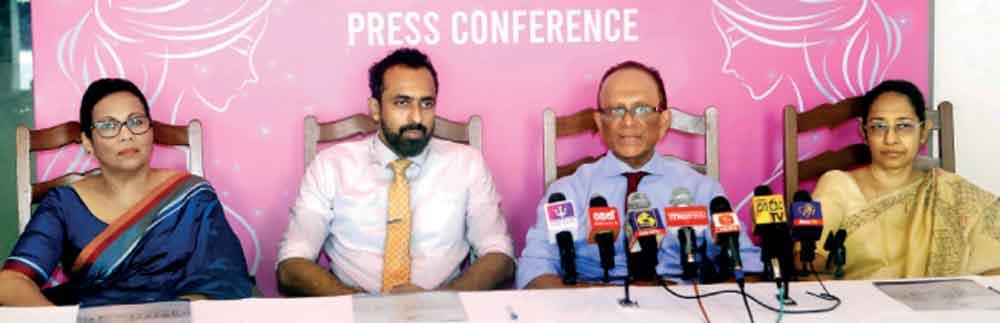
Professor Hemantha Senanayake (third from left) , President of the Asian Society of Endometriosis and Adenomyosis speaking at the media briefing held at Joseph Frazer Hospital, Colombo 05 on last Thursday. Dr. Samanthi Premarathne (first from left - Council member) Dr. Indunil Piyadigama (second from left - Secretary of the Association) and Dr. Champa Nelson (first from right - Treasurer of the Association) were also presented on the occasion. Pix by Pradeep Dilrukshana
By Manjula D. Phillips
The Endometriosis and Adenomyosis Association of Sri Lanka will be organising the 13th Asian Endometriosis Congress 2025 which will be held at Cinnamon Life Colombo during four days starting from 31st of this month. This year, this important event will be attended by world–renowned experts, researchers, and clinicians in the field of Endometriosis from 18 countries representing the USA, Europe, Russia, China and the Asia–Pacific region.
The details of the 13th Asian Endometriosis Congress was announced to the media at a press briefing held at Joseph Frazer Hospital, Colombo 05, last Thursday by the Endometriosis and Adenomyosis Association of Sri Lanka.
The congress will be held in association with the European Endometriosis League and is expected to provide the overview knowledge of the diagnosis, management and cutting–edge research related to Endometriosis and Adenomyosis.This is expected to be the largest medical gathering in Sri Lanka for 2025 with a participation of over 200 international delegates and further establishing Colombo as a regional hub for advanced women’s health research and education.
What are Endometriosis and Adenomyosis?
Endometriosis, relatively little known to the general public here, is a chronic inflammatory condition where tissue similar to the uterine lining grows outside the uterus, causing severe menstrual pain, pelvic discomfort and infertility. It is estimated that it affects 1 in 10 women of reproductive age with over 190 million women affected globally, according to the World Health Organization.
Adenomyosis, a related condition, occurs when endometrial tissue invades the muscular wall of the uterus, leading to heavy painful periods and chronic pelvic pain. Both disorders are often underdiagnosed and mismanaged with an average delay in diagnosis of 7 -10 years.
Speaking at the media briefing, Professor Hemantha Senanayake, President of the Asian Society of Endometriosis and Adenomyosis, said: “We expect to conduct the congress targeting mainly medical professionals and ordinary people.
“When we treat these patients, we find that the delay in diagnosis is a major issue since in some cases it goes 10 years back without being diagonised. The main reason for this is the lack of knowledge of these diseases among people, and even among doctors. If you have a severe pain, it is always better to have a second opinion from another medical officer. The parents’ of teenage girls fear the use of hormones as a medicine for these diseases thinking that it would affect their children in the future, but that is a false belief.”
Many women suffer in silence, accepting pain during menstruation as normal. However, medical experts suggest that painful periods are not normal and should prompt medical evaluation. With the help of modern technology, Endometriosis can be accurately diagnosed and effectively managed.
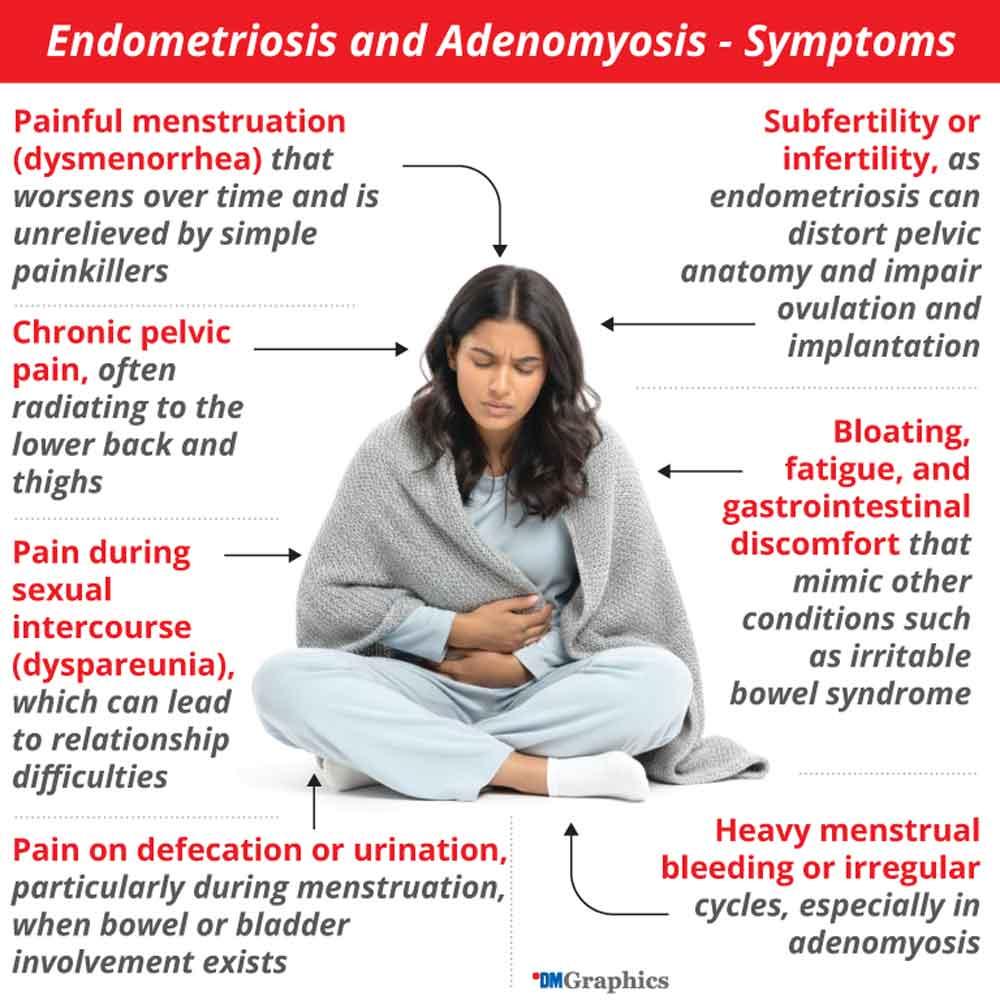
According to the Endometriosis and Adenomyosis Association, Common Symptoms relating to these diseases include Painful menstruation (dysmenorrhea) that worsens over time and is unrelieved by simple painkillers often radiating to the lower back and thighs; pain during sexual intercourse (dyspareunia), which can lead to relationship difficulties; Pain on defecation or urination, particularly during menstruation, due to bowel or
bladder involvement; heavy menstrual bleeding or irregular .cycles, especially in adenomyosis; subfertility or infertility, as endometriosis can distort pelvic anatomy and impair ovulation and implantation; bloating, fatigue, and gastrointestinal discomfort that mimic other conditions such as irritable bowel syndrome.
Adenomyosis is thought to arise when the normal boundary between the endometrium and the uterine muscle is disrupted -- often following childbirth, uterine surgery, or chronic inflammation.
Diagnosis is often delayed for 7-10 years due to overlapping symptoms and limited awareness.
Key diagnostic tools include: Detailed clinical evaluation and symptom diary, transvaginal or 3D ultrasound for endometriomas and adenomyosis, magnetic resonance imaging (MRI) for mapping deep disease, while laparoscopy remains the gold standard for direct visualisation and histological confirmation.
Management Options
Treatment is individualised and multidisciplinary, aiming to relieve pain, improve fertility, and enhance quality of life. It includes medical therapy, Hormonal treatments such as combined oral contraceptives, progestins, levonorgestrel-releasing intrauterine devices, and GnRH analogues, surgical management -- laparoscopic excision or ablation of lesions, adhesiolysis and conservative uterine-sparing surgeries for adenomyosis, pain management -- use of NSAIDs nerve desensitisation therapies, physiotherapy and chronic pain clinics; fertility options, assisted reproductive technologies (IVF/ICSI) when spontaneous conception is difficult; lifestyle and psychological support -- Dietary modification, exercise and counselling play vital roles in holistic care.
The Endometriosis and Adenomyosis Association of Sri Lanka is a professional, non-profit organisation dedicated to improving awareness, research and management of endometriosis and adenomyosis in Sri Lanka, conducting awareness programmes under the theme “Say No to menstrual pain.”
The Asian Endometriosis Congress 2025 aims not only to educate healthcare professionals but to raise public awareness about this silent yet uncomfortable condition. The message is: Don’t ignore menstrual pain, seek medical help if you do.