Reply To:
Name - Reply Comment
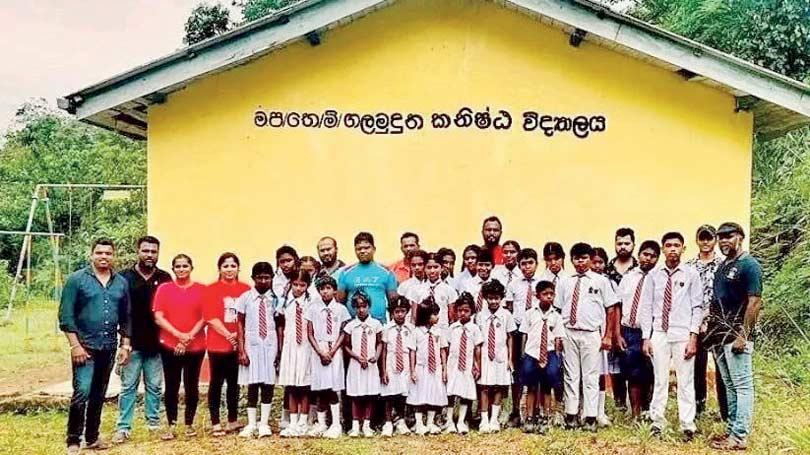
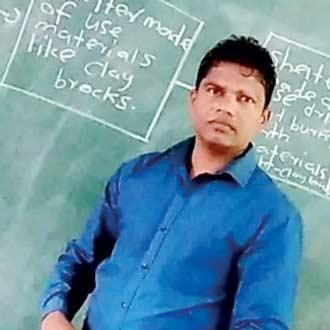
Janaka with the students of the school
 Janaka Dhanuddhara walks six kilometres to the school every Monday morning and remains in the school quarters until Friday. This is due to lack of transportation and lack of essential services in the area
By Manjula D. Phillips
|
Janaka Dhanuddhara |
It is said that success is not measured by what you accomplish, but by the opposition you have encountered, and the courage with which you have maintained the struggle against overwhelming odds. When Janaka Dhanuddhara, a teacher and a graduate with a special in economics, took over teaching Galamuduna Junior School with just 25 students situated in the Knuckles (Dumbara) Mountain Range 6 years ago, he knew that the challenges ahead of him were considerable.
That was his second appointment as a teacher after teaching several years at Mihintale National School. He had to walk several kilometres daily to reach the school from his quarters as transport was scarce.
His second appointment was even more remote, as this school is situated in the Minipe Divisional Secretariat, and located in a rural village called Batumulla within the Knuckles mountain range. It is considered a rural area with limited resources for the students as well and villagers alike.
With this backdrop, out of five students who took the G.C.E. Ordinary Level exam last year, all five passed while four were able to pass with honours.
Janaka, who is also the principal of this school, teaches all subjects from grades 1 to 11. He ran the school single-handedly and was its backbone for several years. Finally, three months ago, another two teachers joined to the staff. But Janaka is the unsung hero of this saga of education against great odds. Even today, the school doesn’t have internet facilities available almost everywhere else in the country by now.
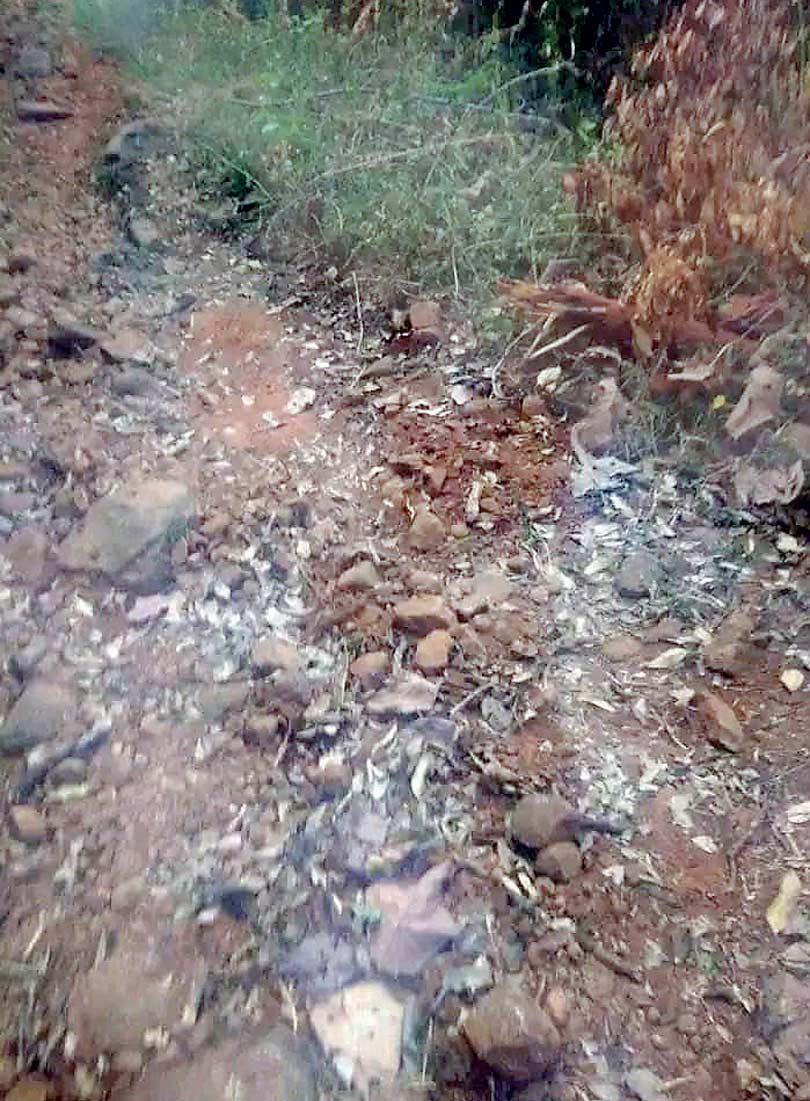
Janaka Dhanuddhara walks six kilometres to the school every Monday morning and remains in the school quarters until Friday. This is due to lack of transportation and lack of essential services in the area. He can cover several kilometres on his motorbike, but must leave it behind and walk the last six kilometres as the road becomes impassable even for a motorcycle.
In an exclusive interview with Daily Mirror, Janaka said.
“We got publicity when our students passed O/L examination with flying colours. Many came forward and helped those students and many wanted to help the school as well. But the major issue is that these roads are not suitable for transportation. The school itself cannot benefit due to very bad roads. We cannot transport construction materials to construct and do refurbishments because of this issue. We urge responsible parties to consider this matter, especially our zonal educational office”.
These students face severe challenges in terms of getting an education. If they want to go to nearby learning centres, to reach public transport routes as they have to walk nearly 10 kms on foot, and that is also through paths in the wild where wild animals like elephants are often seen.
The students who are qualified to do Advance Level have to travel 12-16 kms from their homes to their new schools, and they will have to stay at their relative houses closer to the new schools.
It is the responsibility of the present authorities to look into this matter more seriously in terms of developing roads in this area to facilitate easier transportation.