Reply To:
Name - Reply Comment
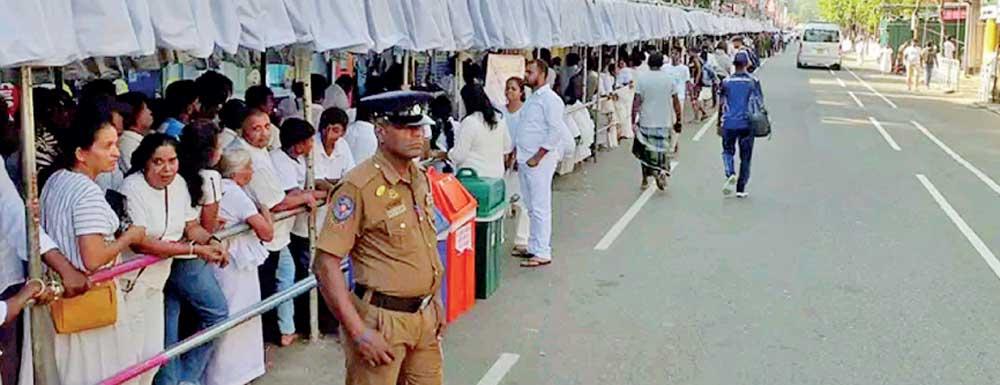
Devotees standing in long queues under the shelter provided
 The Temple of the Tooth has begun the public exposition of the sacred tooth relic of Lord Buddha, taking place from April 18th to 27th. This veneration is being held at the request of President Anura Kumara Dissanayake, with the primary aim of overcoming the economic and social problems and deepening the devotion of Buddhists.
Why did this sacred event not take place earlier?
The sacred veneration of the Tooth Relic of Lord Buddha did not take place before 2025 due to the absence of official approval from the custodians of the relic. While there were intentions and efforts in the past, including a request reportedly made by former President Ranil Wickremesinghe, who had sent former Prime Minister Dinesh Gunawardena to seek permission, the request was ultimately not granted. This has led to speculation that past leaders may not have prioritised the event with sufficient reverence or will. In contrast, President Anura Kumara Dissanayake’s request was accepted. Moreover, Dissanayake has highlighted that an exposition would help to give more priority to the citizens in Sri Lanka and make the Buddhists feel the Tooth Relic more wholeheartedly.
Rules and regulations to be followed
 |
|
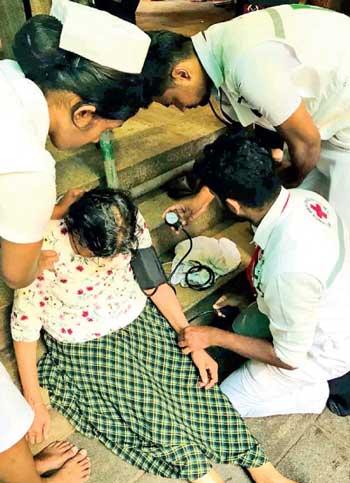
Sri Lanka Red Cross Society treating a devotee |
The exposition is from the 18th from 3:00 PM to 5:30 PM. From the 19th to the 27th, it is conducted daily between 11:00 am and 5:30 pm. Until April 21st, the allocated time began at 12:00 PM. However, due to the increasing number of devotees, the schedule has now been revised to commence at 11:00 AM. Devotees have been advised to attend in appropriate attire. It is to be noted that during the hours of 12:30 PM to 5:30 PM, access to the premises for any other religious observances will be restricted. As per the instructions given by the current president, there are no VIP or VVIP passes issued to visit the exposition.
The Kandy Municipal Council (KMC) provides extensive support for the event, including the organisation of queues, the distribution of free food through ‘dansal’. A total of 248 volunteers are engaged in food distribution efforts.
The official website of the Kandy Municipal Council (KMC) has reserved a separate button for the registration of ‘dansals’. The KMC has also established multiple public lavatory facilities, each equipped with QR codes to enable users to report any maintenance concerns. Furthermore, it is announced that additional lavatories will be provided shortly to accommodate the growing public demand. Newly installed drinking water tanks are now directly connected to the main pipelines, eliminating the need for bowser refilling. This system ensures continuous and unlimited access to safe drinking water for the public. The Public Health Inspectors Union of Sri Lanka announced that approximately 50 public health inspectors are deployed daily to oversee these measures. All food establishments in the city are been inspected by public health inspectors to ensure maximum food safety. Additionally, dansals must be registered with the Kandy Municipal Council’s Health Department.
Medical assistance is readily available, with doctors stationed on-site to attend to individuals experiencing sudden illness. In addition, the Sri Lanka Red Cross Society implements a comprehensive first aid program to address minor medical needs. For critical medical emergencies, prompt arrangements are in place to transfer patients to the Kandy General Hospital without delay.
The writer witnessed how individuals from various religious backgrounds help each other when in need. Muslim mosque committees have generously opened their facilities, allowing public access to the lavatories. A lot of others also have stepped forward, offering shelter and resting spaces to those arriving from distant areas. These collective efforts of people break down the religious and cultural boundaries, uniting people of all faiths under a single banner of humanity and devotion. The sacred exposition has become a powerful symbol of national unity, demonstrating that compassion, service, and solidarity are shared across the country.
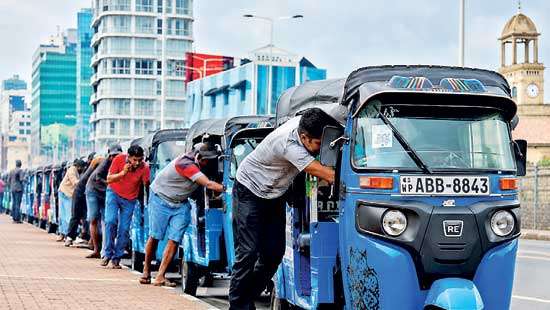
An estimated daily attendance of over one hundred thousand individuals is expected. To facilitate transportation, a dedicated bus service is in operation. Those arriving in private vehicles are required to park at designated locations and transfer to the bus service.
Visitors travelling from Colombo are advised to park at Gatembe and board the buses from there. Individuals coming from Katugastota may use the parking facility at the 4th Post at Katugastota. Devotees approaching from the Madawala and Wattegama areas are directed to park at the National Institute of Co-operative Development (NICD) in Polgolla.
Additionally, a special train service is available from Colombo Fort to Kandy. Timetables and further details can be accessed via the official Facebook page of Sri Dalada Maligawa.
Three designated queues are leading to the exposition. The first originates from the Mahamaya Girls’ School Primary section, the second follows the route along the lake, and the third proceeds via D.S. Senanayake Street (Trincomalee Street). The end points of each queue, vehicle parking availability, suitable time slots to come, important places, exhibition duration and instructions are been updated on the official website of the Sri Lanka Police.
Approximately 10,000 police officers are deployed to ensure the safety and security of the event. Photography within the premises is strictly prohibited. The Temple of the Sacred Tooth Relic has also made necessary arrangements to provide accommodation facilities for individuals with disabilities.
Improper disposal of garbage is observed in various areas around Kandy city. Despite the presence of numerous colour-coded waste bins, many devotees fail to dispose of their litter appropriately. As a result, the cleanliness of the queues is compromised, causing discomfort for those standing in line for extended periods. Moreover, the area surrounding the Temple of the Sacred Tooth Relic is becoming an unsightly scene, detracting from the sanctity and aesthetic of the sacred premises. Out of love and respect for the city, community groups have voluntarily come together to help maintain its cleanliness. These individuals have collected improperly discarded waste and gathered it into bags for proper disposal.