 Kamanthi Wickramasinghe
 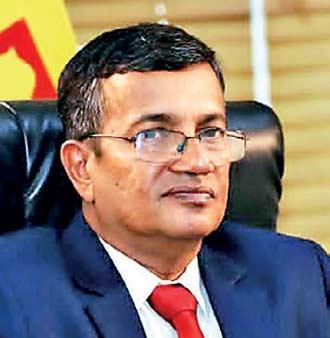 When contacted Deputy Minister of Environment Anton Jayakody said that Sri Lanka requires 150 MW by 2028. “It is estimated that one wind turbine generates around 5 MW and we need another 50MW. So the calculation is 70 divided by 5 which is 14,” he added. .
Reply To:
Name - Reply Comment
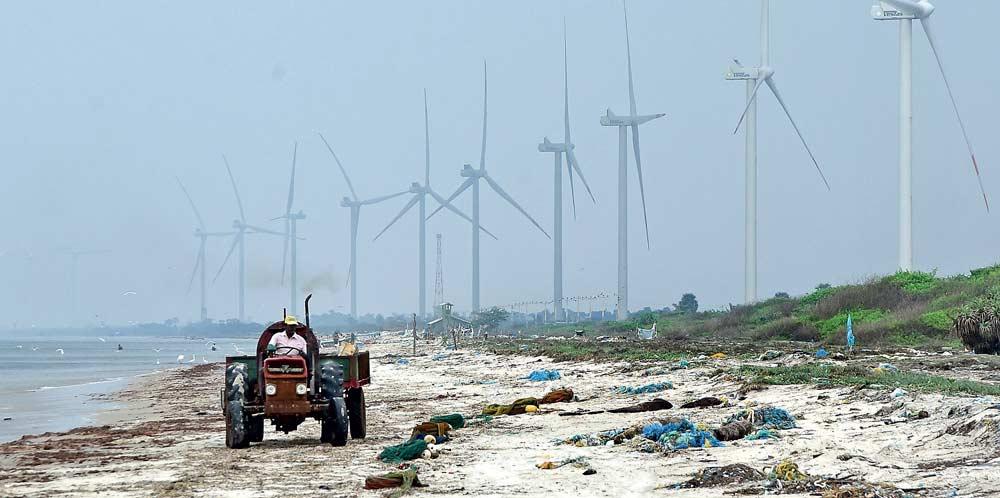
People of Mannar Island have protested against the installing of wind power projects in their vicinity and expressed concerns that they would be detrimental to the environment and cause loss of livelihood (Pics by Kushan Pathiraja)
 Despite the Govt’s assurance that no more wind power projects would be planned on Mannar Island sans people’s consent, the destruction caused to Mannar as a result of the existing wind turbines is worrying
According to experts, there are many other potential locations within the country that are most suitable for wind power projects than Mannar Island
While people and interest groups don’t oppose renewable energy, they are only concerned about the way in which the project has been executed
Environmentalists point out that identifying Mannar as a potential location for wind turbines brings with it the danger to over 4000 species from dugongs to sea grass, which need to be protected
People of Mannar claim that they have been bearing the brunt of unplanned development in the guise of renewable energy. This is why a majority of residents sat down at a 105-day long protest demanding the government to put an end to upcoming projects on Mannar Island which would destroy its natural resources and deprive them of their homeland. However, following President Anura Kumara Dissanayake’s assurance that no more wind power projects would be planned on Mannar Island ‘without the consent of its people’, the protesters decided to call off the protest last Saturday (November 15). But already, the destruction caused to Mannar as a result of the existing wind turbines, is worrying.
Why Mannar?
According to experts, there are many other potential locations within the country that are most suitable for wind power projects. Engineer Robert Pieris, an expert based in Mannar said that even though pilot assessments were carried out in Hambantota and Puttalam, the project finally ended up in Mannar. “The National Renewable Energy Laboratory and CEB has done a study on wind energy potential in Sri Lanka. They identified 20,000 MW energy capacity available in the country. Concentrated locations in Northern, Central and North Western province have 4000 MW energy capacity. So, our main question is why did they choose Mannar? Mannar is covered with mangroves reserves, the Vankalai sanctuary and several other protected areas. When you see the geographical situation, Mannar is an island made of sand and there are no rocks,” he explained.
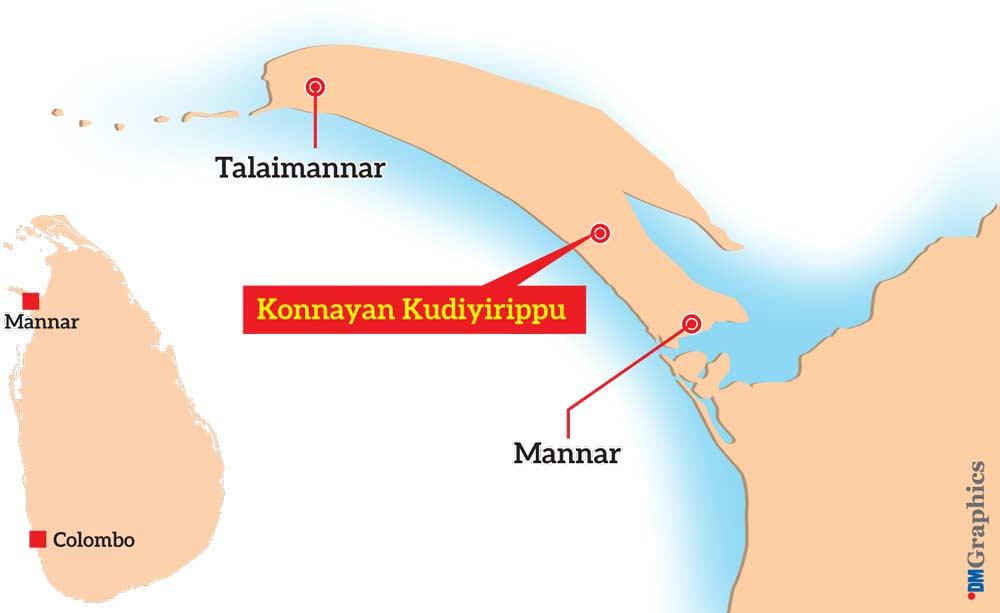
He said that there are more spaces in the mainland. “They can have turbines from Colombo to Jaffna. Upcountry has a bigger wind force. When it comes to Mannar, around 7% of land is occupied by 60% of the population. On the other hand we need to protect migratory birds. We don’t have a Gulf of Sri Lanka or Colombo, but we have a Gulf of Mannar. There are over 4000 species from dugongs to sea grass which we need to protect. There are alternative locations and there’s no reason to have Mannar as a potential location for wind turbines or similar projects,” Pieris underscored.
Detrimental impacts
Thirty wind turbines have already been installed as part of Phase I of the project. While people and interest groups don’t oppose renewable energy, they are only concerned about the way in which the project has been executed. As representatives of this newspaper drove towards Pesalai, leading up to the wind turbines, via the newly constructed road to transport wind blades and other materials for turbines, glimpses could be caught of unplanned development that people were complaining about.
The road lacked a drainage system and was constructed blocking natural waterways that carry inland water to sea. As a result, during the rainy season, Mannar experiences prolonged flooding than before. It can be observed how new drains are being cut on either side of the temporary road to test whether the water would flow to the sea.
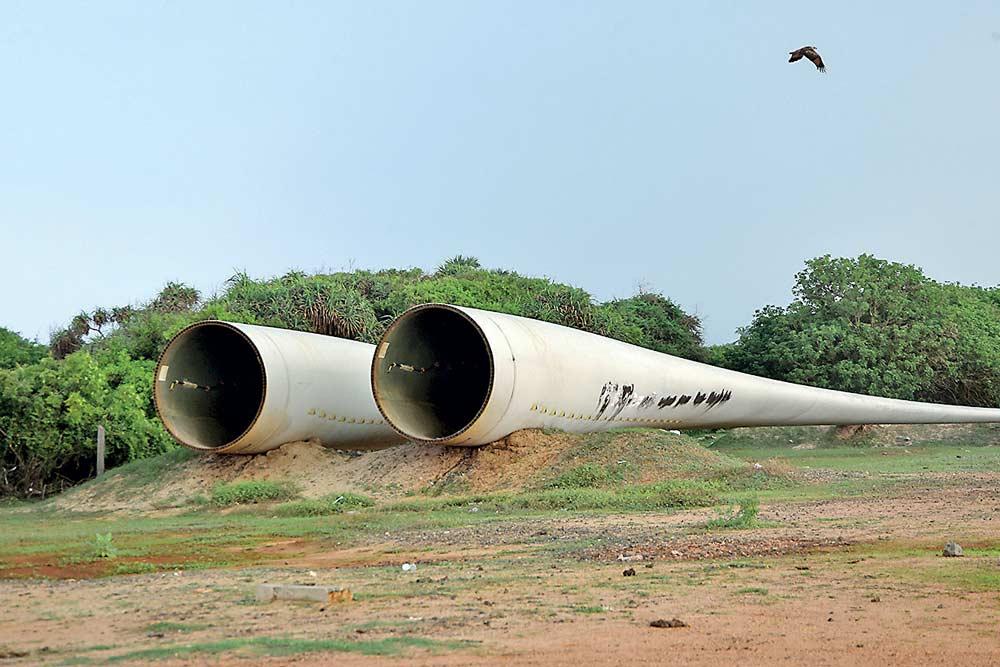
Wind blades to be fixed to wind turbines
However, during its visit, Daily Mirror learned that 14 more turbines are yet to be installed and several turbines were under construction. Soil testing is currently underway in Konnayan Kudiyirippu, a village where 10 more turbines are proposed to be installed. “People are fed up, but since their woes have fallen on deaf ears, they have adjusted to the impacts already,” said Edison Marynathan, an activist and biodiversity researcher based in Mannar. “Once the 10 other turbines come up, it would affect people engaged in farming, palmyra and other industries,” he warned.
EIA process faces mixed reactions
One of the main components of an Environmental Impact Assessment (EIA) is to inform residents about possible environmental impacts of a project and obtain their consent. But when the Daily Mirror spoke to some residents, they expressed mixed reactions regarding the EIA consultation process. Some residents had no clue about an EIA, indicating that they were completely excluded from the EIA process. Some others were convened via respective church committees to be updated about a wind power project. But in the case of obtaining, the residents seem to be confused regarding the process.
 “The National Renewable Energy Laboratory and CEB has done a study on wind energy potential in Sri Lanka. They identified 20,000 MW energy capacity available in the country. Concentrated locations in Northern, Central and North Western province have 4000 MW energy capacity. So, our main question is why did they choose Mannar”
Robert Pieris, Engineer based in Mannar
“The only time we were convened by the church, we were asked what sort of help we needed. But we weren’t made aware of any environmental impacts of the project,” said one resident who spoke on conditions of anonymity citing security reasons.
Another resident from Jim Brown Nagar explained how their village was never inundated with floods. But as of late, there’s hardly any outlet for water to subside and as a result their village gets flooded during the rainy season. “In order to save face, the project representatives came and asked what we needed and they spent a lot of money to build a playground,” the resident claimed.
Committee to be appointed
Following the end of the protest, Mannar Bishop Rt. Rev. Gnanapragasam Anthonypillai led a delegation that handed over a petition listing local concerns to District Secretary K. Kanakeshwaran. Earlier, he had met with President Anura Kumara Dissanayake to seek an amicable solution to the issue.
Kanakeshwaran announced that a committee comprising all stakeholders will be appointed to monitor the implementation process of the ongoing projects.
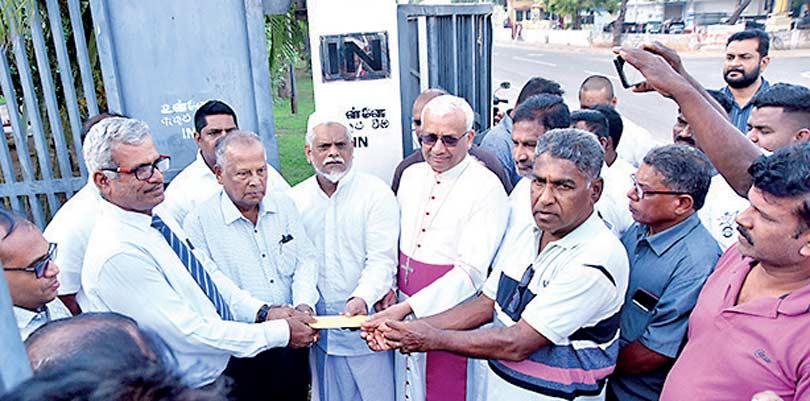 Mannar Bishop Rt. Rev. Gnanapragasam Anthonypillai (second from right) and members of the Mannar Citizens Committee hand over a petition against proposed projects on Mannar Island
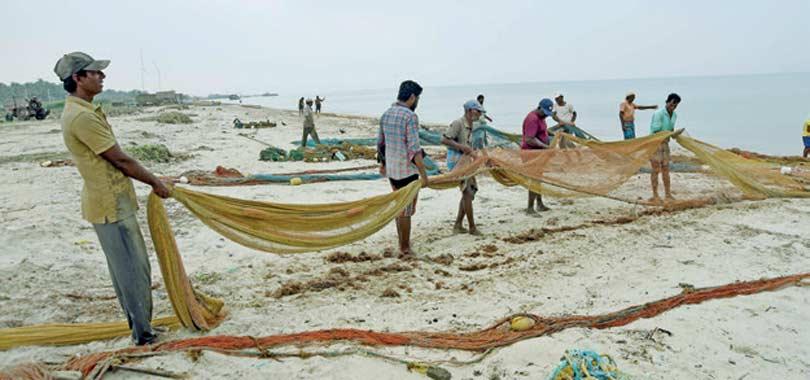
Fishermen claim that there’s a reduction of daily catch
No more wind turbines on Mannar Island: Dy. Environment Minister |
|
According to him, approval has been given for the turbines currently under construction. “Even though people complain of flooding and other issues, those are mainly due to unplanned development that took place during previous regimes. But we have planned to cut drains and rectify these issues. We won’t do any project that would have a detrimental impact on people. President Dissanayake rejected a request to provide the entire Mannar Island for soil testing. In fact if there are more turbines planned under a second phase they would be installed elsewhere and not in Mannar Island,” he underscored |