 KELUM BANDARA
Reply To:
Name - Reply Comment
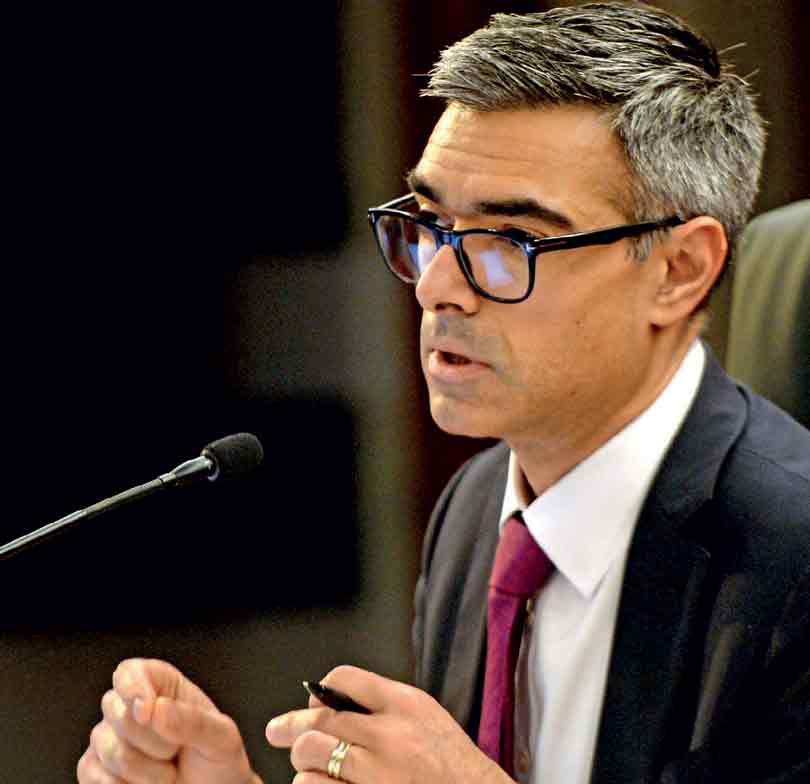
Evan Papageorgiou
It is true that Sri Lanka has made significant gains in terms of macroeconomic stabilisation under the reforms initiated in terms of the International Monetary Fund (IMF) Extended Fund Facility. It is a foundational growth. One may even call it natural growth. But Sri Lanka needs actual growth to improve the living conditions of people. The current growth stems from the IMF–led programme, which is bound to end in March 2027. What is next?
Only after the programme ends will the government be able to implement its own economic model. Then, it can take decisions independent of the IMF programme. It will test the true performance of the National People’s Power (NPP) government and its economic agenda. It is not yet clear how it will balance IMF-led economic reforms with its socialist tendencies which it talked about in the pre-election era.
No matter what, after the IMF programme ends, Sri Lanka should be in a position to rejig its economy after decades of uncertainty and inability to unlock its true potential.
The IMF programme has spurred the path to liberalisation and shaped Sri Lanka’s economic outlook today. Socialist-style plans have failed in Sri Lanka.
The IMF is satisfied with macroeconomic stabilisation. It is a key point highlighted by the IMF during its latest engagement with the government.
The government should ratchet up efforts to implement structural changes to boost growth, going beyond macroeconomic stabilisation.
To unlock durable and inclusive growth, Sri Lanka must also continue with trade liberalisation, digitalisation, regulatory streamlining, and labour market modernisation, IMF Mission Chief for Sri Lanka Evan Papageorgiou said at a press conference conducted at the end of his latest visit to Sri Lanka.
The IMF has taken note of the debt restructuring process which is nearly complete, and the successful exchange of SriLankan Airlines debt.
However, he said Sri Lanka faces economic headwinds because of the Middle East crisis and the impact of Cyclone Ditwah.
“Despite the gains, Sri Lanka continues to face significant challenges due to the ongoing conflict in the Middle East. At the same time, the country is still recovering from the devastating impact of Cyclone Ditwah which has created urgent infrastructure and transport spending needs. We have several intervention pressures, underscoring the need for options to accelerate reforms to safeguard macroeconomic stability and build resilience against future shocks. So, looking ahead, continuing efforts are essential,” he said.
Against this backdrop, the IMF is having a relook at Sri Lanka’s growth prospects for the year. Mr Papageorgiou said that a significant set of external conditions are affecting core functions of the economy. Last December, the IMF had a growth forecast of 2.9 per cent. Now, with the shock from the Middle East, the IMF is having a relook at the projections.
On the fiscal front, he said that it is critical to maintain strong revenue mobilisation and prudent spending.
“Sustained improvements in tax compliance, broadening the tax base, and restoring cost-recovery pricing for fuel and electricity will help reduce fiscal risks. These measures must be implemented in a way that protects the most vulnerable,” he said.
Regarding reconstruction work which the government is now carrying out after the cyclone, the IMF is keen to ensure that projects are prioritised carefully and executed transparently, in line with the Public Financial Management Act.
He stressed the need for the Central Bank’s independence.
“The Central Bank should continue to refrain from monetary financing of the budget. In addition, rebuilding foreign exchange reserves while allowing for exchange-rate flexibility is essential, and addressing non-performing loans and ensuring the resilience of financial institutions will help safeguard financial stability. Structural governance reforms are equally important, and perhaps even more important now than ever,” he said.
Tackling corruption is a major concern being expressed by many. The World Bank and the IMF have repeatedly laid emphasis on this matter.
Tackling corruption: the way forward
He welcomed the publication of the 2026 Action Plan on Governance Reform. Effective implementation will be key to advancing the anti-corruption agenda and supporting growth, according to him. Upholding the independence of Sri Lanka’s anti-corruption institutions and strengthening fiscal governance through sound legislation and asset management will contribute to a more transparent and efficient public sector, he said.
After decades of policy uncertainty and inconsistency, Sri Lanka found itself in economic peril in 2022, exacerbated by the global pandemic. The country, under the then government, found no other avenue for economic relief except IMF-led assistance. Today, the IMF has shown the path for liberalisation. Now, a wide range of policies, including the restructuring of state-owned enterprises such as SriLankan Airlines, should be carried out.
The efficiency and competitiveness of the Sri Lankan economy should be improved. Economic reform would not have been possible without the IMF programme. This is an opportunity for Sri Lanka not to miss. Will the NPP government deviate from its past socialist tendencies and embrace reform in line with the IMF programme? It only has to embrace reformation.
Pic by Pradeep Pathirana