 Zainab Hussein

Reply To:
Name - Reply Comment
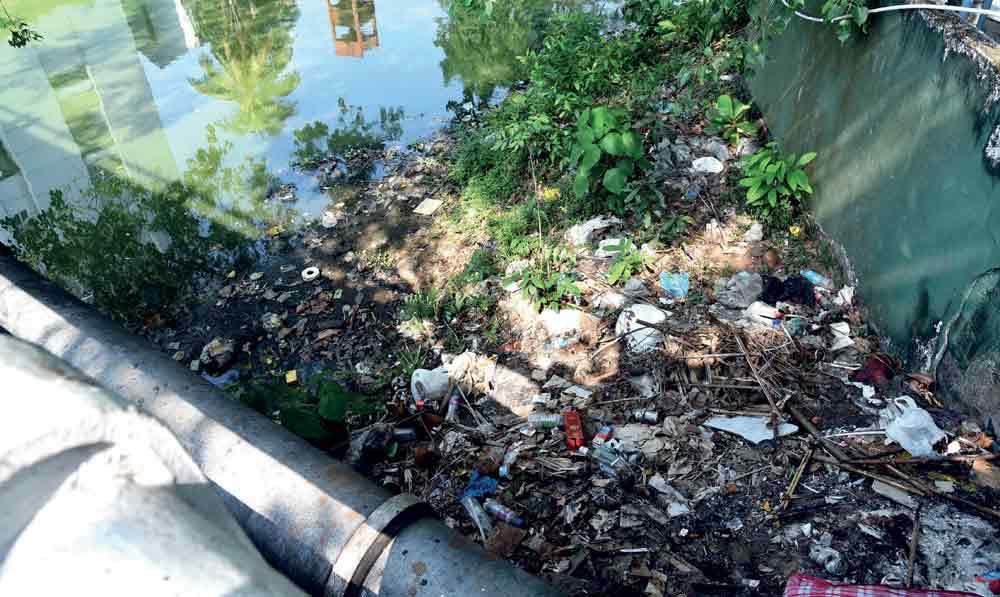
The Nawala Canal, once considered a crucial biodiversity hub has now become a major environmental and public health hazard, increasing the risk of waterborne diseases and urban flooding (Pics by Nisal Baduge)
 The water in the Nawala Canal has turned green and is heavily silted, increasing the risk of waterborne diseases
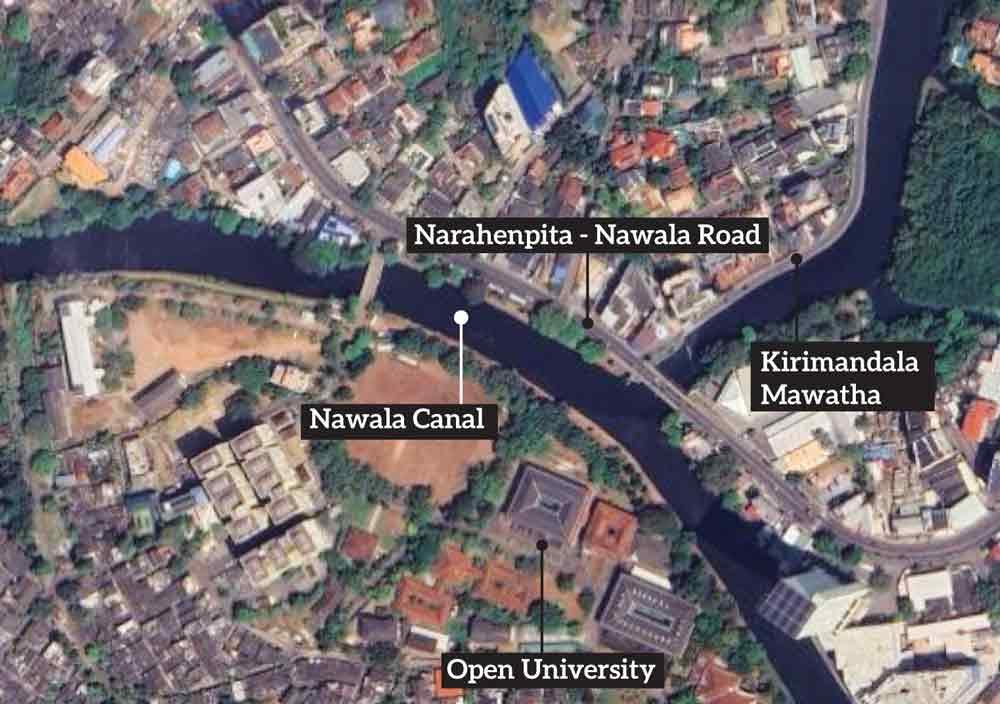
Nawala Canal is a component of Colombo’s urban waterway system, forming part of the broader Diyawanna Oya network
Non-biodegradable waste often clogs the waterways and blocks the canal flow, increasing the risk of urban flooding
The Nawala Canal, once considered a crucial biodiversity hub has now become a major environmental and public health hazard. For nearly three years, residents living along the canal have reported that the water has turned green and heavily silted, increasing the risk of waterborne diseases. The Nawala Canal is a crucial component of Colombo’s urban waterway system, forming part of the broader Diyawanna Oya network. It plays an important role in flood control, drainage and the maintenance of water quality and water levels in surrounding low-lying urban regions. However, non-biodegradable waste often clogs the waterways and blocks the canal flow, increasing the risk of urban flooding.
During a recent visit, the Daily Mirror spoke to a few residents living in close proximity to this canal. Ganesh, a worker at a nearby construction site, stated that the canal has been in this condition for a long time. “Despite frequent cleanup efforts by the relevant authorities, it continues to accumulate garbage. The waste is not dumped by local residents, but is carried from the Wellawatte side or the drainage outlets,” he explained.
A resident who wished to remain anonymous claimed that there have been instances when the water has even turned black due to severe pollution from industrial waste, sewage, and improper disposal of solid waste.
As shown in the photographs produced in this article, garbage tends to accumulate in areas where the water is stagnant. Even fauna is seen navigating through the trash, highlighting the severe impact of pollution on the natural habitat of the waterway.
Impact on communities
|
Karunaraj Nishanthi |
According to Karunaraj Nishanthi, a Lecturer at the Department of Geography, University of Kelaniya, communities living near polluted urban canals face serious health and environmental problems. She said that untreated sewage and industrial wastewater can spread waterborne diseases such as cholera, typhoid fever, hepatitis A, and salmonellosis, especially affecting children. “Parasitic diseases like ascariasis and giardiasis are also common in areas where water is heavily contaminated with human waste. People who come into contact with polluted water may suffer from skin problems, fungal infections, and respiratory illnesses,” she added.
She further said that stagnant or slow-moving canal water, together with uncontrolled growth of aquatic plants, creates solid breeding places for mosquitoes. “This increases the risk of diseases such as malaria and lymphatic filariasis. Long-term exposure to heavy metals like lead and cadmium can cause kidney damage, nerve problems, and other long-term health issues. Polluted water from canals can also leak into nearby soil and contaminate groundwater. This is very dangerous for people who still use unprotected wells near canals for their daily needs. In addition, dumping solid waste into canals often blocks water flow and causes flash floods during rainy seasons. The breakdown of organic waste also produces odors and makes the environment unpleasant while reducing the quality of life for people living nearby,” she noted.
Threats to biodiversity
The canal and its adjacent Colombo wetlands also acts as a vital urban ecosystem which supports a diverse range of endemic flora and fauna. The area provides habitat for wildlife including crocodiles, water monitors, turtles, fishing cats and several bird species including kingfishers, herons and egrets. These wetlands and waterways offer essential resources such as food, shelter and breeding grounds, thereby playing a significant role in sustaining urban biodiversity.
Nishanthi noted that when dissolved oxygen (DO) levels decrease in a canal ecosystem, biodiversity changes significantly at all ecological levels. “These changes spread through the ecosystem and affect many different plants and animals. Sensitive species like salmonid fish disappear first, while tolerant species such as carp and tubifex worms survive longer. When the DO levels fall below 2 mg/L (milligrams per litre), ‘dead zones’ form where complex life cannot survive. Invertebrates alter their behaviour, severely disrupting predator-prey relationships and collapsing the food web. Anaerobic bacteria multiply rapidly, releasing harmful substances like methane and phosphorus, triggering algal blooms that further deplete oxygen,” she explained.
She further said that human activities, such as sewage discharge, agricultural runoff, and industrial waste, may accelerate this decline. “Rising water temperatures due to climate change further reduce oxygen solubility, compounding biodiversity loss. Ecologically, energy flow shifts from complex macrofauna toward simplified microbial communities, severely reducing ecosystem resilience and productivity,” Nishanthi underscored.
How canal systems control floods
“Canal systems cannot properly control floods when waste and mud accumulate without regular cleaning,” said Nishanthi. She quoted a study done along Lazatin Boulevard in San Fernando, Pampanga which showed that when a canal is 40% blocked, it can carry only 3.6% of the water it was designed to handle. When the blockage increases to 60%, its capacity drops to just 1.4%. Because of this, even light rain (about 1.125 mm per hour) can cause the canal to overflow.
Nishanthi explained that in Colombo, illegal waste dumping and settlements built close to canals have made the canals narrower and shallower. “Waste materials also slow down the flow of water by making the canal surface rough. Even when canals are cleaned, mud and waste can build up again within a few weeks. Although large amounts of funds have been spent on canal rehabilitation in Colombo, many canals return to poor conditions because of weak maintenance and continued waste disposal,” she said.
According to her, some key challenges include limited technical and financial resources for continuous monitoring, weak inter-agency coordination, inadequate treatment infrastructure, delays in legal action, and insufficient local authority capacity. Recent improvements in licensing standards and public awareness are encouraging, but sustained enforcement at the local level remains the critical gap.
Previous urban planning failures
Canal degradation is largely the product of systemic urban planning failures. Nishanthi stated that poorly designed infrastructure including low-clearance bridges, narrow channels and undersised drainage pipes restrict water flow. “The absence of integrated sewage and solid waste management means that untreated waste is routinely discharged directly into open drains. Deforestation in nearby watershed areas increases the amount of soil and mud that enters canals and rivers. This leads to faster sediment build-up and reduces their ability to carry water. As a result, a harmful cycle begins; unplanned development changes natural drainage systems and increases flooding, and then expensive emergency solutions are needed to fix the damage,” she remarked.
Effective future measures
“It is important to move away from traditional ‘grey’ infrastructure (such as concrete drains and channels) and adopt more sustainable solutions like Sustainable Drainage Systems (SuDS) and Low-Impact Development (LID). These approaches include using permeable surfaces, bioswales, rain gardens, and green roofs to absorb and filter rainwater where it falls. Proper use of septic tanks and improved wastewater treatment methods, including biological, chemical, and physical processes are also necessary to remove pollutants before water is released into canals. Governments should make SuDS compulsory in new construction projects and set clear targets to reduce pollution levels. Projects that restore canals by replacing concrete channels with vegetated green corridors can improve the environment and encourage community participation. Funds can also be redirected from less important activities to support valuable wetlands that help control floods and improve water quality. Regular monitoring of water quality, strict laws to control industrial waste discharge, and container deposit systems to reduce plastic waste are also helpful solutions. Finally, community awareness programmes are important to encourage people to dispose of waste properly and protect drainage systems,” she concluded.
Daily Mirror spoke to officials from both the Urban Development Authority (UDA) and the Sri Jayawardenepura Kotte Municipal Council. Both institutions stated that they are not responsible for the management of the Nawala Canal, noting that it falls under the jurisdiction of the Sri Lanka Land Development Corporation. The SLLDC Act No. 15 of 1968, amended in 2021, regulates industrial discharge and waste dumping along canal reservations, strictly prohibiting the dumping of industrial waste or pollutants, unauthorised connection of storm water drains or sewerage lines, and any construction without prior written approval from the SLLDC. However, repeated attempts to obtain a response from the SLLDC were unsuccessful.
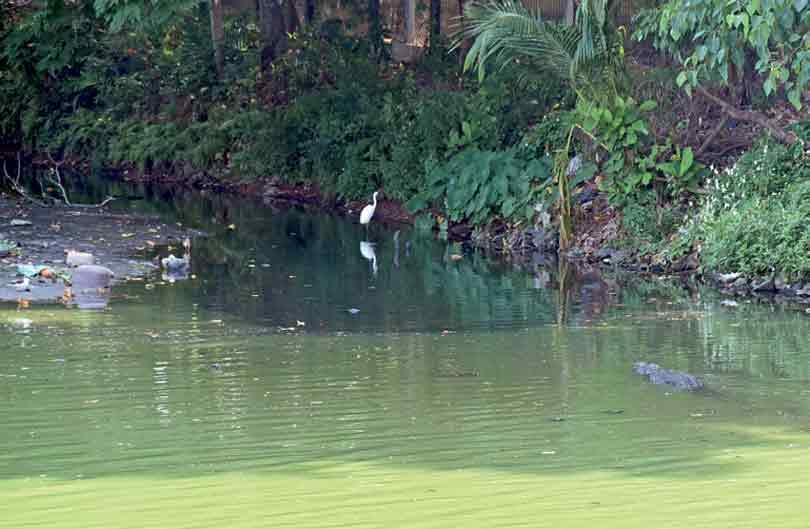 Garbage tends to accumulate in areas where the water is stagnant. Even the wildlife is seen navigating through the trash, highlighting the severe impact of pollution on the natural habitat of the waterway
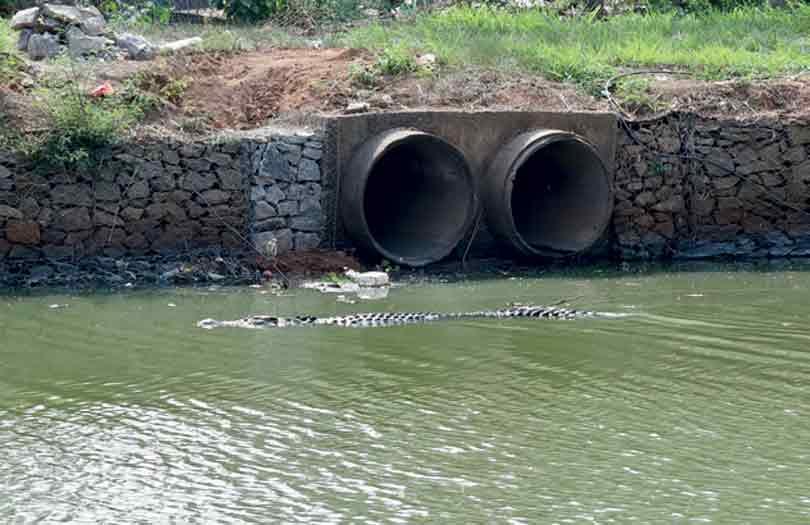
A crocodile spotted swimming in the Nawala canal
Karunaraj Nishanthi, Lecturer at the Department of Geography, University of Kelaniya explained why canal water turns black and the key biological, chemical and physical processes responsible for this phenomenon.
“Canal water turns black due to a combination of biological, chemical, and physical processes. Excess nutrients from sewage and runoff trigger algae blooms, and when this biomass decomposes, bacteria consume all dissolved oxygen. Anaerobic bacteria then produce hydrogen sulfide, which reacts with sediment iron to form black iron sulfide particles. Boat movement and monsoon rains further disturb oxygen-depleted sediment, releasing trapped sulfides and dark organic matter, while untreated sewage, industrial effluents, and chemical dyes introduce heavy metals and dark compounds into the water. Seasonal algal die-off additionally releases tannins and humic acids, naturally staining the water dark. When flow slows or stops entirely, stagnation allows all these pollutants to concentrate, and warm temperatures accelerate bacterial activity, collectively intensifying the blackening effect” explained Nishanthi.