 CHATURANGA PRADEEP SAMARAWICKRAMA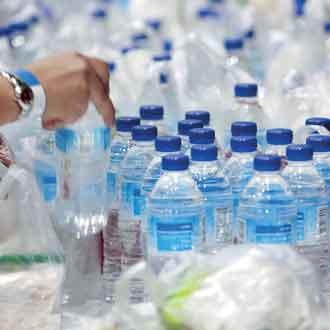
Reply To:
Name - Reply Comment
| Food safety officials advises consumers to look for the number 5 or the glass-and-fork symbol on plastic products, which indicate these items are food-safe materials |
| Unfortunately, over 75% of plastic products in the market—primarily imported from China—are of poor quality items and enter the country without adequate control |
| Former Environment Minister Mahinda Amaraweera had directed the Central Environmental Authority to ban certain polythene and plastic products |
The local market is awash with low-quality plastic products despite measures introduced to curb their import. Poor implementation of these policies has allowed items like water bottles and lunch boxes—often made from non-food-grade materials—to flood stores and homes.
These substandard products pose serious risks, with harmful chemicals potentially leaching food and beverages. Over a period of time, the exposure to these toxins can lead to severe health problems, including the creation of hormonal imbalances, infertility and chronic diseases.
Scope of the problem
|
Health experts have advised that if people must use plastic products, ensure it is high-quality and marked as food-safe or food-grade
|
The Daily Mirror recently investigated the rampant use of plastic items in the local market, uncovering alarming trends.
Even products labelled as “Pure Water Bottles” were often made from substandard materials; thereby failing to meet basic safety standards. According to Public Health Inspectors’ (PHI) Union Chairman Upul Rohana, the issue was widespread, particularly among items used by children.
“Many of the lunch boxes and water bottles in stores are not suitable for children,” Rohana explained, adding “they contain Bisphenol A (BPA), an industrial chemical linked to numerous health risks, from hormonal imbalances to cancer.”
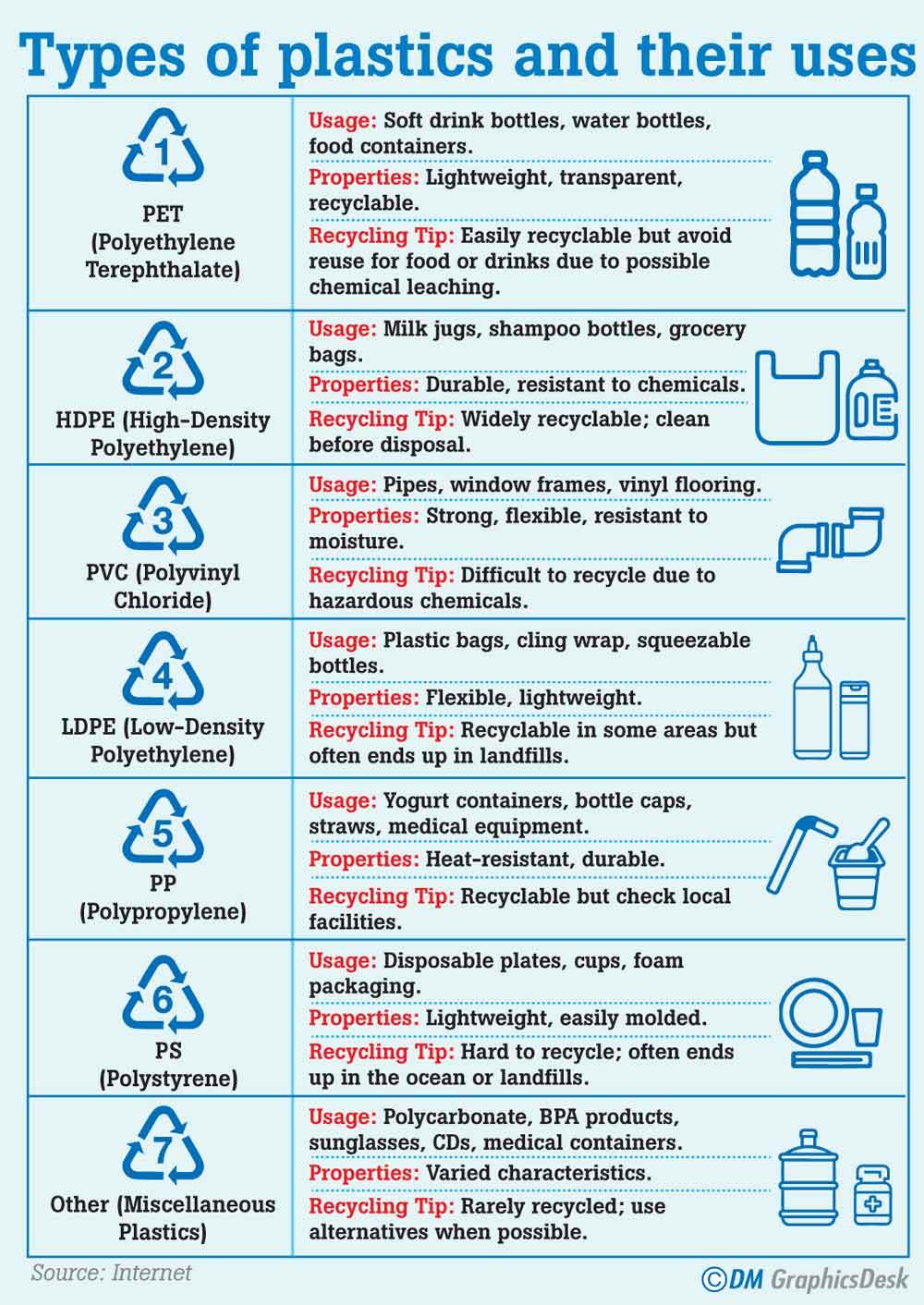
Rohana advises consumers to look for the number 5 or the glass-and-fork symbol on plastic products, which indicate these items are food-safe materials. The number will be inside the three arrows that form a triangle indicating recycling.
These markers signify polypropylene (PP), a durable plastic that can withstand higher temperatures and is commonly used in reusable containers.
Unfortunately, over 75% of plastic products in the market—primarily imported from China—are of poor quality and enter the country without adequate control.
Government initiatives
The Environment Ministry has been grappling with the challenge of regulating low-quality plastic imports.
Former Environment Minister Mahinda Amaraweera had directed the Central Environmental Authority (CEA) to ban certain polythene and plastic products, including single-use items.
He had emphasised that many of these products could be made from eco-friendly materials instead.

 Many of the lunch boxes and water bottles in stores are not suitable for children. They contain Bisphenol A (BPA), an industrial chemical linked to numerous health risks, from hormonal imbalances to cancer”
- Public Health Inspectors’ Union Chairman Upul Rohana
To better regulate imports, the ministry is proposing the introduction of separate Harmonized System (HS) codes for all plastic items.
These codes would help authorities identify and restrict harmful or low-quality plastics.
However, implementing this system poses financial and logistical challenges. To offset costs, the ministry is collaborating with the United Nations Environment Programme (UNEP) to analyse the chemical composition of plastic imports.
Non-Governmental Organisations (NGO) are expected to spearhead this initiative, examining whether products are made from recycled materials or contain harmful chemicals.
While outright bans on plastic imports are complicated by trade agreements, the introduction of HS codes is expected to prevent future imports of substandard plastics.
Steps toward sustainability
The government has already banned single-use plastic items based on recommendations from the Intergovernmental Negotiating Committee (INC). This ban has spurred the introduction of alternatives like wooden spoons, paper and coconut leaf straws, and cardboard utensils. Regular market inspections ensure compliance, although the transition will take time.
Court orders now allow fines for using polythene bags, and deadlines have been set to phase out products like lunch sheets. However, regulating existing low-quality plastics in the market remains a daunting task.
Consumer choices and challenges
|
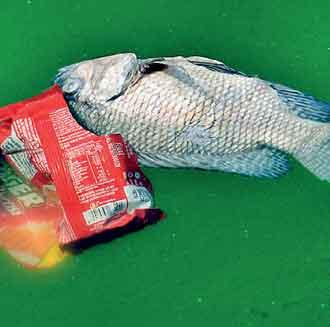
A dead fish floats next to a single-use plastic wrapping in a pond. The Environment Ministry’s proactive measures—such as HS code implementation and banning single-use plastics—are steps in the right direction
|
Consumers play a vital role in addressing the plastic crisis. Yet, many prioritise affordability and convenience over quality.
Parents, for instance, often avoid glass water bottles for children due to their fragility and dangers associated with it and opt for plastic items instead.
Although metal bottles are safer, they are costly and less appealing to children who prefer lightweight and colourful plastic options.
A pediatrician, who wished to remain anonymous, highlighted the risks associated with low-quality plastics, warning that chemicals in these products could leach food and drinks, increase the risk of illnesses like cancer and negatively impact children’s growth and development.
“If you must use plastic, ensure it is high-quality and marked as food-safe or food-grade,” the pediatrician advised.
Looking ahead
Tackling the plastic crisis requires coordinated efforts from the government, manufacturers, and importers, traders, and consumers. Stricter enforcement of import regulations, public awareness campaigns, and a shift toward sustainable alternatives are all essential.
The Environment Ministry’s proactive measures—such as HS code implementation and banning single-use plastics—are steps in the right direction. However, long-term success depends on collective action and a commitment to change.
The choices and decisions made today will shape the health of future generations and the environment. But the time to act is now.