
Reply To:
Name - Reply Comment
 Prof. Kotagama addressed the problem associated with the destruction caused by pest animals to agricultural sites
The roles that scientists and responsible officials could play to address this problem associated with pests was also discussed
It was also pointed out that there are no guesses in census and no science in counting animals
 A discussion on “Pest Animals Management” organised by the Committee for the Popularization of Science (CPS) of Sri Lanka Association of the Advancement Science (SLAAS) was held at the SLAAS auditorium on March 25. The session was conducted by Prof. Sarath Kotagama. In this timely discussion Prof. Kotagama addressed the problem of destruction caused by pest animals to agricultural sites, while urging on how research and statistical data could be used to find solutions. He also mentioned the roles that scientists and responsible officials could play to address this problem.
|
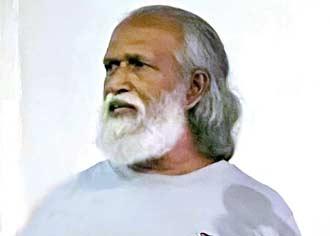
Prof. Sarath Kotagama addressing media representatives and invitees at a briefing conducted by the Committee for the Popularization of Science (CPS) of Sri Lanka Association of the Advancement Science (SLAAS) and held at the SLAAS auditorium in Colombo recently to educate the public as to how science and statistics can be used in pest animal management (Pic credit SLAAS) |
“As a learned man of science, I see that if we do not use science to address this issue we cannot progress. We are moving with the science. We have to understand science properly. I believe that I can address this issue and I am confident about it because I did Pest Animal Management for my Post Graduate. When we identify a pest we use pest control solution and by doing this we kill all the insects despite targeted insects, in the area. Gradually we identify the exact insect and use a more suitable one. But that is not scientific. So science plays a crucial role here. It is science that drives us,” explained Prof. Kotagama.
He also insisted on how important it is to have a census on animals and update it methodically using the correct procedure.
“How many years do we need to do a human census? We take a minimum of two years. We do not properly do even a human census and don’t do it scientifically. After a census, we cannot estimate as to how many children need schools in five years from now. This situation is not common only here in Sri Lanka, but it is the same in other countries in the world as well. I took humans as the first point and prioritised them because we can understand each other. We cannot do it with animals,” he said.
He also pointed out the difference between guesses and adequate statistics.
“It is very difficult to do a census on animals. We have been counting elephants for years now. But we are not able to specifically count the number of elephants even today. There are no guesses in census. There is no science in counting. We can do a good census, but first we have to be specific as to why we want to estimate them. Why do we need to have numbers of animals? When it comes to the census of animals we take only an estimate, and that is not a census. You have to first ask why do we take an estimate of the animals? We need correct and adequate statistics and numbers. Why do we need to estimate them? What type of information do we need? We have to be specific. Otherwise we would waste time and money in vain. A purposeful statistical data collection is the solution for the issue. We do not use science to address the issue. We have to use science,” he underscored.
He also stated how to implement science to get the results that is desired. “Let the science be brought in to solve this issue. If not we are going to waste a lot of money and create social disharmony. We have a problem, I do say so. But we do not know the magnitude of it. We cannot just do things while being in the dark. It requires a solution. We need clear data if we are going to address the issue scientifically.
“If you go to India today and look at the Weaver bird, actually they do some harm to the farms, but according to a research, they have found that the birds are taking away all the harmful insects in the paddy fields and feeding them to their little ones. When they compare the loss and gain it is very positive and today they plant trees to enable Weaver birds to visit paddy fields. That is the solution. It is a matter of understanding what the bird is doing and if it is a loss how do you set about preventing it. Can we do it without opting for the ultimate? Then we should practise that. For that an assessment is needed. For that we need some numbers, and that is the process. If we follow that we can get a good result. The science has the process here,” he concluded.