Reply To:
Name - Reply Comment
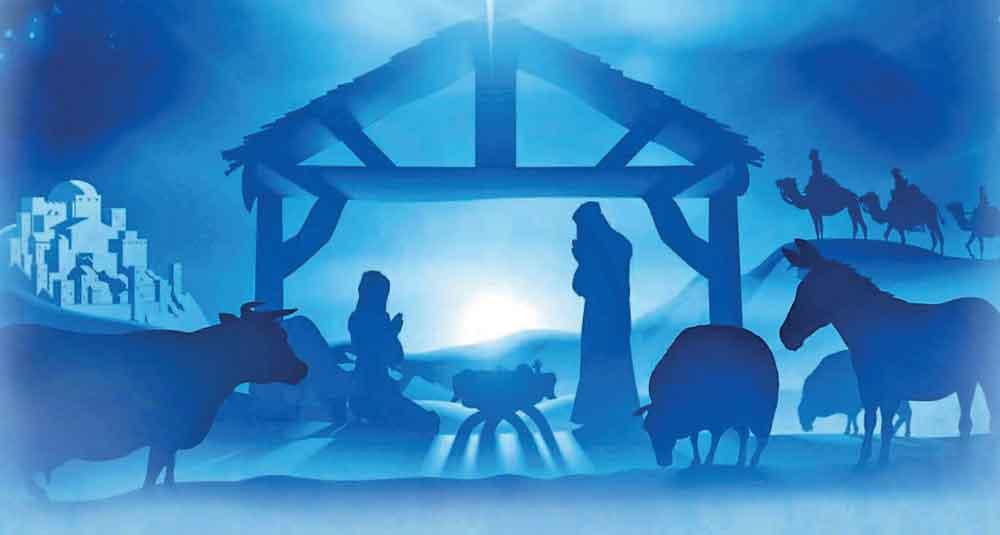
The Christmas message was that man’s Saviour was born
By Upatissa Attygalle
Every Christmas we see and hear the message “Peace on earth and goodwill among men” in Christmas cards, newspapers, magazines, display material on radio and television. Even wars are halted by mutual consent of the parties concerned. Such temporary ceasefires are considered to represent the ‘peace on earth’ significance of Christmas.
First, let us see what man considers ‘Peace’ to man. Primarily, peace is considered a state in which people co-exist without hostilities. The world is said to be at peace when there is an absence of war among states and nations. But the individual expects much more of peace. He expects to be free from want of money, food, clothing, shelter and other necessities of life. He wants to enjoy good health, to have security of employment and safety of his bodily self and possessions In fact, man expects peace to be a life free of worries and problems.
Next, let us find out how the popular belief that the message of Christmas is ‘Peace on Earth’ became accepted. In his gospel St. Luke records the message brought by an angel to some shepherds on the day that Christ was born in Bethlehem – “An angel of the Lord” appeared to them. They were terribly afraid, but the angel said to them “don’t be afraid! I am here with good news for you, which will bring great joy all the people. This very day in David’s town your saviour was born – Christ the Lord!” (Luke 2.9-11).
The Christmas message was that man’s Saviour was born. Luke further records the praises to God sung by a great army of heaven’s angels soon after the message was delivered to the shepherds. “Glory to God in the highest heaven, and peace on earth to those with whom he is pleased!” (Luke 2.14). It is from this passage of Scripture that man has extracted the section which reads “peace on earth” and made it to be the Christmas message. The reason for all misinterpretation of Bible text by man is that he removes a particular section of Scripture out of its context and then reads in or out a meaning to his satisfaction. In this case it is because most men, including Christians are really not concerned about Salvation – the assurance of eternal life with Jesus after physical death. Man forgets how uncertain and short his earthly life is. You don’t know what will happen between now and then” (Prov 27.1). “We are like weeds that sprout in the morning that grown and burst into bloom, then dry up and die in the evening “Psalm 90.5,6. Man also forgets that he is not here to make himself comfortable but to make himself conformable to Jesus Christ. “Fear God, and obey his commands because this is all that man was created for” (Ccc 12.13). Therefore man finds it more comforting to think the message of Christmas to be the peace they expect on earth.
St. Luke’s record of the Christmas message
Now let us go back to the Bible and carefully study St. Luke’s record of the Christmas message. The message was universal in nature as the angel said that it was good news which should bring great joy to all people. The message itself was that the Saviour of man was born on that day. The Saviour was not a warrior king come to save the Jews from their conquerors the Romans as was expected by the majority of the Jewish people due to their priest misinterpreting the prophetic Scriptures. The Saviour was Jesus Christ – God in Human form (1 Timothy 3.16). Did the birth of Christ bring peace on earth as expected by man? No! On the contrary it brought the exact opposite. Jesus said, “Do not think I have come to bring peace to the world. No. I did not come to bring peace but a sword. I came to set sons against their fathers, daughters against their mothers, daughter-in-law against their mother-in-law; a man’s worst enemies will be the members of his own family” (Matt 10.34-36). The sword is the word of God – “the sword of the Spirit, which is the word of God” (Eph 6.17). “The word of God is alive and active, sharper than any double-edged sword. It cuts all the way through to where soul and spirit meet to where joints and marrow come together. IT judges the desired and thoughts of a man’s heart” (Heb 4.12). Jesus’ teachings turned the world upside down. They exposed man’s hypocrisy and left him naked and helpless. This hurt man’s pride, for he preferred to rely on his own good deeds and righteousness for his salvation. Further Jesus demanded total commitment to him. “Whoever loves his father or mother more than me is not fit to be my disciple, whoever loves his son or daughter more than me is not fit to be my disciple. Whoever does not take up his cross and follow in my stapes is not fit to be my disciple. Whoever tries to gain his own life will lose it; but whoever loses his life for my sake will gain it (Matt 10.37-39). Whoever who believes in Jesus Christ makes those around him very uncomfortable. This is why Jesus said the first to oppose a believer would be the members of his own family and those who are close to him. Jesus too experienced this – “Not even his brothers believed him” (John 7.5). “A prophet is never welcomed in his home town” (Luke 4.23).
Next, let us find out from the Bible what the “peace on earth” referred to in the angles’ praise meant. When we read Luke 2.14 carefully we see that the angels actually said was, “peace on earth to those with whom he is pleased!” It was not a universal proclamation but a conditional one. The events that immediately followed the birth of Christ show us clearly that it was not peace as expected by man that was proclaimed by the angels. Jesus’ birth first shattered the peace of mind of Herod and others in Jerusalem (Matt 2.3). Then followed the terrible massacre of all male children of two years and under in Bethlehem and its neighborhood (Matt 2.16). So we see what the first Christmas brought was not peace but violent death and bitter weeping (Matt 3.18). Yet the angels had used the words “Peace on earth to those with whom he is pleased.’ This means that those with whom God is pleased are able to have peace while on earth.
We now have to study the Bible further and find out whether the peace referred to by the angels was different to the peace as understood by the world. Jesus tell us of the peace which is different from the peace knows to the world. “Peace is what I leave with you; it is my own peace that I give you. I do not give it as the world does. DO not be worried and upset; do not be afraid” (John 14.27). Paul too refers to this very special peace “Don’t worry about anything but in all your prayers as God for what you need (we should note that Paul used the word ‘need’ and not ‘Want’ or ‘covet’), always asking him with a thankful heart. And God’s peace which is far beyond human understanding will keep your hearts and minds safe in union with Christ” (Phil 4.6.7). What is the cardinal difference between the peace of God and the peace the world gives? It is this, the peace the world gives a man depends on the circumstances affecting him. If the circumstances are favourable to him, he enjoys peace. If the circumstances are unfavourable to him, he has no peace. The peace of God however does not depend on the circumstances affecting the man. He can have the peace of God under all circumstances – adverse or favourable. How can man have the peace of God? The Bible tells us how “You, Lord, give perfect peace to those who keep their purpose firm and out their trust in you” (Isaiah 26.3). This answers another question. The angels said, “peace on earth to those with whom he is pleased!” Now with whom is he pleased? With “those who keep their purpose firm and put their trust in God”.
We must not forget, however that a man can lose the peace of God he has even though it is not affected by circumstances. This happens when he strays from the path shown by Jesus and puts his trust elsewhere. Peter was able to walk on water as long as he kept his trust in Jesus. The moment Peter looked away from Jesus, and looked at the waves, fear entered him and he began to sink (Matt 14.29.30). But man is able to regain this wonderful peace of God by turning back to Jesus and once again trusting him completely. Peter realized his inability to save himself, he turned back to Jesus and cried out, ‘Save me Lord” At once Jesus reached out and grabbed hold of him and said, “How little faith you have” Why did you doubt?” (Matt 14.31).
It is now clear that the message of Christmas is very definitely – “This very day in David’s town your savior was born, Christ the Lord (Luke 2.9.11). On this day God offered man a gift of his son Jesus Christ – “For it is by God’s grace that you have been saved through faith. It is not the result of your own efforts, but God’s gift, so that no one can boast about it” (Eph 2.8,9). All man has to do is accept God’s gift and be saved from his sins. Man can then have the peace of God on earth.