Reply To:
Name - Reply Comment
By Admiral Ravindra C Wijegunaratne
 Navy installed over a thousand low-cost Reverse Osmosis (RO) water treatment plants to fight CKD, while successful in slowing the disease’s spread, the project’s long-term sustainability now requires government maintenance and centralized control.
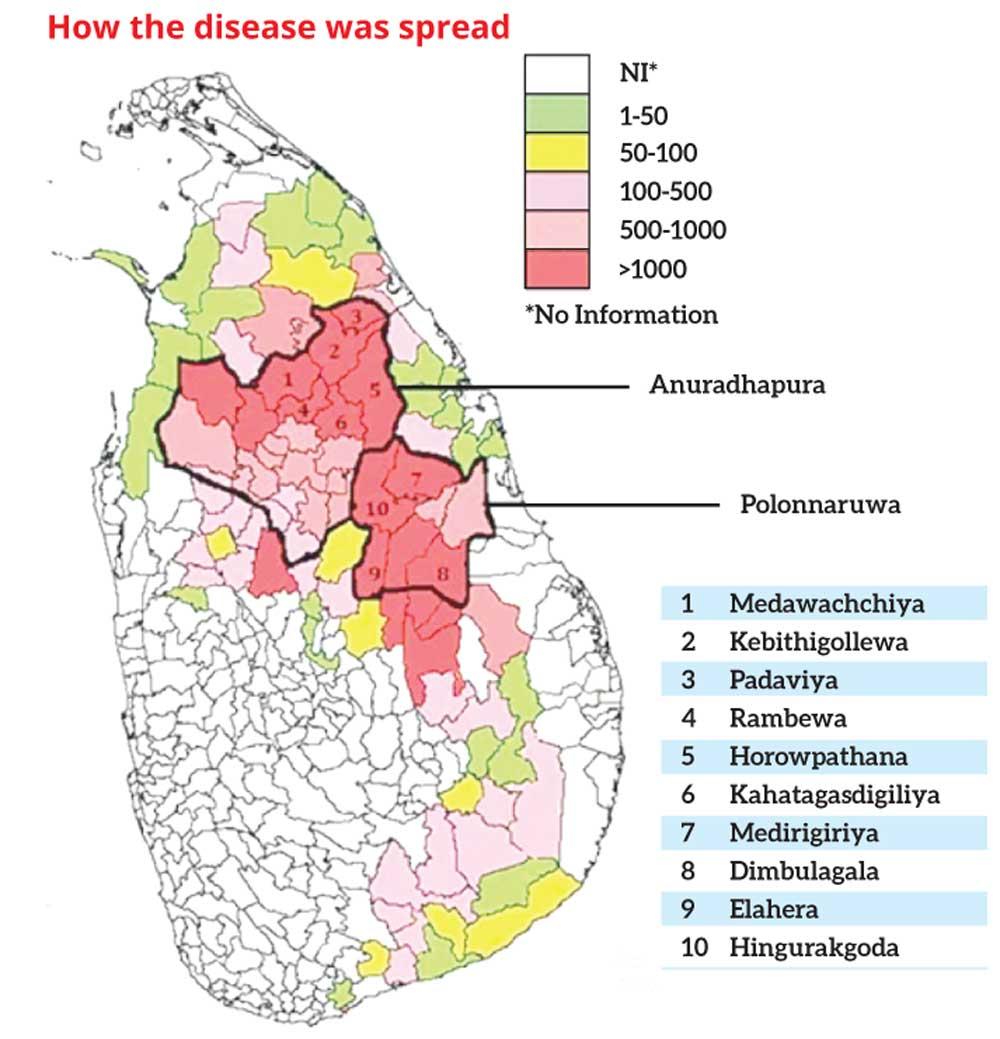
An unknown kidney disease stated spreading, especially in North Central Province of Sri Lanka like wild fire in early 2000s.
Various medical researches done on this disease by experts on the subject and it was revealed that it is a waterborne disease, which spreads due to the use of contaminated water for drinking and cooking.
The innocent patients, specially the farmers and their families were the victims. Once you are a KDK patient, you have to go through dialysis treatments frequently and you will not be able to work.
As the reason for the CKD known, Navy decided to manufacture low-cost Reverse Osmosis water treatment plants. The project started on 22nd December 2015 by fixing the first plant at Kadawath Rambawa, Madawachchiya in the North Central Province.
 Project continued with seven Navy Commanders continuously namely, Admiral Wijegunaratne, Admiral Sinniah, Admiral Ranasinghe, Admiral De Silva, Admiral Ulugetenna, Admiral Priyantha Perera and present Commander Vice Admiral Banagoda.
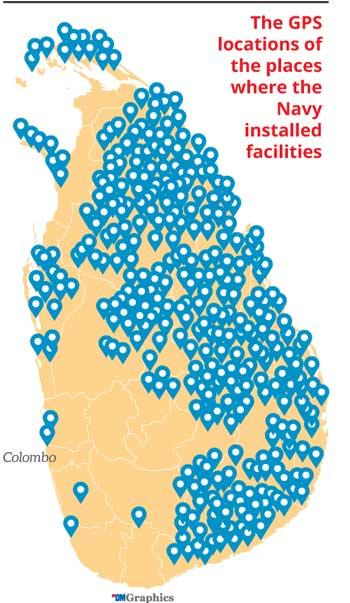
The Navy has also installed 1120 RO plants, each capable of providing 10,000 (ten thousand) liters of clean drinking and cooking water to public, free of charge on a daily basis.
The following map shows GPS locations of places where the Navy has installed these facilities (Map 1)
The region where the disease is spread is shown on map 2 (Map 2)
Now, the disease was not spreading at the rate it was spreading earlier. But, maintaining these plants and paying electricity bills cannot be done by Navy.
The State should have a proper system to maintain them - Navy can always provide the technical assistance/advice- but financial burden on providing chemicals for backwash of filters in 1120 points beyond Navy’s limited budget.
However, some places various local Societies/organizations has taken over the running of the RO plants and collecting money from humble people to provide water.
I personally feel government should step in and control the RO plants from a central location to keep them operational so that people get clean drinking and cooking water free daily.
For an example, there was a Presidential Task Force to eradicate CKD which was very well operated during the time of President Maitripala Sirisena, which handled this project very well.
Need for such an office is immediately required, otherwise this excellent project will get a natural death and CKD will start spreading again.
The writer is Admiral Ravindra C. Wijegunaratne,
WV, RWP and Bar, RSP, VSV, USP, NI (M) (Pakistan), ndc, psn, Bsc (Hons) (War Studies) (Karachi) MPhil (Madras)
Former Navy Commander and Former Chief of Defense Staff, Former Chairman, Trincomalee Petroleum Terminals Ltd, Former Managing Director Ceylon Petroleum Corporation, Former Sri Lankan High Commissioner to Pakistan .