Reply To:
Name - Reply Comment
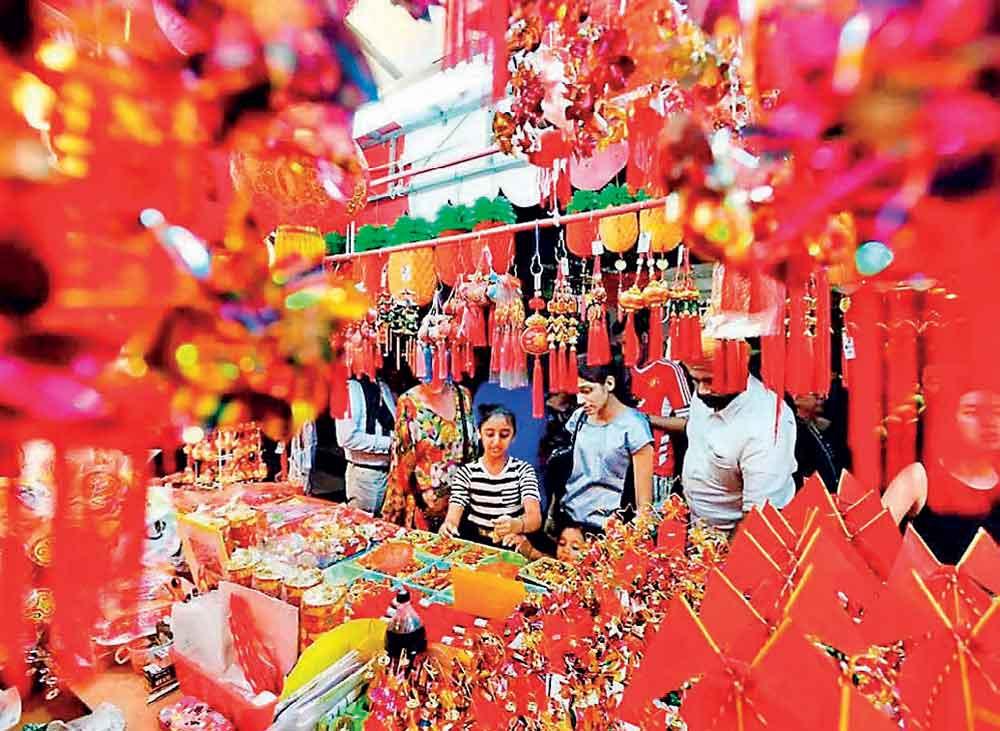
As a build up to the Chinese New Year, Chinese people clean their homes, stock provisions and prepare food
|
The Chinese New Year are also known as the ‘Spring Festival’ is a UNESCO-recognised global event The Spring Festival bears Chinese civilization’s pursuit of peace and harmony and substantiates common values of humanity Comparative analysis indicates that Chinese cultural practices are similar to Sri Lankan rituals observed during Sinhala-Hindu New Year |
 ‘Chinese New Year’ dawned on January 29, 2025. Celebrations, which will last for 15 days, are also known as the ‘Spring Festival’. The UNESCO-recognised global event is the most important holiday in China. As per the Chinese zodiac, 2025 marks the dawn of the year of the ‘Snake,’ which represents wisdom, adaptability, grace, intelligence, and strong intuition.
The Chinese New Year fell on the first day of the first month of the Chinese calendar and social practices such as family reunions and community harmony are given priority making it the largest human migration on planet earth. Prior to the celebrations, Chinese people clean their homes, stock provisions and prepare food. On New Year’s Eve, families dine together, light red lanterns, and stay up late to welcome the New Year. They light firecrackers to chase evil spirits and attract good luck. During the festival, people wear new clothes, make offerings to heaven, earth, and ancestors, and extend greetings to elders, relatives, friends and neighbours. The Spring Festival bears Chinese civilization’s pursuit of peace and harmony, promotes best wishes for the future, and substantiates the common values of humanity such as social inclusion and a sound relationship between human and nature (Ref. Chinese literature).
The crossing over to the New Year is known in Chinese as ‘guonian’.
China-Sri Lanka cultural similarities
Comparative analysis indicates that Chinese cultural practices are very similar to Sri Lankan rituals observed during the Sinhala Hindu New Year, Thaipongal, Vesak, Christmas, Deepavali and Ramadan. As ancient China traded with ancient civilizations along the historic Silk Road, its traditions, rituals, customs, legends and ballads influenced and blended with various cultures. Over the centuries, these rituals and customs have evolved and adapted to the modern era in many countries. Countries in the Middle East celebrate ‘Nawruz’ to mark the dawn of the New Year, which is known as ‘Nawa Wasara’ in the Sinhala language. The Chinese New Year promotes conflict prevention through family values, social cohesion, and peace, fostering a sense of identity, continuity, and stability. It serves as a strong foundation for global peace and a shared future in the 21st century.
Universal celebration of unity and joy
The evolution of practices reflects how traditions have been passed through generations, proving that it is not merely a Chinese festival but a global event. The Chinese New Year is celebrated by Chinese and non-Chinese alike in most countries around the world, including the 140-plus partners of the Belt and Road Initiative (BRI). The BRI is China’s 21st-century Silk Road trade network.
The Chinese New Year will fall on the first day of the first month of the Chinese calendar and social practices such as family reunions and community harmony are given priority making it the largest human migration on planet earth
More than just a cultural tradition, the Spring Festival serves as a global celebration of unity and joy. Through vibrant parades, culinary fairs, and workshops on Chinese crafts, it invites people from all walks of life to experience its inclusive and festive spirit. Among the countries that celebrate the Chinese New Year are Australia, India, the USA, and Japan, which formed the QUAD in an attempt to counter the influence of the BRI.
Amid attempts by separatist unions to distance countries from the BRI and divide humanity, the Spring Festival stands as a reminder of humanity’s shared values. China’s efforts to document, promote, and share its traditions have been widely recognized as a model for global cultural preservation. Recognizing China’s contributions to human civilization, UNESCO has included more than 44 cultural practices from China in its Intangible Cultural Heritage list. The latest addition was the Spring Festival’s social practices, which were included at the 19th session of the Intergovernmental Committee for the Safeguarding of the Intangible Cultural Heritage on December 4, 2024 (Ref. UNESCO).
Messages to ‘Generation Z’
China has delivered a practical message to all other countries that wish to modernize while preserving their cultural heritage by formally integrating religion, culture, and history into the public education system. The way China transmits related crafts and performing arts through apprenticeships provides an important lesson for others, as noted by many global researchers (Ref. INAH Mexico).
Chinese initiatives to digitize traditions associated with the ‘Spring Festival’ and conduct more cultural exchange programs will also ensure that the Chinese New Year remains vibrant among ‘Generation Z’ in the 21st century. Global youth focused on prosperity should collaborate more with China, as it already influences the world economy through booming exports, research and innovation, and its contributions to clean energy. By 2025, a GDP four times its current level is expected to amplify China’s worldwide impact (Ref. Cambridge).
(The Author of this article was a postgraduate researcher at the Kennedy School (Harvard) & Queen Elizabeth House (Oxford). He was the principal resource person of the ‘Belt & Road’ radio program on China Radio International (SL). He is a visiting lecturer at the faculty in Peace and Conflict studies and focuses on utilising the Belt and Road initiative for conflict resolution and prevention)