Reply To:
Name - Reply Comment
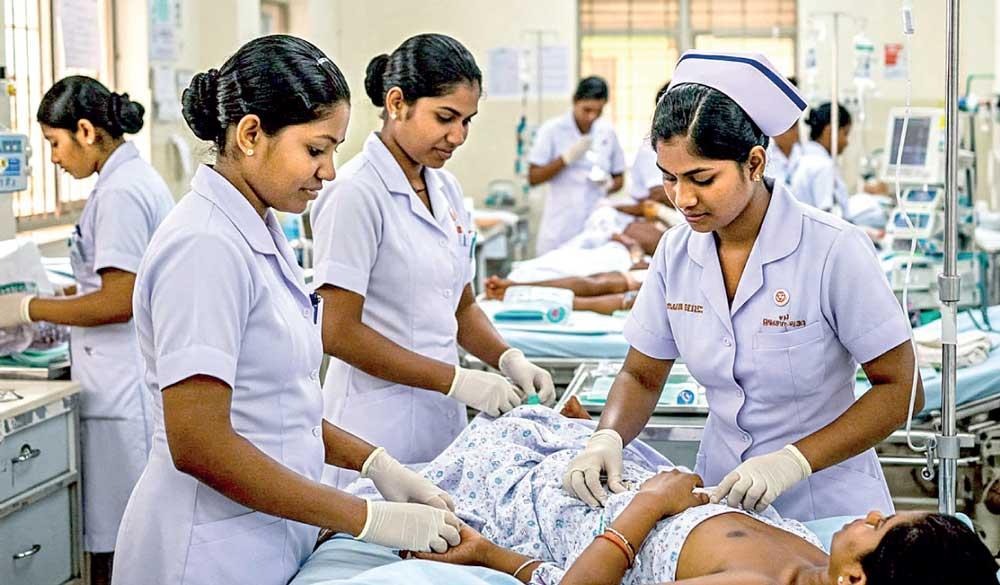
 Sri Lanka’s nursing profession underpins not only the nation’s healthcare provision but also its economic resilience. The dedication of these professionals in delivering care and promoting public health directly bolsters workforce productivity and curtails healthcare expenditure, particularly within underserved communities. Furthermore, remittances from the considerable number of Sri Lankan nurses serving abroad represent a vital influx of foreign exchange. As the island nation charts its economic recovery, the strategic importance of investing in and recognising its nursing corps is paramount for sustained progress and stability.
In Sri Lanka, a nurse is a professionally trained individual responsible for delivering holistic health care services to individuals, families, and communities. Nurses play a critical role in the national health system, acting as both caregivers and advocates.
Governed by the Sri Lanka Nursing Council (SLNC), nursing is a regulated profession, requiring formal education, registration, and adherence to ethical and professional standards.
Nurses in Sri Lanka are educated through government and private nursing schools and universities, where they receive both theoretical knowledge and practical training. Upon completion of the prescribed curriculum, nurses must register with the SLNC to practice legally.
Sri Lankan nurses hold many roles and Responsibilities for uplifting the health service and wellbeing of the public as Patient Care and Clinical Duties, Health Education and Promotion, Support for the Medical Teams, Record Keeping and Documentation, Community Health Services, Emotional and Psychological Support and for Professional Development and Ethical Practice.
In patient Care and Clinical Duties nurses are responsible for providing direct care to patients in hospitals, clinics, and community settings. This includes administering medications, monitoring vital signs, assisting with daily living activities, and implementing care plans. They also ensure infection control practices and maintain a clean and safe environment for patients. A key role of Sri Lankan nurses is educating patients and communities on health-related matters. They promote disease prevention, proper nutrition, hygiene, and maternal and child health, especially in rural and underserved areas.
Furthermore, nurses work collaboratively with doctors and other healthcare professionals. They assist in medical procedures, prepare equipment, and relay critical information about patient conditions to the medical team. Accurate documentation is an essential component in nursing. Nurses maintain patient records, treatment charts, and nursing notes that are vital for continuity of care and legal accountability. In public health, nurses are key players in immunization programs, such as home visits . They are often the first point of contact in primary health care units, especially in rural Sri Lanka.
Beyond physical care, nurses provide emotional support to patients and families, especially in critical care, palliative care, and end-of-life situations. Compassion and empathy are central to their practice. Furthermore, nurses in Sri Lanka are currently expected to follow a strict code of ethics and continuously update their skills through training and professional development programs. They must maintain confidentiality, provide non-discriminatory care, and uphold the dignity of the profession.
Sri Lanka is currently facing a challenging economic situation, which began to worsen around 2020 due to a combination of internal and external factors. It was marked by high inflation, foreign exchange shortages, and a significant decline in living standards. Although there have been signs of gradual recovery, the economy still faces many difficulties. One of the main causes of the crisis was the shortage of foreign currency reserves. To address the crisis, the Sri Lankan government sought help from international organisations, including the International Monetary Fund (IMF). Currently, while inflation has decreased, and tourism is slowly recovering, many Sri Lankans still struggle with high living costs, unemployment, and low wages. The government continues to implement reform programmes, but long-term recovery will depend on political stability, economic discipline, and support from international partners.
Nurses play a vital role not only in delivering health care but also in supporting the broader economic development of Sri Lanka. As the backbone of the health care system, nurses contribute significantly to improving population health, reducing disease burden, and promoting a healthier workforce that is directly linked to national economic growth.
Nurses working in hospitals play a key role in strengthening Sri Lanka’s economy by ensuring efficient, high-quality healthcare services. Their contribution helps maintain the health and productivity of the population, which is essential for national development. In hospitals, nurses provide continuous patient care, assist in surgeries, manage medication, and monitor recovery. This direct care leads to faster healing, shorter hospital stays, and fewer complications, all of which reduce the overall cost of healthcare. By doing so, nurses help save valuable resources for the health system and improve patient outcomes, making the workforce healthier and more productive. Hospital nurses also contribute by preventing the spread of infections through proper hygiene and infection control practices. This reduces the occurrence of hospital-acquired infections, lowering the burden on healthcare services and reducing unnecessary expenses. Their role in record keeping, patient education, and emotional support ensures that care is holistic and efficient. This contributes to a stronger healthcare system, which is essential for a stable economy.
The contribution of nurses to the economy of Sri Lanka goes beyond hospital walls. Public health nursing officers and public health nursing sisters contribute to improving public health by supporting productivity and reducing healthcare costs as silent drivers of economic development. One of the key ways nurses contribute to the economy is by promoting disease prevention and health education. By conducting community outreach programmes, nurses help prevent illnesses before they require costly hospital treatment. This lowers the national health expenditure and increases productivity by reducing sick days and hospital admissions. Moreover, a healthy population is a productive population. Nurses ensure early diagnosis and effective management of diseases, which helps people return to work faster and live longer, healthier lives. This supports labour productivity in sectors such as agriculture, industry, and services which is a key component of Sri Lanka’s economy. Nurses also contribute through public health services, especially in rural and underserved areas where doctors may not be readily available. Their work in vaccination programmes, providing domiciliary care for people who cannot come to health institutions and nutritional support helps control diseases and improve long-term health outcomes, thereby decreasing the economic burden on the state.
Nurses from Sri Lanka who take up employment abroad make a significant contribution to the country’s economy through the foreign income they generate. Thousands of Sri Lankan nurses work in countries like the Middle East, Europe, and Australia, providing skilled healthcare services that are in high demand globally. One of the primary economic benefits is the foreign remittances these nurses send back to Sri Lanka. On a national level, remittances are one of Sri Lanka’s main sources of foreign exchange, helping to strengthen the country’s balance of payments and reduce foreign debt pressure.
In addition to financial benefits, nurses who work abroad often gain advanced knowledge and skills, which they can bring back when they return to the country. This helps raise the overall quality of healthcare services in Sri Lanka and supports the development of the health sector. Furthermore, the international demand for Sri Lankan nurses creates employment opportunities, reducing local unemployment and relieving pressure on the public health sector. This also contributes to the country’s image as a reliable source of skilled healthcare professionals.
The new trends in Nursing and Economic Contribution are International Employment Opportunities, Nursing in Private Sector Expansion, Telehealth and Digital Health Services, and Entrepreneurial Roles. There is a growing global demand for Sri Lankan nurses due to their skills and professionalism. Countries like Japan, the UK, and Gulf nations are recruiting Sri Lankan nurses in large numbers. These jobs generate valuable foreign remittances, which directly support Sri Lanka’s economy. With the rapid growth of private hospitals and wellness centers in Sri Lanka, nurses can play a more prominent role in medical tourism and specialised care. This will generate income from international patients, promoting healthcare as a business sector. The rise of telemedicine and digital nursing can allow nurses to provide services remotely, both locally and internationally. It will generate new platforms to enable Sri Lankan nurses to earn foreign income while staying in the country. As a new trend, nurses can contribute to preventive healthcare, which reduces national healthcare costs and improves long-term workforce productivity.
Furthermore, to enhance the Economic Impact of Nurses, suggestions such as Increasing International Training and Language Skills, Government-Supported Overseas Recruitment, Encouraging Nurse-Led Clinics and Home Care Services, Promoting Research and Innovation, and Developing Tele-Nursing Infrastructure can be made.
Offering internationally recognised training and English or foreign language courses will help more nurses qualify for overseas jobs with higher salaries. Establishing structured programmes for safe, ethical, and well-paid foreign nursing employment can boost remittance income while protecting nurses from exploitation. Empowering experienced public health nurses to run clinics or home care services in rural and urban areas can improve community health and reduce the load on hospitals, improving productivity nationwide. Encouraging nurses to engage in research, public health innovation, and policy development can lead to better health outcomes, which support economic stability and growth. Moreover, investing in tele-nursing platforms could allow Sri Lankan nurses to offer healthcare services globally from within the country, generating income and reducing brain drain.
In the Sri Lankan context, a nurse is not just a caregiver but a pillar of the healthcare system, contributing to both curative and preventive services. Their roles go beyond hospital walls, extending into communities and homes, making them indispensable in achieving national health goals. As healthcare evolves, so does the role of the nurse, making it a noble and dynamic profession in Sri Lanka.
May 12 is marked as International Nurses Day. This annual commemoration serves to honour the birth of Florence Nightingale, widely regarded as the founder of modern nursing, and to acknowledge the indispensable contributions of nurses across the globe. The designation of International Nurses Day is attributed to the International Council of Nurses (ICN).
The writer is a Special Grade Nursing Officer (Education) at the School of Nursing, Ratnapura.