 Kamanthi Wickramasinghe
Reply To:
Name - Reply Comment
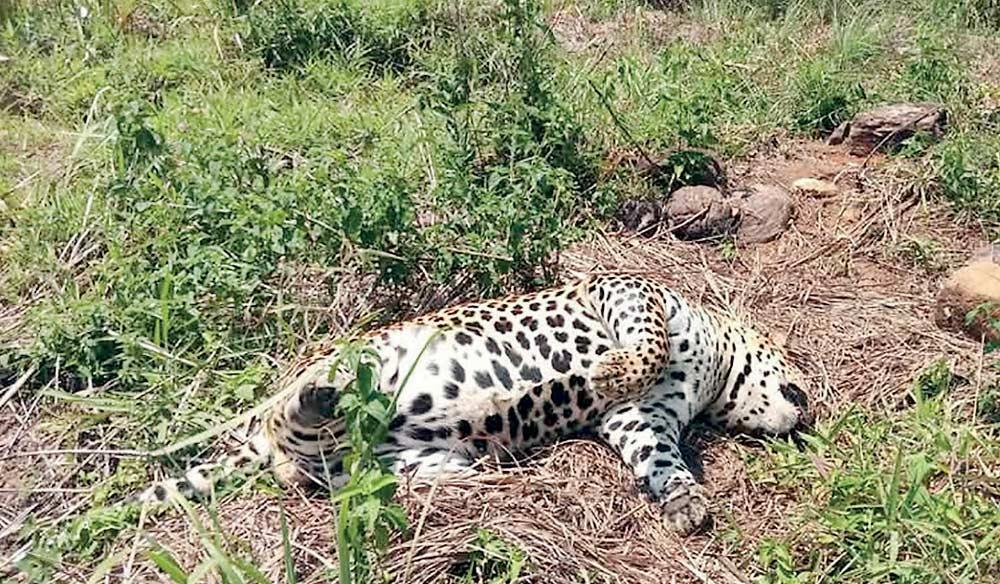
A leopard carcass found in Hatton
During the first three months of 2025 four leopards succumbed to injuries in separate incidents in the Nuwara Eliya district. Carcasses were discovered from Pussellawa, Dimbula-Pathana, Palmerston area and Talawakelle. In 2023, Sri Lanka recorded 12 leopard deaths where 67% was attributed to snares but no leopard deaths were recorded in 2024. Conservationists therefore opine that the value of a leopard goes beyond the lens of a camera or a tourism video and that stricter law enforcement and a shift in attitudes of people is paramount in protecting this charismatic, keystone species.
The value of leopards
|
Sethil Muhandiram |
The importance of having leopards in an ecosystem has been reiterated on numerous occasions. Leopards play a crucial ecological role as apex predators in maintaining the balance of ecosystems. By regulating herbivore populations, they prevent overgrazing, which in turn supports healthy forests and biodiversity. A thriving leopard population indicates a well-functioning ecosystem, which is essential for other industries such as agriculture and water management. According to Sethil Muhandiram, environmentalist, conservationist and founder at Leopocon, a non-profit organisation dedicated to the conservation of the Sri Lankan leopard, forests protected due to leopard conservation efforts also contribute to carbon sequestration, helping mitigate climate change. The economic benefits of a stable environment—such as clean water, soil fertility, and climate regulation—are invaluable and directly impact local communities.
Beyond financial and ecological benefits, leopards also hold cultural and heritage value. “In Sri Lanka, the leopard is a symbol of national pride and an integral part of the country’s wildlife identity. Unlike other parts of the world where large carnivores are disappearing, Sri Lanka still has a chance to safeguard its leopard population. However, if conservation is limited to the lens of tourism and media appeal, the real challenges faced by leopards—such as habitat destruction, human-leopard conflict, and poaching—will not be effectively addressed,” Muhandiram added.
Main threats to leopard habitats
Similarly to the human-elephant conflict where elephant habitats are being encroached by people for domestic and commercial purposes, leopard habitats in Sri Lanka are facing severe pressure due to deforestation, habitat fragmentation, and human expansion into wilderness areas. Muhandiram further said that the conversion of forested land into tea plantations, agricultural plots, infrastructure development, and urban settlements has significantly reduced the space available for leopards. “This has led to isolated populations struggling to find sufficient prey, forcing them into smaller and often suboptimal habitats. Additionally, as natural corridors are lost, leopard movement is restricted, increasing the chances of inbreeding and genetic bottlenecks, which can weaken populations over time.”
Another significant issue is human-leopard conflict, particularly in areas where agriculture and settlements border forests. Muhandiram observed that leopards are often blamed for preying on livestock, which results in retaliatory killings by farmers. “However, one of the most severe threats remains snaring, where leopards fall victim to traps originally set for other animals such as wild boar or deer. Leopocon’s research has shown that snaring is responsible for a large proportion of leopard deaths in Sri Lanka. Other threats include illegal hunting, road kills due to expanding road networks, and a decline in natural prey species due to habitat degradation and hunting. If these threats are not mitigated, the long-term survival of the Sri Lankan leopard will be in jeopardy,” Muhandiram warned.
Awareness alone may not be enough..
At one point private wildlife organisations took it upon themselves to remove snares in tea plantations. Community-level awareness programmes, especially in the hill country were carried out to educate communities about co-existence. But Muhandiram says that despite numerous awareness programs and conservation initiatives, the persistence of leopard deaths due to snaring highlights the fact that awareness alone is not enough. “While many communities now recognize leopards as keystone species, changing long-standing practices such as setting snares for wild boar is difficult without providing viable alternatives. This suggests that more needs to be done at the policy and enforcement levels, alongside community-driven conservation efforts,” he added.
A key factor that contributes to the continued use of snares is the lack of strong enforcement mechanisms. Muhandiram further said that while laws exist to protect leopards, their implementation remains weak, especially in remote areas where hunting and trapping are still common. “Additionally, there is a gap in accountability—those responsible for setting traps are rarely identified or penalized. Leopocon has been actively working on ground-level initiatives, but stronger collaboration with local authorities and policymakers is required to make conservation measures more effective,” he said.
Another issue identified by conservationists is that economic and livelihood concerns often override conservation priorities. Farmers and estate workers who lose livestock to leopards may resort to snaring as a defensive measure. “This underscores the importance of integrating conservation with community welfare programmes, ensuring that local people are given incentives to coexist with leopards rather than view them as a threat,” Muhandiram further said.
The need to change negative perceptions about leopards
The perception of leopards among local communities in Sri Lanka varies, with many viewing them as threats due to livestock predation, while others recognize their ecological and economic value. In rural areas near forests and plantations, fear and resentment towards leopards are common, often fueled by economic losses and misconceptions about their behavior. However, according to Muhandiram, shifting these negative attitudes requires practical, community-driven solutions beyond just awareness campaigns. Implementing livestock protection measures, such as reinforced enclosures and predator-proof pens, can significantly reduce predation and alleviate tensions.
He said that strengthening law enforcement with community participation—such as confidential poaching tip-offs or reward-based systems—can further deter illegal activities. Additionally, providing alternative livelihoods, like eco-tourism, sustainable agriculture, and handicrafts, can reduce human-leopard conflict. By integrating these strategies, attitudes can shift from hostility to coexistence, ensuring both community welfare and the long-term survival of leopards.
Muhandiram said that over the next decade, the biggest conservation goals for Sri Lanka’s leopards include strengthening habitat protection, reducing human-leopard conflict, enhancing legal enforcement, and fostering community participation in conservation efforts. Protecting and restoring natural habitats through reforestation, ecological corridor establishment, and stricter land-use policies will be crucial in ensuring that leopards have sufficient space and prey. “Conservation efforts must be science-driven, with expanded research on leopard populations, genetic diversity, and movement patterns through camera trapping, eDNA analysis, and satellite tracking. Ultimately, leopard conservation in Sri Lanka requires a collective effort, where government agencies, conservationists, and the public work together to ensure the survival of this keystone species,” he said in conclusion.