Reply To:
Name - Reply Comment
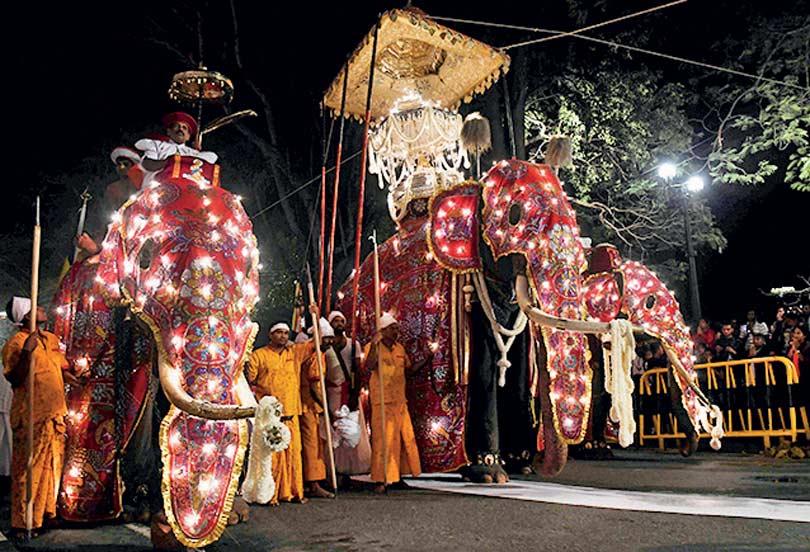
The Esala Pageant, which originally began as ritual to pray to various deities, gradually transformed into a platform that displays Kandyan excellence.
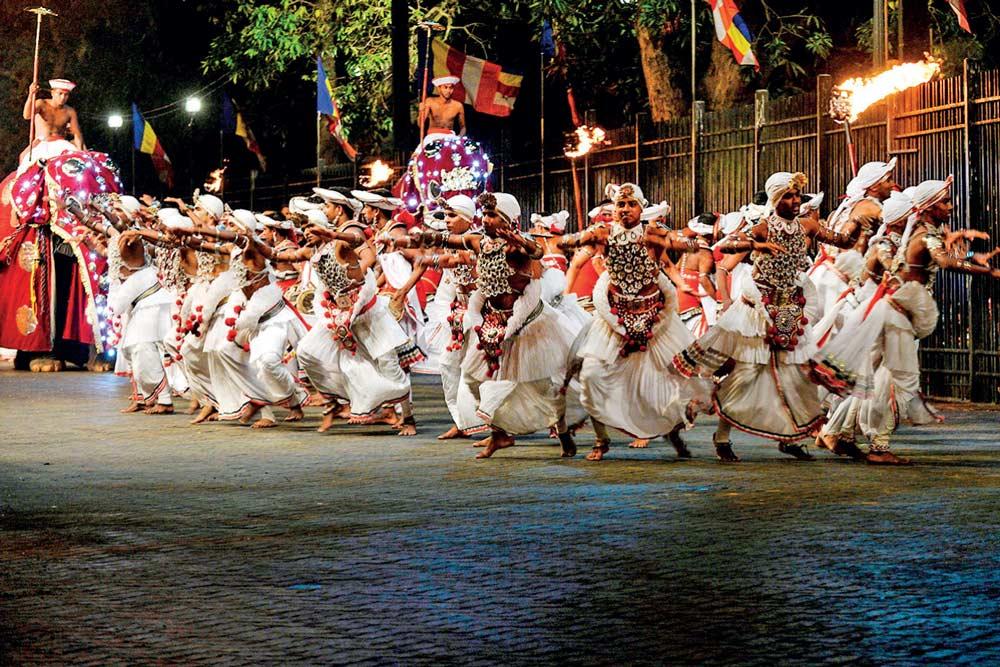
 If not for the dancers, drummers and torch bearers the Kandy Esala Pageant would be another street procession
 Have you ever thought of as to how this ancient ritual called the Esala Maha Perehera (Pageant) now called the Grand Pageant in Kandy has survived?
Little do we realise that if not for the dancers, drummers and torch bearers the Kandy Esala Pageant would be another street procession. The Esala Pageant, which originally began as ritual to pray to various deities, gradually transformed into a platform that displays Kandyan excellence. On display are dancing from different schools and other traditional performances.
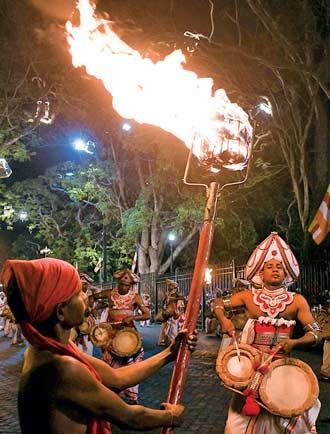 One result of the austere adherence to tradition is the significance of various musical instruments played in the procession over the years, These musicians can be identified by the different clans they represent.
Another baffling point about this Pageants is the absence of southern dancers. This is strange because the item of dancing originally came from the South, namely Devundra.
The original Perahera or procession wended its way to Aluthnuwara from Devundara Vishnu Devale, which marked the first Perahera in the hills. Then it was King Senarath who decided to take the Perahera with the effigies of God Maha Vishnu to Senkadagalapura.
This gigantic ritual practised in the Central Hills also had an Indian influence. That, is not unusual since the Kandyan Kings in later years were much associated with the Indian Culture.
Unlike in the Aluthnuwara Perahera, which concluded a few days ago, before the commencement of the ritual, the Kapurala (the serving priest) of the Devale (Shrine) bears the emblem of the deities.
The only plausible reason for this action is that the Kapuralas, who participate in the Kandy ritual, obediently took upon themselves to serve the deities, rather than leave it on a ‘Ransivige’ (Canopy).
On the other hand Robert Knox, who lived in Kandy as a prisoner, in his book mentions of dressed giants. These are the “Maha Bambas”, but they have since been removed from the Kandy Esala Perahara.
The story goes that the ‘Maha Bamba’ acts were created as a symbol of the trustees of the people of Sabaragamwa, especially after the Kandyan rebellion. The giants were ‘forced’ to go in the Kandyan Pageant. As a result the Maha Bamba who had two faces had by this time left the Kandyan ritual.
It is a privilege to be called to perform in this historic ritual. This request came from the King himself. And now that request comes from the Diyawadana Nilame, the official who can even cancel the Perahera or divert its couse, as it was done by the former Diyawadana Nilame C.B.Nugawela, over a clash with the Chairman of Queen’s Hotel.