Reply To:
Name - Reply Comment
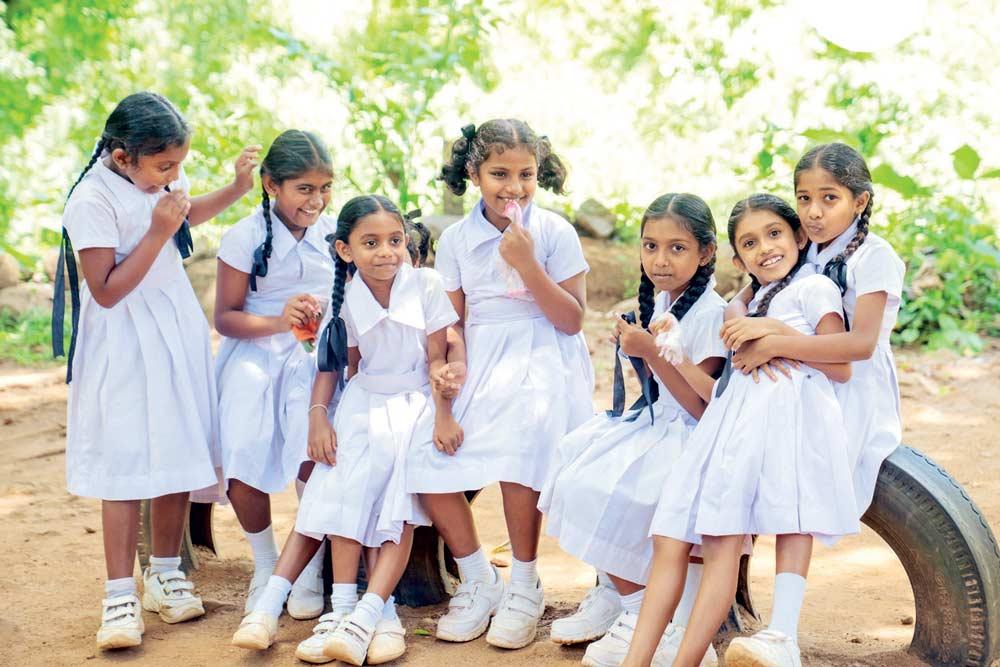
With new laws, global pledges and proven positive parenting tools, it is up to everyone to build a future where children are raised with care, not fear
 Physical punishment, although it’s supposed to be about discipline, often inflicts deeper emotional and physical damage in children
 When Menuri was just six, she woke up excited to take flowers to school; it was homework assigned by her teacher the day before. But a heavy rainstorm made her lose it on the way to school. When she arrived empty-handed, her teacher didn’t ask why. Instead, she hit Menuri on her hands and legs. That moment changed everything. Menuri went home crying and didn’t return to school for six months. The fear followed her for years, silencing her voice, even when she was praised.
 “I was terrified of adults, even when they meant well. I now realise I missed out on so much because of that fear,” she says. Today, as a UNICEF Youth Advocate, Menuri speaks out for children who are still afraid. “No child should have to learn through pain. And no child should grow up scared to speak,” she says. Menuri believes discipline should never come through violence, but through understanding, empathy and respect.
Nelson Mandela said, “There can be no keener revelation of a society’s soul than the way in which it treats its children.” Children are the future, curious, hopeful, and full of potential. As cited in the UN Convention on the Rights of the Child, anyone under 18 is considered a child, and they all deserve to grow up feeling safe, loved, and respected. Sadly, many still experience physical punishment as a means of discipline, which replaces safety with fear.
Corporal punishment is when an adult, be it a parent or any other authority figure, uses physical pain like spanking, slapping, or hitting to punish a child. These acts, although they are supposed to be about discipline, often leave deeper emotional and physical damage. Instead of teaching lessons, it can result in trauma and lead the children to believe that violence is okay.
This is why the ‘International Day to End Corporal Punishment’, which falls today (April 30), is so important. It raises awareness and pushes for change by promoting positive, non-violent discipline methods. This day reminds us that we, the children, have the right to be protected from harm and treated with kindness. If we want a better future, hurting children must stop and should instead be supported with love and understanding. No child should grow up afraid of the people meant to guide them.
Generational myths and trauma
I spoke to ten parents to hear their thoughts on the use of physical punishment to discipline children. Four of them believed that corporal punishment was necessary. Many adults still believe that physical punishment is necessary to raise respectful kids. They justify that approach with things like, “I was hit, and I turned out fine,” or “Without it, kids will be wild.” These are myths passed down through generations. Disciplining should be about guiding kids, not scaring them. Studies show that children thrive when they feel safe and respected, not when they’re punished with pain.
This connects to Menuri’s story, where one harsh punishment affected her for years. It shows how fear doesn’t teach lessons and just creates lasting trauma. Even if some adults may feel they “turned out fine,” it’s time to stop to think about how it actually shaped you. Maybe it made you scared of speaking up or had you confused about love and fear.
Just because something is part of a culture doesn’t mean it is right. Culture can grow, and so can we. Ending corporal punishment isn’t about being soft, it’s about being smart and kind.
Lasting damage
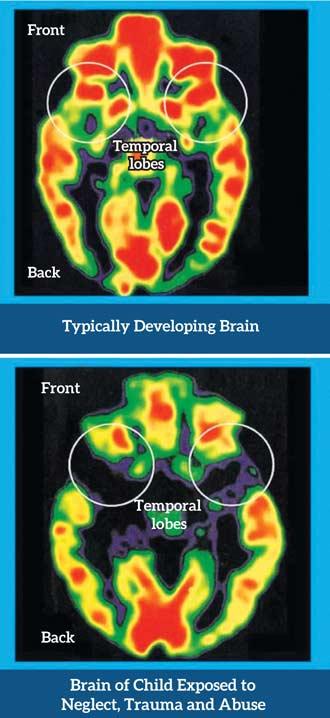
Corporal punishment doesn’t just hurt emotionally, it damages children physically too. Building on Menuri’s story and the myths we’ve unpacked, it’s clear the impact runs deeper than many realise. When children are hit, our bodies react with stress, flooding them with cortisol; the stress hormone. Over time, this weakens the immune system, messes with sleep, and affects brain development.
Even what some may consider a ‘light slap’ could lead to serious consequences, especially for younger kids. Neuroscience shows that repeated punishment can change how a child’s brain develops, affecting emotions and decision-making, similar to trauma. The effects don’t fade with age; they often last a lifetime.
According to Dr. Darshani Hettiarachchi, Consultant Child and Adolescent Psychiatrist at the Lady Ridgeway Hospital, “Corporal punishment doesn’t simply end with physical pain, it leaves deep psychological wounds that can last a lifetime.” She explains that trauma in childhood often leads to emotional distress, negative thinking, and poor coping skills.
“These early emotional disturbances often evolve into poor coping mechanisms,” she notes.
The unresolved trauma may later result in depression or post-traumatic stress. She warns that children exposed to aggressive environments may adopt those behaviors as adults, creating a harmful cycle. “Breaking this cycle is essential to ensure a more compassionate society,” she stresses.
Corporal punishment isn’t just a moment; it’s a pattern that can pass from one generation to the next. Research such as this study titled “Parental Adverse Childhood Experiences and Perpetration of Child Physical Punishment in Wales” from 2022 shows that parents who were punished physically as children are more likely to use the same methods on their own kids. High levels of parenting stress make this cycle even harder to break.
But attitudes matter too. Parents who believe in non-violent discipline are less likely to repeat what they experienced. Child Protection Specialist at UNICEF Sri Lanka, Dr. Hemamal Jayawardena explains that children mirror adult behavior. “If we use violence to discipline, we’re teaching them that violence is okay,” he says. He warns that fear-based discipline doesn’t build respect, just fear and emotional damage.
Dr. Jayawardena says, “true discipline should guide, not hurt. When adults model respect and patience, they raise stronger, more compassionate individuals”.
Changing perceptions
The world is starting to wake up to the damage corporal punishment causes, and Sri Lanka is part of that change. The Supreme Court made a powerful statement in 2021, ruling corporal punishment in schools illegal after a student suffered serious harm. To add to that, April 2024, then Cabinet approved a Penal Code amendment to ban all forms of corporal punishment, aligning with the UN Convention on the Rights of the Child.
More recently, in November 2024 at the first global Ministerial Conference to End Violence Against Children held in Bogotá, Colombia Sri Lanka pledged to introduce a comprehensive legal framework by mid-2025 to ban corporal punishment in all settings, including homes, schools, and institutions.
Sri Lanka also committed to strengthening social services responses for child survivors of violence, establishing childsensitive services for survivors, and creating safer school environments through revised policies and enhanced teacher training on positive discipline techniques.
But laws and pledges alone aren’t enough, we also need to shift mindsets. Instead of punishing children, adults should help us grow through simple, effective strategies that will support us in modeling the right behaviours. Children learn best when they feel safe and heard. Resources like UNICEF Sri Lanka’s Positive Parenting Manual bring these ideas to life in practical ways, showing parents how to use kindness and structure together.
Individual action must also build up community actions. Schools and religious leaders should also step up to promote these positive and non-violent parenting methods. By teaching respect instead of fear, children will automatically learn to be responsible, emotionally strong adults. Like Gandhi said, peace begins with children and that means raising them with patience, not pain.
Corporal punishment isn’t discipline, it’s damage. It creates fear, not respect; silence, not growth. As stories like Menuri’s and research worldwide show, the scars of violence can last a lifetime. But the power to break the cycle is also within us. With new laws, global pledges, and proven positive parenting tools, it is up to everyone of us to build a future where children are raised with care, not fear. Be the generation that ends corporal punishment for good. Change starts with you.
(The author is an 18-year-old student of Visakha Vidyalaya with an aspiration to become a doctor. She is passionate about youth empowerment and social engagement. She was part of the group of children who participated in the “Daily Mirror takeover by children” initiative, organized by UNICEF Sri Lanka in November 2024 to mark World Children’s Day)