 KELUM BANDARA
 Reply To:
Name - Reply Comment
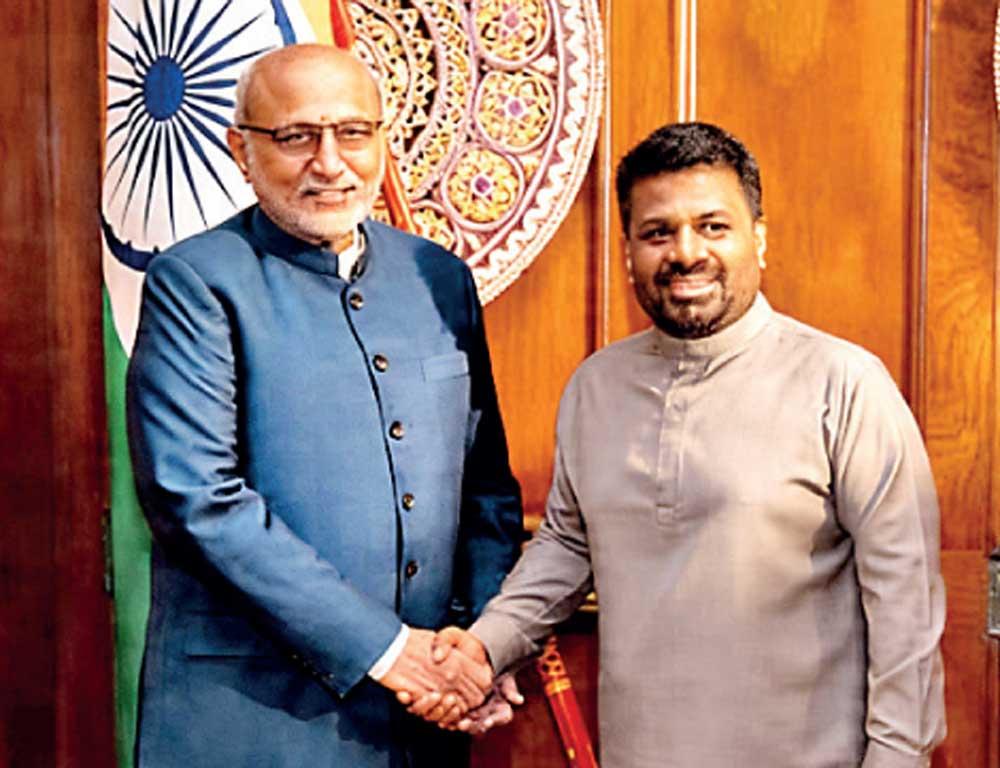
Visiting Indian Vice President C.P. Radhakrishnan (L) with President Anura Kumara Dissanayake
Indian Vice President C.P. Radhakrishnan visited Sri Lanka from April 19 to April 20, 2026.
The visit took place against the backdrop of India-Sri Lanka relations reaching new heights and taking fresh shapes. In the wake of the ongoing Middle East crisis, the two countries renewed initiatives for energy cooperation.
India has assured petroleum supplies to Sri Lanka to ward off any shortage in the market at this juncture. In the immediate aftermath of Cyclone Ditwah, the Indian government delivered essential relief supplies to cyclone-battered Sri Lanka. Prime Minister Narendra Modi assured that New Delhi stands ready to provide more aid to it to deal with the situation. New Delhi launched “Operation Sagar Bandhu” to assist Sri Lanka.
The current visit took place in the backdrop of such developments in bilateral ties and the two countries seeking further enhancement of their ties to the next level.
It is not yet another visit by an Indian dignitary to the country because the Vice President of India occupies one of the highest constitutional offices in India. When he travels abroad, it becomes an act that goes beyond ceremonial optics.
It carries great weight in terms of political intent and strategic signalling while attaching the highest possible importance to agreements and MoUs signed. This is the first bilateral visit by the Vice President of India to Sri Lanka.
Earlier, Prime Minister Narendra Modi visited Sri Lanka on five different occasions in the past. In that sense, it is a visit that symbolises the highest level of engagement between India and Sri Lanka.
During his visit, the Vice President called on the Sri Lankan President Anura Kumara Dissanayake. He also met Prime Minister Harini Amarasuriya, as well as other dignitaries and Indian diaspora leaders.
Sri Lanka is a key partner in India’s Vision MAHASAGAR as well as its Neighbourhood First Policy.
The visit of the Vice President to Sri Lanka follows recent high-level engagements between the two nations and will further reinforce the millennia-old people-to-people ties that bind India and Sri Lanka, according to a statement from the Indian External Affairs Ministry.
During the Emergency period, while studying at V.O.C. College, Tuticorin, the Vice President actively organised the collection of funds to support individuals who had been jailed during the Emergency.
He was the District General Secretary of the” Total Revolution” movement of late Lok Nayak Jai Prakash Narayanji for the Coimbatore District.
Total Revolution was a political and social movement led by Jayaprakash Narayan (Popularly known as JP) in the 1970s in India. Total Revolution was a call for a complete transformation of Indian society, not just a change in government. Lok Nayak Shri Jai Prakash Narayan believed that corruption, misgovernance, and social injustice required a holistic overhaul of systems.
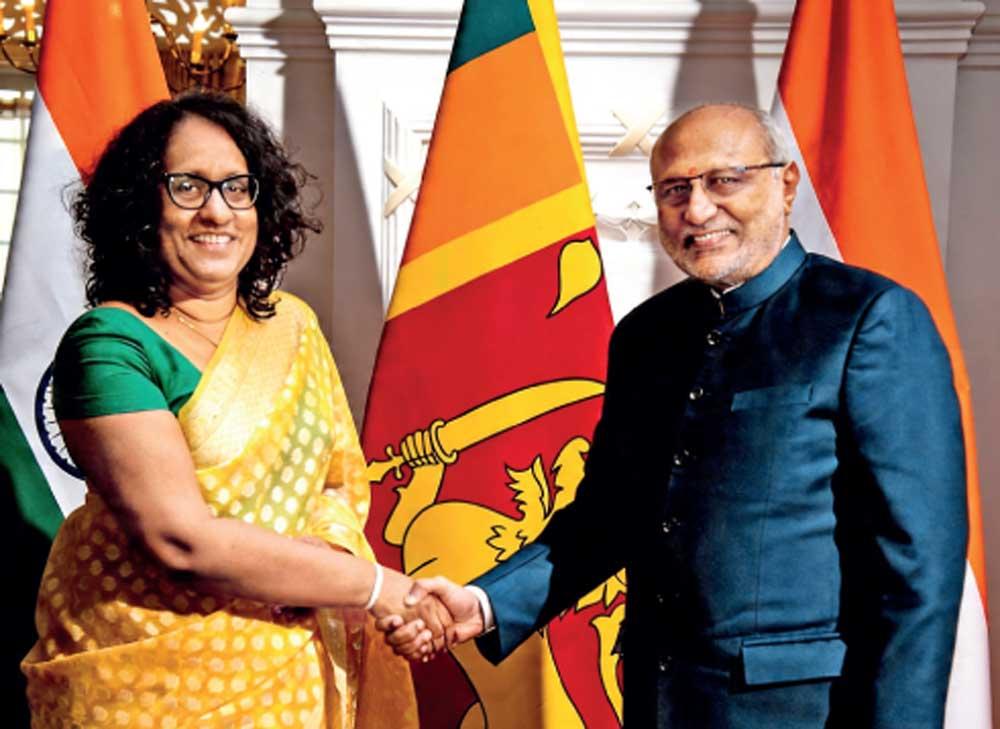
Prime Minister Harini Amarasuriya (L) with Visiting Indian VP C.P. Radhakrishnan
During a visit to Kashi in the year 2000, he chose to give up non-vegetarian food. Since then, he has strictly followed a vegetarian lifestyle.
During the Coimbatore bomb blast in 1998, a bomb had been placed in a fruit cart nearby, in order to save himself-he swiftly took shelter under a parked car and escaped unharmed.
The Coimbatore serial bomb blasts were a series of coordinated explosions that took place on 14 February 1998 in the city of Coimbatore, marking one of the deadliest terror attacks in South India.
On that day, over a dozen bombs exploded across different parts of the city within a short span of time. The blasts were timed to coincide with a political rally of senior leader L. K. Advani, who was visiting Coimbatore.
The Vice President has consistently expressed deep concern over the growing menace of drug abuse, particularly among young people.
Wherever he travels across the country, he makes it a point to address students and youth, urging them to stay away from drugs and adopt a healthy, disciplined lifestyle.
He emphasises that substance abuse not only harms individuals but also weakens families and society at large.
His interactions are marked by a sincere appeal to young minds to channel their energy towards nation-building and personal growth.
As Chairman of Rajya Sabha, the upper house of the Indian Parliament, he has to ensure that the House functions smoothly while upholding democratic values and decorum. Known for maintaining cordial relations across party lines, he fosters a spirit of cooperation and mutual respect among members, which is essential for constructive parliamentary discourse.
In the end, the visit of the Indian Vice President is not to be dismissed as a mere ceremony dressed in protocol.