 KELUM BANDARA
Reply To:
Name - Reply Comment
Sri Lanka’s diplomatic strength, as a neutral power, has now come to the limelight after it played a role in persuading Pakistan to play against India in the T-20World. In fact, it has struck a chord as a diplomatic gain attesting Sri Lanka’s ability. Sri Lanka is a trusted partner for both India and Pakistan
Is Sri Lanka a small power as many call it? The answer is no, and Australian High Commissioner Matthew Duckworth affirmed it at a roundtable discussion organized by Pathfinder Foundation in Colombo yesterday.
In that sense, Australia and Sri Lanka have a common role to play in the international arena today, afflicted by the dominant powers leveraging their strength to advance their national interests. The recent use of tariff as leverage by the United States is the classic example in this regard.
Against the backdrop, the High Commissioner shared Australian perspectives on middle power diplomacy in the Indian Ocean where Sri Lanka is also positioned strategically.
It is the region where the future world is being shaped.
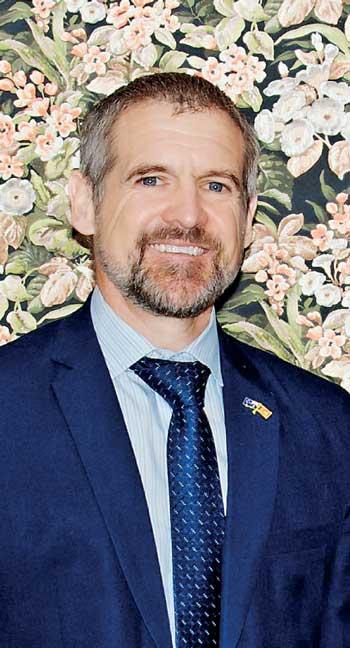 “Can I just say that the latest development overnight with Sri Lanka’s. Shall we call it a diplomatic coup, in securing Pakistan and India to play a very important game of cricket? It may even represent an example of exactly the sort of deft and clever middle power or Indian Ocean power diplomacy that we might be able to talk about,” he said.
In recent times, Canadian Prime Minister Mark Carney’s remarks at the World Economic Forum in Davos have laid bare the ground realities in the world today.
Quoting the remarks made by the Canadian Prime Minister, the Australian envoy said that over the past two decades, a series of crises in finance, health, energy, and geopolitics had laid bare the risks of extreme global integration.
Great powers are using economic integration as weapons, tariffs as leverage, financial infrastructure as coercion, supply chains as vulnerabilities to be exploited. The multilateral institutions on which middle powers have relied such as the WTO and the UN are now under threat, he said, quoting the Canadian Prime Minister.
“The old comfortable assumptions that our geography and alliance memberships automatically confer prosperity and security are no longer valid. Now, Prime Minister Carney made these remarks not to raise it as a cause for panic or retreat, but rather we see his core message in speaking this way was a call for states like ours to realise our own agency, to realise each of our potential to act and to shape the region in which we live ,” he said.
“We’re moving into a new era of amplified middle power diplomacy. This will continue as we work for our interests in an ever more contested world and as middle powers seek strategic balance in a multi-power world, “he said.
Also, he quoted extensively from Australian Prime Minister Anthony Albanese’s speech made at the UN General Assembly earlier to drive home his points on middle power diplomacy.
Asserting that the middle power of Indian Ocean diplomacy is still here, he said Australia certainly believes that keeping the region peaceful, prosperous and secure is its strategy.
“Australia is in no doubt that we are occupying a contested space, in particular here in the Indian Ocean with a range of complex problems facing policymakers. If we characterise our operating environment it presents as a pretty gloomy list of challenges. We’ve got climate change being more keenly felt, devastating weather events such as the recent Cyclone Ditwah and Australia’s recent and ongoing bushfires and floods. We know these are going to worsen,” he said.
“We’re seeing people continue to be displaced around our region by conflict, by economic circumstances. We’re seeing trade and investment increasingly viewed through security lenses. We’re seeing energy security, which, of course, the Indian Ocean plays a major role in, as a thoroughfare being increasingly vital to our resilience but less reliable going forward,” he said.
Quoting Australian Foreign Minister Penny Wong, he said that the Indo-Pacific, in particular this region, is where the world’s future is most being shaped.
Middle power has no clearly agreed definition. He traced the intellectual origins of the concept to Renaissance Italy, noting that the 16th-century political thinker Giovanni Botero distinguished between what he termed the grandissime states — dominant powers capable of asserting control over their regions — and the piccioli, the small or marginal states that were largely insignificant and functioned as price-takers, or, in Mark Carney’s phrase, “states that were on the menu.”
Between these two poles, however, Botero identified a category of states possessing sufficient strength, resources and legitimacy to operate independently, without dependence on the protection or patronage of larger powers.
Australia has long reflected on this concept. After World War II, then Minister for External Affairs, Herbert Evatt, invoked the term in the context of the United Nations’ founding.
He referred to states which, by virtue of their resourcefulness and geographic position, could play a pivotal role in maintaining security in different parts of the world. Both resourcefulness and geographic location, he emphasized, are critical.
Decades later, Gareth Evans, a more recent Australian Foreign Minister from the 1990s, elaborated on what defines a middle-power state. He argued that middle powers are not economically or militarily strong enough to impose their preferences on others, yet they are sufficiently capable, credible, and motivated to make a meaningful contribution on regional issues. Crucially, they must bring an active mindset to the way they conduct their international relations.
Sri Lanka and Australia fit well into this category, the High Commissioner said.
From Australia’s perspective, the answer lies in a combination of resilience and collaboration. Resilience means understanding where our core interests are at stake, knowing our own agency, and being prepared to stand up for our values and interests when necessary. Of course, we cannot — and do not need to — take a stand on every issue. But where something is fundamental, we must be ready to act.
Collaboration, on the other hand, recognizes that meaningful change often cannot be achieved alone. Middle powers must be engaged enough to identify others who share their goals and are willing to combine efforts, thereby amplifying their impact.
He elaborated that the middle powers such as Australia and Sri Lanka should try to strengthen the institutions such as the World Trade Organization (WTO) given the stability and predictability they have brought for us. Australia’s prosperity has absolutely benefited over recent decades because of that stability that the WTO has brought, he said. WTO was cited as a key institute in the era of weaponization of trade by dominant powers. He cited how Australia engaged the WTO to resolve a trade dispute with China without conceding to Chinese demands.
“I know there’s a lot of questions over the US’s trade actions in this regard as well. Of course, we share concerns about the use of tariffs as a policy measure. I think the fact that the US is still in the WTO, and is still engaged in that system, shows that even it does not wish to completely throw the system out,” he said.
Now is the time for Sri Lanka to build its strengths based on strategic positioning, historical neutrality, and diplomatic skill not only to safeguard its own interests but also contribute to the stability and prosperity of the Indian Ocean region.