Reply To:
Name - Reply Comment
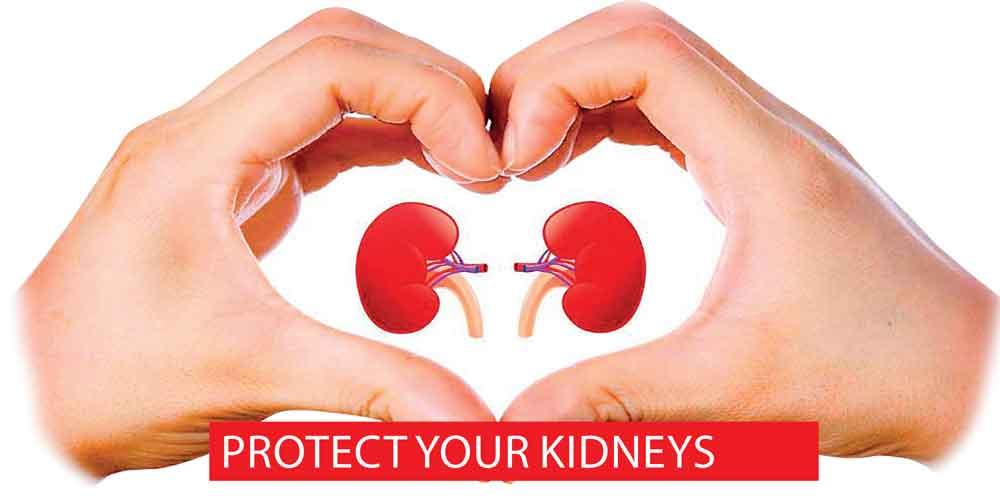
 Chronic Kidney Disease (CKD) is a silent epidemic affecting millions worldwide. While high blood pressure and diabetes are commonly known risk factors, many people overlook the role of urological conditions in the development of CKD. Conditions such as kidney stones, prostate enlargement and recurrent urosepsis can lead to long-term kidney damage if left untreated.
 Many people overlook the role of urological conditions in the development of CKD
If you’ve had kidney stones, you’re at a higher risk for more kidney stones and chronic kidney disease
About 1 in 10 people will develop a kidney stone during their lifetime. They’re most common in people in their 30s and 40s
If a stone that can’t pass on its own or is blocking your urinary tract, the doctor will recommend a procedure to break up and/or remove the stone
 1. What are kidney stones?
Kidney stones are solid masses or crystals that form from substances (like minerals, acids and salts) in your kidneys. They can be as small as a grain of sand or — rarely — larger than a golf ball. Kidney stones are also called renal calculi or nephrolithiasis
Depending on the size of your kidney stone (or stones), you may not even realise that you have one. Smaller stones can pass through your urinary tract in your pee with no symptoms. Large kidney stones can get trapped in your ureter (the tube that drains urine from your kidney down to your bladder). This can cause pee to back up and limit your kidney’s ability to filter waste from your body. It can also cause bleeding.
It can take as long as three weeks for kidney stones to pass on their own. Even some small stones can cause extreme pain as they go through your urinary tract and out of your body. You may need a provider to break up and remove a stone that cannott pass on its own.
About 1 in 10 people will develop a kidney stone during their lifetime. They’re most common in people in their 30s and 40s.
The most common symptom of kidney stones is pain in your lower back, belly or side (flank pain). It might feel like it extends from your groin to your side. It can be a dull pain or sharp and severe. It’s sometimes called colicky pain because it can get worse in waves.
Other symptoms :
Nausea and vomiting.
Bloody pee.
Pain when you pee.
Inability to pee.
Feeling the urge to pee a lot.
Fever or chills.
Cloudy or foul-smelling pee.
Smaller kidney stones may not cause pain or other symptoms.
 What causes kidney stones?
Your pee contains minerals, acids and other substances, like calcium, sodium, oxalate and uric acid. When you have too many particles of these substances in your pee and too little liquid, they can start to stick together, forming crystals or stones. Kidney stones can form over months or years.
Types of kidney stones
Calcium-oxalate and calcium phosphate stones.
They form when you eat high-oxalate or low-calcium foods and aren’t drinking enough fluids. Calcium-oxalate stones are the most common type of kidney stones.
Uric acid stones. Eating animal proteins (beef, poultry, pork, eggs and fish) can cause uric acid stones to form.
Struvite stones. Bacterial infections can cause struvite stones.
Cystine stones. An inherited condition called cystinuria causes cystine stones.
1. Medications
If you have a kidney stone that can pass on its own and isn’t causing infection, a provider may prescribe or recommend medications to:
Relax your ureter to help stones pass. Commonly prescribed medicines include tamsulosin and nifedipine.
Manage pain. Even small stones that can pass on their own can be very painful. Ask your doctor before taking over the counter pain killers. Some medicines (NSAIDS) can increase the risk of kidney failure.
. Kidney stone removal procedures
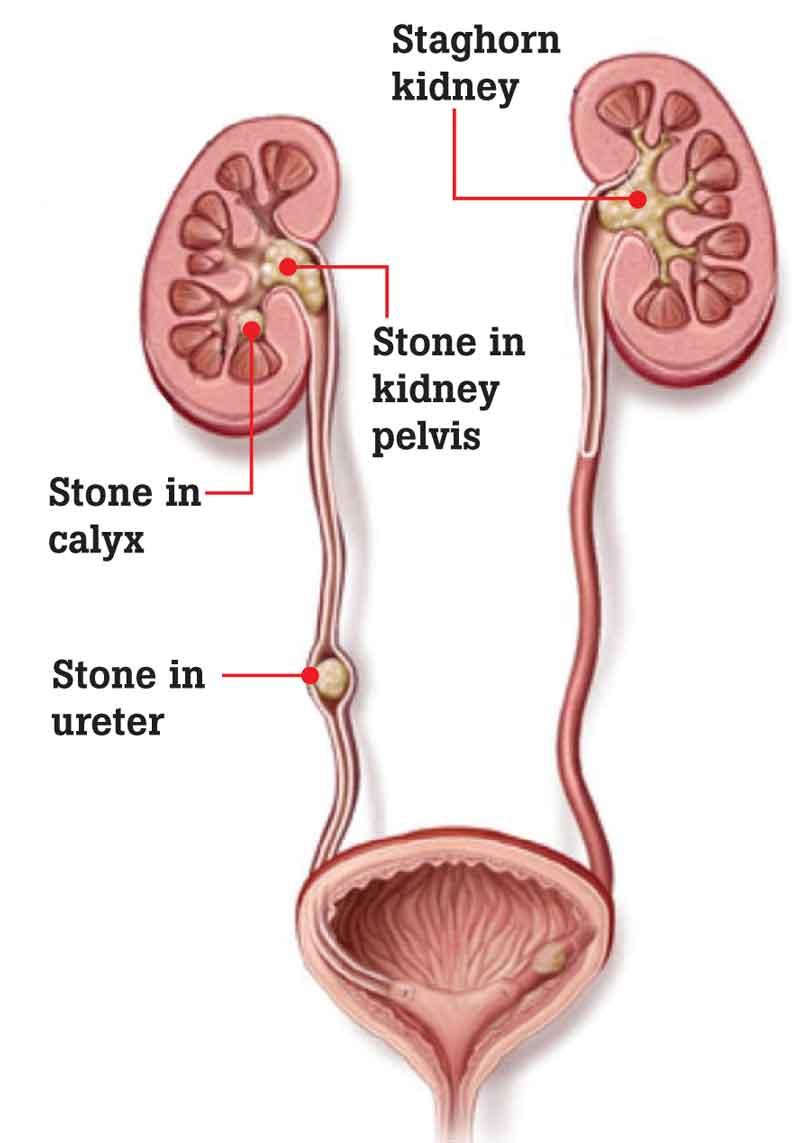
If a stone that can’t pass on its own or is blocking your urinary tract, the doctor will recommend a procedure to break up and/or remove the stone.
Shockwave lithotripsy. Uses shockwaves to break the stones from the outside of your body. The fragments can move through your urinary tract and out of your body more easily.
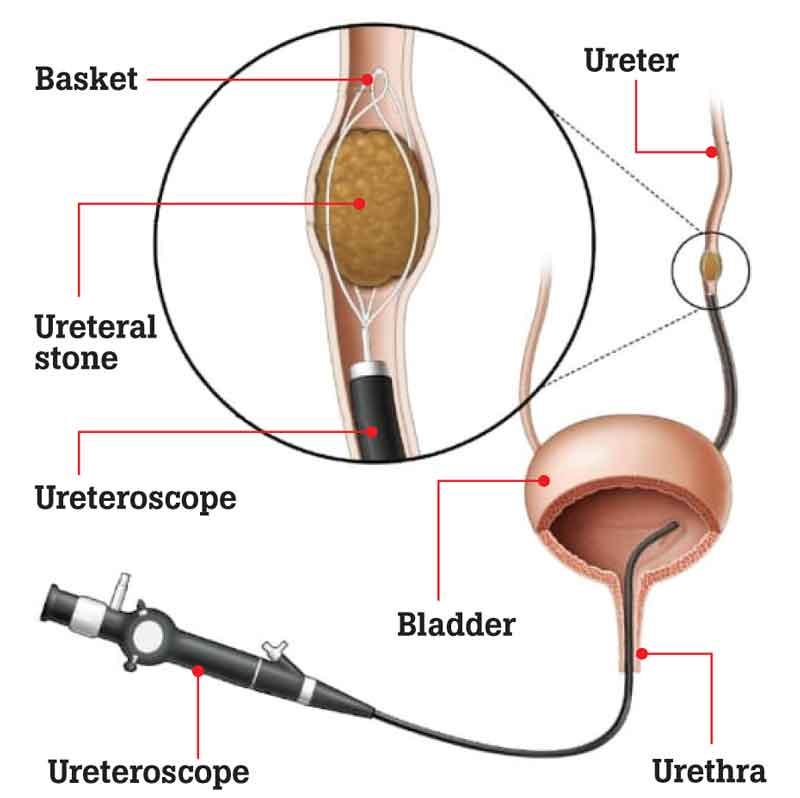
Ureteroscopy. Inserts a scope through your urethra and bladder and into your ureter and break up and remove the stone. The smaller pieces can move through your urinary tract and out of your body more easily.
Percutaneous nephrolithotomy. Inserts a tube directly into your kidney through a tiny incision (cut) in your back. An ultrasound probe breaks apart and removes the stones.
Laparoscopic surgery. Makes a small incision to remove the stone. In some rare cases, your provider might need to perform open surgery (with a larger incision) instead of laparoscopy.
Yes, around 80% of kidney stones can pass on their own. The amount of time it takes for you to pass a kidney stone depends on its size and location. A stone that’s smaller than 4 mm (millimeters) may pass within one to two weeks. It’s important to follow up with your healthcare provider if you don’t pass the stone within four to six weeks.
Stay Hydrated: Drinking at least 2-3 liters of water daily dilutes urine, reducing the risk of stone formation.
Limiting foods high in sugar and sodium.
Limiting foods high in oxalates. If you have calcium oxalate stones, your doctor might recommend you avoid foods like spinach, rhubarb, wheat bran, tree nuts and peanuts.
Maintaining a weight that’s healthy for you.
Eating foods that are good sources of calcium. While it may not seem like it, foods high in calcium can help prevent kidney stones. The same isn’t true for calcium supplements or antacids with calcium, which can increase your risk for stones.
If you’ve had kidney stones, you’re at a higher risk for more kidney stones and chronic kidney disease.
Don’t hesitate to see your doctor if you’re experiencing symptoms of kidney stones. If you have a kidney stone, you’ll need to know where it’s located and what size it is so that you can get treatment and prevent complications.
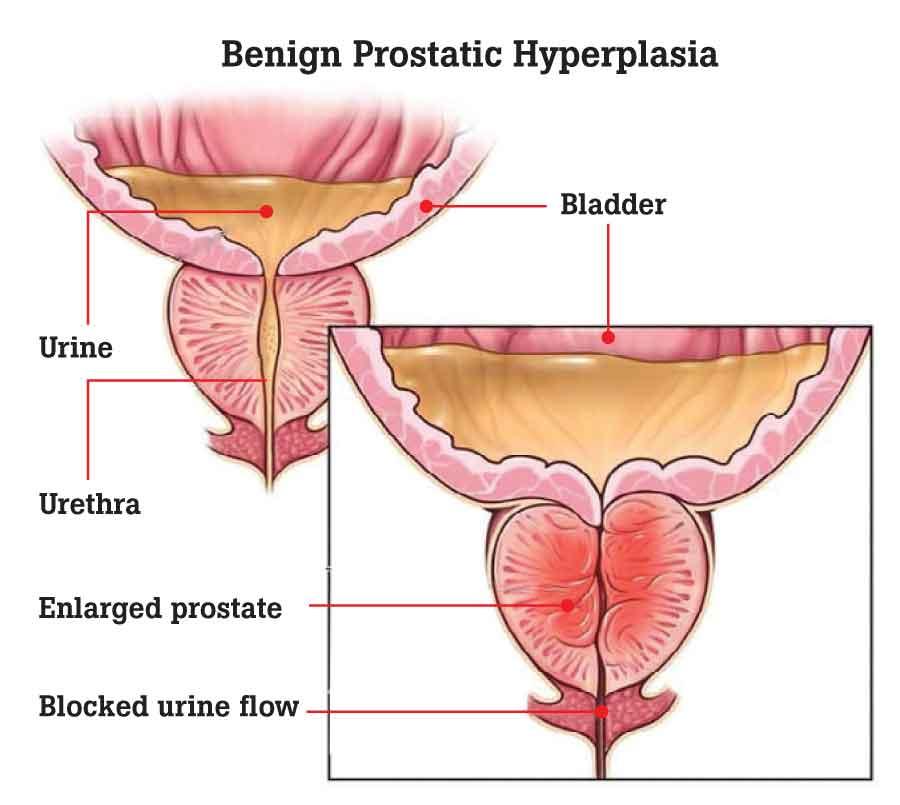
Benign prostatic hyperplasia (BPH) is a condition in which your prostate grows in size.
Your prostate is a gland that rests below your bladder and in front of your rectum. It’s about the size of a walnut, and it surrounds part of your urethra.
Your urethra is a tube that carries urine (pee) and sperm (ejaculate) out of your body.
If your prostate grows in size, it can prevent pee and ejaculate from passing through your urethra.
Almost all people with a prostate will develop some enlargement in their prostates as they grow older.
Frequent or urgent need to pee
Peeing more often at night.
Trouble starting to pee.
Weak urine stream, or a stream that stops and starts.
Dribbling at the end of urination.
Not being able to fully empty the bladder.
Complications of an enlarged prostate can include:
Not being able to pee. This also is called urinary retention. You might need to have a tube called a catheter placed into your bladder to drain the urine. Some people with an enlarged prostate need surgery to get relief.
Urinary tract infections (UTIs). Not being able to fully empty the bladder can raise the risk of infection in the urinary tract.
Bladder stones. Can block the urine flow.
Kidney damage. Pressure in the bladder from not being able to pee can damage the kidneys or let bladder infections reach the kidneys.
Prostate-specific antigen (PSA) blood test. PSA is a protein made in the prostate. PSA levels go up when the prostate becomes enlarged.
Urinary flow test. You pee into a container attached to a machine. The machine measures how strong your urine flow
Ultrasound Scan with Postvoid residual volume test. This test measures whether you can empty your bladder fully.
Prostate biopsy. This test uses ultrasound imaging to guide needles that take tissue samples of the prostate.
Cystoscopy. A lighted, flexible scope is placed into the urethra to see inside the urethra and bladder.
Many treatments are available for enlarged prostate. These include medicines, surgery and procedures that involve smaller, fewer or no cuts. The best treatment choice for you depends on the size of your prostate, your age, your overall health, how serious your symptoms are. medications (ex-Tamsulosin) relax the muscle in your prostate.
Transurethral resection of the prostate (TURP). Your urologist inserts a special instrument (resectoscope) through your urethra that allows them to see and remove prostate tissue.
Transurethral electrovaporization. Your urologist uses an electrode to heat your prostate tissue. This turns the tissue cells in the enlarged areas of your prostate into steam.
GreenLight™ laser treatment. Your urologist uses a special laser to evaporate your enlarged prostate tissue.
Chronic Kidney Disease is a silent killer that progresses gradually, often going unnoticed until the late stages. While diabetes and hypertension remain the leading causes, urological conditions such as kidney stones, recurrent urosepsis, and prostate enlargement significantly contribute to kidney damage.
The good news is that CKD caused by these conditions is largely preventable. By adopting a healthy lifestyle, staying vigilant about urinary symptoms, and seeking timely medical intervention, individuals can protect their kidneys and maintain optimal health.
Raising awareness about these urological causes of CKD is crucial for early detection and prevention. The key to reducing CKD-related complications lies in education, lifestyle modifications, and regular medical check-ups. Let’s take proactive steps today to safeguard our kidney health for a healthier future!
(The writer is a Consultant Urologist & Transplant Surgeon at National Institute for Nephrology Dialysis and Transplantation Colombo – 10)