 Kamanthi Wickramasinghe
  The value of Sri Lankan English is how it may reflect our local realities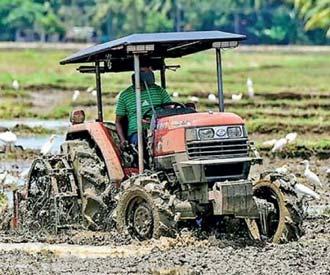

Reply To:
Name - Reply Comment
|
|
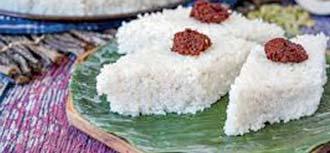
Be it asweddumized fields or mallung in a rice and curry meal, kiribath for a special occasion, sizzling kottu, scrumptious watalappam or a happening baila song – each one of these examples provides a glimpse of Sri Lanka in a nutshell. The aforementioned words have been used in our vocabulary for decades, highlighting the unique cultural, social and culinary diversity of Sri Lanka. This is why these words and a few others made their mark in the Oxford English Dictionary’s (OED) latest update, in appreciation of the origins and evolution of Sri Lankan English. To find out more about how these words made their entry into a world-acclaimed dictionary, the Daily Mirror spoke to Rochana Jayasinghe, the consultant for Sri Lankan English for the OED’s World Englishes update.
A journey shaped by a fascination for language
Jayasinghe’s journey into language study had begun with a deep love of reading from a young age. “I was always fascinated by words—their histories, meanings, and the patterns that connected languages across cultures. As a child, I enjoyed learning new languages and instinctively noticed similarities among them, which I later came to understand as an early curiosity in etymology and historical linguistics,” she said.
 Her academic path was shaped significantly during her time at the Department of English at the University of Peradeniya, “where conversations around language use, and in particular, World Englishes, were particularly vibrant and intellectually stimulating,” as described in her own words. Jayasinghe said that the Department has long been at the forefront of interrogating language, identity, and post-colonialist. “Their scholarship has contributed much to thinking critically about the politics of English, the localisation of the language, and its ideological implications,” she added.
Though her formal training is in literature with a Master’s in World Literatures in English - it was through literary study that her interest in language itself deepened. “During my Master’s at the University of Oxford, I researched Sri Lankan-origin words in the Oxford English Dictionary (OED), published by Oxford University Press. My focus was on the correspondence between Robert Burchfield, then-editor of the OED, and Pearl Cooray, who was affiliated with the Dictionary Department of the University of Ceylon, later absorbed by the Ministry of Cultural Affairs. Their exchange, spanning from 1971 to 1981, offered a window into the collaborative history of lexicography between Sri Lanka and the OED. This research led to my selection - through a vetting process, lexicographical aptitude test, and working visit - as the consultant for Sri Lankan English for the OED’s World Englishes update,” she explained.
Understanding the context of a dictionary
|
Words such as asweddumize, which is to do with preparing the earth for harvesting, have made its entry into OED |
|
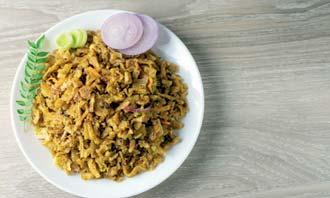
kiribath and kottu (shown bottom left) were included in the Oxford English Dictionary because food is generally visible and a shared part of any culture |
Apart from simplifying complex words for users, Jayasinghe opined that different dictionaries have different aims and philosophies. “So when we ask, ‘what is a dictionary, the answer depends on which one we’re talking about. I can only speak with confidence about the Oxford English Dictionary (OED), which is the one I’ve studied in depth and worked with,” she said in response to a query on what exactly is a dictionary.
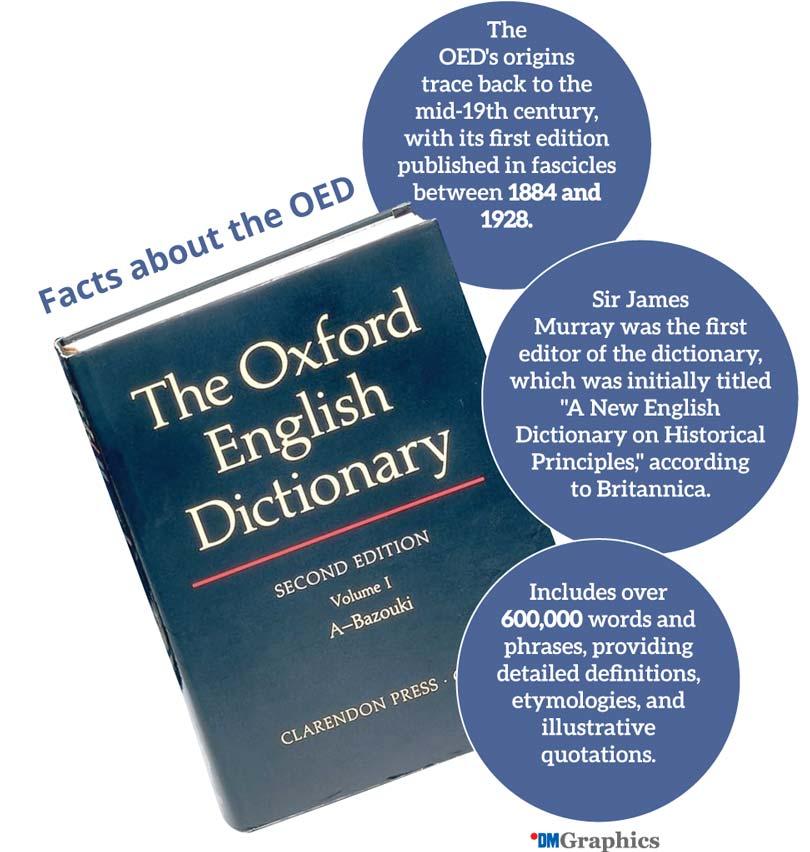
“To begin with, it’s worth noting that Oxford University Press publishes two major dictionaries: the Oxford Dictionary of English, which is a current-use dictionary aimed at offering concise definitions for everyday reference; and the Oxford English Dictionary, or OED, which is quite different. The OED is a historical dictionary - its job isn’t only to define a word as we use it today, but to trace its full life story: where it came from, how its meaning has shifted over time, and how it’s been used in context, across literature, newspapers, legal documents, and more,” she explained.
“So, when people ask, ‘Why is a word in the OED’, it’s important to understand that the OED isn’t giving us permission to use these words—and never claimed to. That’s not its function. The OED’s role is to record how people are already using language, not to decide what is or isn’t “correct.” Sri Lankan English didn’t suddenly become “real” the moment it appeared in the dictionary. It’s been real for decades. We’ve spoken it, sung baila in it, written school essays in it, argued in it, and cracked jokes in it,” she added.
Latest additions to the OED include kiribath and mallung. According to Jayasinghe, these words don’t need any dictionary to validate them. “Everyday speakers of Sri Lankan English have stood by these words for generations, choosing not to translate them into “milk rice” or “sautéed greens,” but instead insisting on their continued use in English-language contexts—because those words carry more than just meaning; they carry an entire cultural world,” she opined.
Jayasinghe said that the OED has always relied on people to show how language lives in the world. “When James Murray became its first Chief Editor in 1879, he quickly realised that no one person—or even one team—could capture the entirety of the English language. So, he put out a public appeal: asking volunteers to send in examples of words they encountered in books, newspapers, speeches, or journals. These handwritten slips—often including the sentence, source, and date—poured in from around the world. Teachers, clergy, civil servants, and avid readers contributed,” she added.
“In many ways, the OED was one of the earliest examples of crowdsourced knowledge. It wasn’t simply created by scholars in Oxford, but by readers around the globe; people noticing how words were used and caring enough to document them,” she explained further.
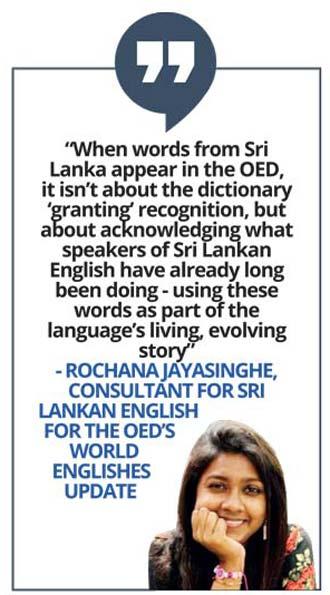
“So, when words from Sri Lanka appear in the OED, it isn’t about the dictionary ‘granting’ recognition, but about acknowledging what speakers of Sri Lankan English have already long been doing - using these words as part of the language’s living, evolving story,” said Jayasinghe further underscorings the uniqueness of Sri Lankan English.
Process of adding words to OED
 Responding to a query on the process of adding words to OED, Jayasinghe said that James Murray’s philosophy and practice still live on. “Anyone can suggest words. There is an entire process that involves carefully tracking how a word is used over time—across books, newspapers, academic texts, social media, and even spoken language—and assessing whether it is used widely and consistently enough in a way that fits the OED’s particular inclusion policy.
A dedicated team of editors, etymologists, and library researchers work together to trace the word’s history, examine spelling and pronunciation variations, and compile illustrative quotations that show how the word functions in real-world contexts,” she explained.
Speaking about her contribution to the groundwork, she said that as the consultant for Sri Lankan English she collected linguistic evidence, suggesting possible definitions, and providing sociolinguistic and cultural context for how certain Sri Lankan English words are used.
An ‘incredibly meaningful’ experience
“Incredibly meaningful,” is how she describes her overall experience as a consultant for Sri Lankan English for OED. “I have had the chance to engage with the work of Sri Lankans who have contributed to the Oxford English Dictionary over the years. In addition to Pearl Cooray whom I have mentioned, Richard Boyle, a former consultant himself, did much to raise awareness about Sri Lankan contributions to the OED, and his book Knox’s Words remains a landmark study of Sri Lankan-origin words in the OED. I also came across figures like Donald Ferguson, who wrote extensively on language in Sri Lanka, and even Dr. William Chester Minor—one of the OED’s most prolific early contributors—who, as it turns out, was born in Ceylon and lived here until his teenage years. These kinds of unexpected connections really brought home the long, complex relationship between Sri Lanka and the English language,” she further said.
For Jayasinghe, working in the OED archives has been the favorite part of this journey. “There was something quietly thrilling about holding handwritten slips, some over a hundred years old. The archivist, Beverley McCulloch, could even recognise particular people’s handwriting, just by sight; it was a level of familiarity I found so moving. It made me realise that dictionary-making was not just an intellectual process, but a profoundly intimate, human one,” she added.
She said that she has been lucky to have the support of such generous people. “Dr. Danica Salazar, Executive Editor for World Englishes, has been a kind, thoughtful, and encouraging guide throughout the process. And meeting Dr. Peter Gilliver, Associate Editor of the OED and one of its most experienced lexicographers, was a highlight. His research on the history and making of the OED had already helped me feel connected to the work I was doing, but speaking to him in person gave me a deeper sense of the continuity and dedication that underpin this massive project,” Jayasinghe said.
Sri Lankan English – a living, evolving variety
When asked about Sri Lankan English and its uniqueness, Jayasinghe began by stressing that she doesn’t consider herself capable of speaking for Sri Lankan English – nor can any one person do so. “There are many academics, writers, teachers, and everyday speakers who have shaped, studied, and reflected on Sri Lankan English for decades. My role was simply to support the OED’s broader mission of documenting language usage,” she said.
“What I can say as someone who studies language use is that Sri Lankan English is what happens when it grows roots in our soil. It is a living evolving variety that blends Sinhala, Tamil, Malay, English, and more – just like our cuisine, our music, and our everyday life. Its uniqueness lies in how it reflects Sri Lankan identities, humour, politics, and belonging. That said, it is unique in the same way all varieties of World Englishes are unique—each one grows out of its own specific context. The value of Sri Lankan English isn’t in how different it is from British or American English, but in how it may reflect our local realities while still participating in a global language,” Jayasinghe explained.
From Asweddumize to Papare
When asked how certain words such as asweddumize made its entry into OED, Jayasinghe said that interestingly, asweddumize was one of the words everyone thought was already in the dictionary. “It has certainly been part of OED discourse for nearly a century, but it missed inclusion at the time due to insufficient evidence. It resurfaced in 1971 with the intervention of Pearl Cooray, and again in the 1980s, but was set aside once more. Now, with broader access to historical and contemporary Sri Lankan sources, the editors were finally able to gather enough evidence - including a first recorded use from as early as 1857 - to support its inclusion,” she explained.
Jayasinghe further said that words like kottu roti, watalappam, mallung and kiribath were included because food is generally a visible and shared part of any culture, and that makes food-related terms especially likely to appear in English usage across communities. “These words frequently turn up in writing - menus, travel writing, cookbooks, media - and are often left untranslated because there aren’t equivalent “English” words that can be used. Other terms like baila and papare were added for similar reasons,” she added.
She further said that a ‘few words didn’t make the cut this time’, but that it doesn’t mean it won’t be added in future. “The OED is a living dictionary, so words are always being revisited as new material becomes available,” she explained further.
Bringing about social harmony through sociolinguistics
The new set of words added to the OED represent diverse cultures. Speaking about the role of sociolinguistics in bringing about social harmony Jayasinghe explained that sociolinguistics shows us how people relate to each other through language. “In a multi-ethnic, multi-diverse country like Sri Lanka, where identities, histories, and cultures intertwine, language is a living expression of who we are,” she added.
But she said that with regard to the new set of words, some media outlets and social media pages have run with the headline “Sinhala words added to the dictionary!”, which is both inaccurate and unhelpful. “Many of the words we’re talking about are nourished by a rich mix of Sinhala, Tamil, Malay, Portuguese, English, and other influences, showing us that language is not fixed or owned by any single group; it’s a living, breathing entity shaped by everyone who uses it. Recognising this alone, helps us move beyond simplistic labels and appreciate language as a shared resource that reflects the complexity of our society. When we embrace language as fluid and collective, it can become a powerful tool for connection, understanding, and social harmony in a multi-ethnic, multi-lingual country like Sri Lanka.
“Use language freely, but listen carefully”
When asked to give a message on the use of language, Jayasinghe said that for her, the key idea once again, is that language is both fluid and collective. “It shifts, blends, borrows, and adapts. In Sri Lanka, many of us may naturally move between Sinhala and Tamil, or Tamil and English - sometimes all three languages (and at times even more) - in our everyday lives. Often, it’s hard to pinpoint where one language ends and another begins. But that’s not a weakness—it’s a strength. It reflects how cultures live alongside each other, influence one another, and evolve together. And the more we accept that language doesn’t have to stay within rigid boundaries, the more space we create for creativity, mutual respect, and genuine understanding,” she added.
“One principle I’ve tried to hold on to is this, which is my message - use language freely, but listen carefully. Pay attention to how it shifts, how others use it, and what it carries for them. That kind of attentiveness opens the door to empathy. In a country as richly diverse as Sri Lanka, that’s one of the most powerful steps toward meaningful connection,” she underscored.