Reply To:
Name - Reply Comment
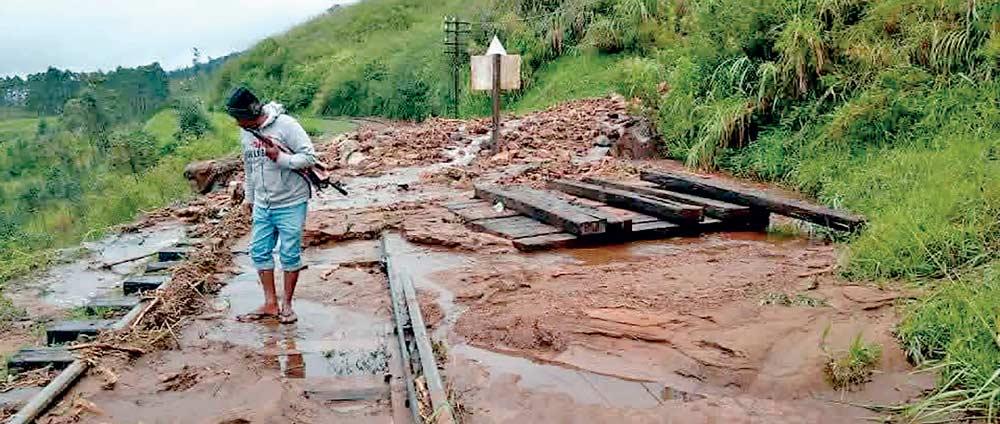
The picture shows the upcountry railway line in shambles after mud and rocks ruined the workings of the rail tracks
 The railway from Rambukkana is winding and it crosses rural roads at several unguarded crossings
The upcountry railway track has a ghostly look at present owing to the havoc caused by the Ditwah cyclone
The devastation caused to the upcountry rail way track is more dreadful than that caused to the southern railway by the tsunami
By Shantha Chandrasiri
The upcountry railway, which is also called the main line, runs through an attractive countryside from Rambukkana to Badulla through Peradeniiya, where the railway branches off to Kandy-Matale and Badulla. The main line from Rambukkana to Badulla passes through 46 tunnels. The rail tracks were laid after piercing rocks. The longest tunnel is the Singhimalai tunnel situated near Hatton railway station.
The railway from Rambukkana is winding and it crosses rural roads at several unguarded crossings. The only warning is the ringing of a bell and the sound of the approaching train. After passing Peliyagoda level crossing, the railway line crosses the main highway leading to Kandy and again when approaching Polgahawela.
The train traverses through lovely and attractive and picturesque country with tea estates, smiling terrace paddy fields and lush vegetation on the slopes and little hamlets on either side. The first 85 kms of the track up to Rambukkana runs through the plain and then it begins the steep climb.
The upcountry train service is adorned by Udarata Menike, Podi Menike and Senkadagala Menike. However, the upcountry railway has a ghostly look at present owing to the havoc caused by the Ditwah cyclone that resulted in floods and landslides.
Every Sri Lankan and the foreign tourist loves to enjoy a journey by the upcountry train: Commuters get the chance to view the Nine Arch Bridge which is a major tourist attraction today. It has turned Ella into one of the most popular tourist destinations in the country.
However the upcountry railway is crippled by the cyclone disaster. Thousands of foreign tourists used to take a ride by the upcountry train to Ella to view the historic Nine Arch Bridge, a masterpiece of British architecture, and to spend a couple of days enjoying the scenic beauty of the environment. But that scenic beauty doesn’t exist anymore. The reason is that the Upcountry Train Service, which had been a source of colossal foreign exchange, is in shambles. The devastation caused to the upcountry rail way by the Ditwah cyclone is more dreadful than that caused to the southern railway during the tsunami.
The upcountry railway line has been heavily damaged by landslides at several locations while several bridges and culverts have collapsed. The Black Bridge spanning the Mahaweli River at Peradeniya is one of the major bridges ruined during the disaster. The bridge constructed in 1897 at Penideniya in Peradeniya is 348 ft long. The bridge is leaning now and the authorities had prohibited pedestrians from using it. A retired railway employee has mentioned that he had witnessed a similar damage to the bridge during the 1947 floods and that the bridge span had fallen into the river.
The railway from Rambukkana to Badulla has been extensively damaged. It has been worst affected between Rambukkana and Kadigamuwa, between Ihala Kotte and Kadugannawa, between Gampola and Nawalapitiya, and near Gelioya, Kotagala, Thalawakele, Great Western, Nanuoya, Pattipola railway stations and near the Ulapane brick bridge, where the railway line has been damaged by landslide and rock falling. At several locations the bed of the railway line has eroded due to the flow of water underneath.
The Department of Railway, established in 1858, is 167 years at present. It operates train services in nine railway lines covering a distance of 1508 kilometres. A senior official of the department said the 70 percent of the distance covered by the train service has been affected owing to the Ditwah disaster.
The British rulers in Sri Lanka (then Ceylon) had constructed the railway line to transport cash crops, first coffee and later tea, to Colombo. It was a massive project completed in stages; from Colombo to Ambepussa (1864), Ambepussa to Kandy (1867), Peradeniya to Nawalapitiya ( 1874) Nawalapitiya to Nanuoya (1885), Nanuoya to Bandarawela ( 1894 and Bandarawela to Badulla (1924), The railway line from Peradeniya to Kandy was augmented to Matale from 1880. However the railway line from Nanuoya to Kandapola through Nuwara Eliya was closed due to losses and replaced with forwarding agencies to transport goods by road.
The highest point in the upcountry railway line is Pattipola Railway Station located at the height of 6240 ft. above the mean sea level.
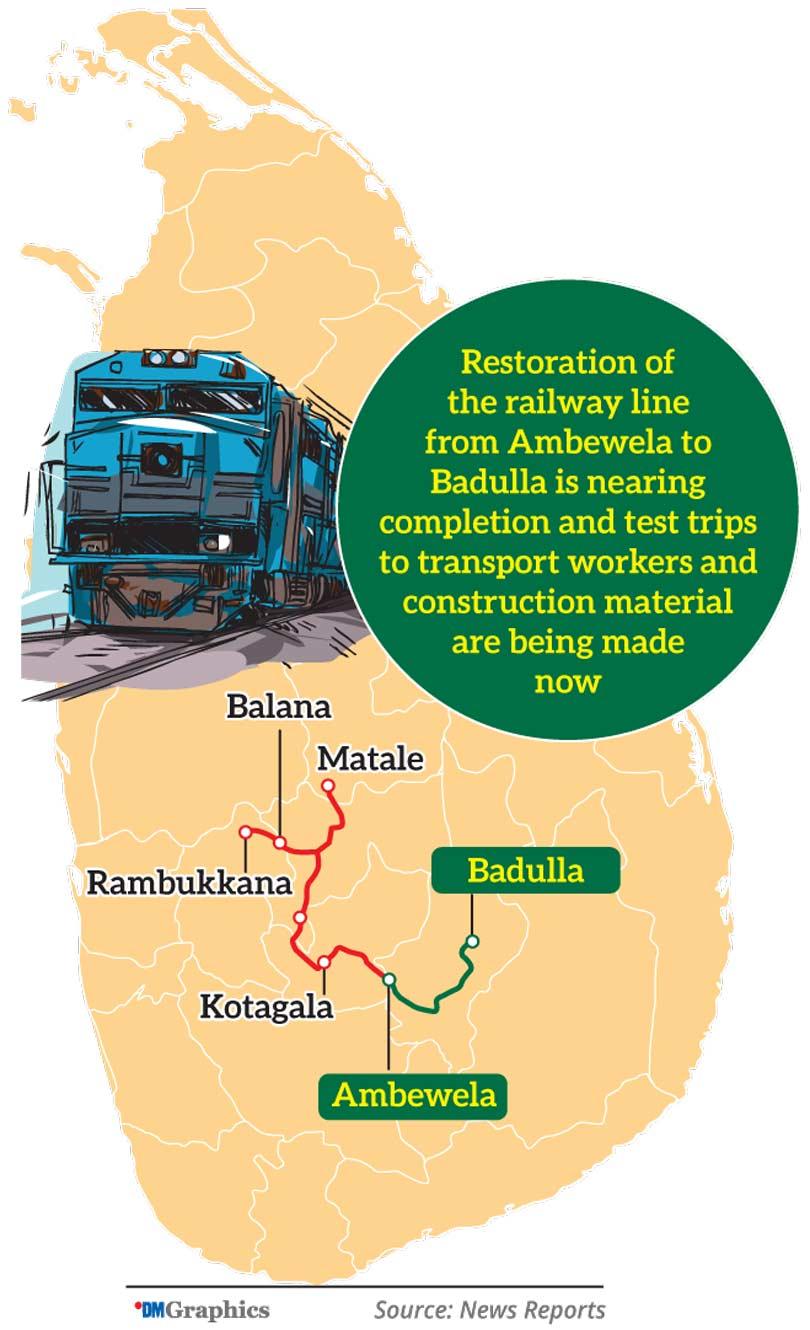
Restoration of the railway line from Ambewela to Badulla is nearing completion and test trips to transport workers and construction material are being made now.
Tsunami disaster had ruined only 140kms of southern coastal railway line. The damaged rail line could be restored in a very short time without much effort. However the upcountry railway that runs through hard terrain is quite distinct. Railway engineers said that restoration work should be subject to thorough supervision with particular attention on imminent danger of landslides, earth cracks, and rock falling to prevent the recurrence of similar disaster.
These engineers are not in a position to state precisely how long it would take to resume the train service on the main line. Railway officials are of the opinion that foreign expertise should be obtained to restore the railway line at several locations.
The people are longing to see Udarata Menike, Podi Menika and Senkadagala Menike making their journey along the winding track through lovely and attractive country very soon.
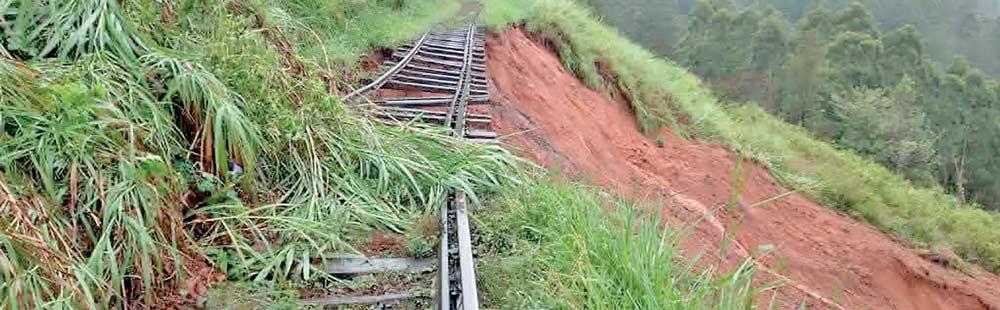
It has been calculated that the devastation caused to the upcountry rail way by the Ditwah cyclone is more severe than that caused to the southern railway during the tsunami