Reply To:
Name - Reply Comment

This captivating memoir escompasses Ranjith Fernando’s life as cricketer, commentator and administrator
 In conclusion, Hob Nails to Spikes stands as a testament to the enduring spirit of Sri Lankan cricket and the individuals who have shaped its journey

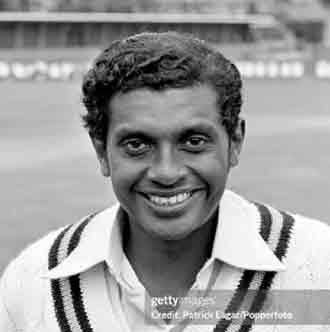
Hob Nails to Spikes, the newly released memoir by Ranjith Fernando, arrives as a deeply evocative and historically significant contribution to the literary and sporting landscape of Sri Lanka. Fernando, a name synonymous with cricket in the island nation—as a former national cricketer, respected commentator, and influential administrator—has crafted a work that transcends the boundaries of a conventional memoir.
 It stands as a richly layered narrative that chronicles not only his personal journey through the game of cricket, but also the remarkable evolution of Sri Lankan cricket itself.
From the moment of its recent launch, Hob Nails to Spikes has drawn widespread attention and acclaim, quickly establishing itself as an essential read and must have book in the shelf of every library, not only for cricket enthusiasts but any literary enthusiast, both locally and internationally.
The title itself is striking in its symbolism. As I see it, the phrase “hob nails” evokes an era of rudimentary conditions, when cricket in Sri Lanka was played with limited resources, often on uneven grounds, driven by passion rather than professionalism;in contrast, “spikes” represent the modern age of the sport—defined by structure, global recognition, advanced training, and professional excellence. In this simple yet powerful metaphor, Fernando encapsulates decades of transformation, not only within cricket but within himself and SriLankan society as a whole.
Fernando begins his narrative with his early life, offering readers a glimpse into the formative years that shaped his character and sporting ambitions. His education at St. Benedict’s College, Kotahena —an institution steeped in tradition and excellence—played a pivotal role in nurturing his cricketing talents. It was here that he first experienced the discipline, camaraderie, and competitive spirit that would define his career.
Sense of nostalgia
These early chapters are infused with a sense of nostalgia, yet they are grounded in thoughtful reflection, allowing readers to appreciate the foundations upon which Sri Lanka’s cricketing future was built.
As the memoir progresses, Fernando recounts his experiences representing Sri Lanka during a time when the nation had not yet achieved Test status. This period, often overlooked in mainstream cricket histories, is brought vividly into life through his detailed recollections. He paints a picture of a team driven by determination and pride, striving for recognition on the international stage despite numerous challenges. These accounts are not merely historical; they are deeply human, capturing the hopes, struggles, and aspirations of a generation of cricketers who played for the love of the game and the honor of their country.
One of the most compelling aspects of Hob Nails to Spikes is its ability to weave together personal narrative with broader historical context. Fernando’s journey from a schoolboy cricketer to a national representative, and eventually to a leader in cricket administration, mirrors the trajectory of Sri Lankan cricket itself. His story is one of discipline, commitment, and resilience—qualities that resonate far beyond the realm of sport. Through his experiences, readers are reminded that true success is built on perseverance and integrity, values that remain relevant in any field of endeavor.
The book has already received numerous glowing reviews, with critics praising its depth, authenticity, and engaging style. It offers readers a captivating insight into the evolution of Sri Lankan cricket, tracing its journey from humble beginnings on school grounds to its emergence as a formidable force on the global stage. Fernando’s narrative captures the essence of an era when cricket was sustained by passion and dedication, long before the advent of modern infrastructure and commercial influence.
What sets this memoir apart from other cricketing historians is Fernando’s ability to provide a comprehensive, 360-degree view of the game. Drawing from his multifaceted career—as a player, captain, wicketkeeper-batsman, pioneering radio commentator, and cricket administrator—he offers unique insights into the many dimensions of the sport. Each role he has played adds a new layer of perspective, enabling readers to understand not only what happened on the field but also the intricate and inner workings and behind the scene realities.
In particular, Fernando’s reflections on cricket administration are both insightful and illuminating. He highlights the contributions of key figures such as Gamini Dissanayake, whose visionary leadership was instrumental in elevating Sri Lankan cricket to international standards. Through these accounts, readers gain an appreciation for the collective effort required to transform a nation’s sporting fortunes. It becomes evident that the rise of Sri Lankan cricket was not the result of individual brilliance alone, but of collaboration, strategic thinking, and unwavering commitment.
Symbol of national identity
 Beyond its focus on cricket, Hob Nails to Spikes also explores the socio-cultural transformation of Sri Lanka. Fernando illustrates how cricket evolved into a powerful symbol of national identity, particularly during a time when the country was seeking to assert itself on the global stage. The sport became a unifying force, transcending social, ethnic, and economic divisions, and fostering a shared sense of pride among Sri Lankans. In this context, the metaphor of “from hob nails to spikes” takes on an even deeper meaning, reflecting not just the professionalisation of sport but the broader journey of a nation striving for recognition and excellence.
The memoir delves into themes of discipline, leadership, and commitment, moving beyond the confines of statistics and records. Fernando emphasizes that the true value of cricket lies in the lessons it imparts—the importance of teamwork, the ability to face adversity, and the pursuit of excellence with humility. Through anecdotes of memorable matches, interactions with teammates, and the challenges faced along the way -- he brings these themes to life in a manner that is both engaging and thought-provoking.
A particularly noteworthy aspect of the book is its portrayal of Sri Lanka’s struggle for international recognition. Fernando recounts the perseverance of players and administrators who worked tirelessly to secure the country’s place in the world of Test cricket. Their journey was marked by setbacks and obstacles, yet it was also defined by an unyielding belief in their potential. The eventual triumphs that followed stand as a testament to the power of resilience and collective effort, reinforcing the idea that success is often the result of sustained determination and never taking No for an answer.
For younger readers, Hob Nails to Spikes serves as a source of inspiration and guidance. Fernando’s approach to the game characterised by sportsmanship, integrity, and a “gentlemanly” demeanor—offers a model for aspiring cricketers and all other sporting men and women alike. His reflections encourage readers to pursue their goals with dedication and to uphold the values that define true character.
Fernando’s writing style further enhances the appeal of the memoir. His prose is lucid, engaging, and reflective, striking a careful balance between personal anecdotes and historical narrative. The book is rich in detail, offering vivid descriptions of matches, players, and pivotal moments, as well as insights into the challenges faced behind the scenes. This attention to detail creates an immersive reading experience, allowing readers to feel as though they are part of the journey.
The significance of Hob Nails to Spikes was further underscored at its recent launch, which was attended by a distinguished gathering of cricketing legends and dignitaries. The presence of iconic figures such as Ravi Shastri, Wasim Akram, Sunil Gavaskar and Aravinda de Silva, served as a powerful endorsement of both the author and his work. Their participation highlighted the respect and admiration Fernando commands within the cricketing fraternity, as well as the importance of the memoir as a historical document.
In many ways, Hob Nails to Spikes is more than just a book; it is a legacy. Through his thoughtful and comprehensive account, Ranjith Fernando has ensured that the story of Sri Lankan cricket’s rise—from its modest beginnings to its current stature—will be preserved for future generations. It is a narrative that deserves to be read, studied, and appreciated, not only for its sporting insights but for its broader reflections on perseverance, leadership, and national identity.
In conclusion, Hob Nails to Spikes stands as a testament to the enduring spirit of Sri Lankan cricket and the individuals who have shaped its journey. It is a work that will resonate with sports lovers, historians, and general readers alike, offering a compelling blend of personal memoir and historical chronicle. Fernando’s contribution through this book is both significant and commendable, and it is with great appreciation that one acknowledges his effort in leaving behind such a valuable record.
As readers turn the final pages, they are left not only with a deeper understanding of cricket’s evolution, but also with a sense of admiration for the resilience and vision that made it possible. Ranjith Fernando has, indeed, left indelible footsteps in the sands of time—footsteps that will guide and inspire generations to come.