Reply To:
Name - Reply Comment
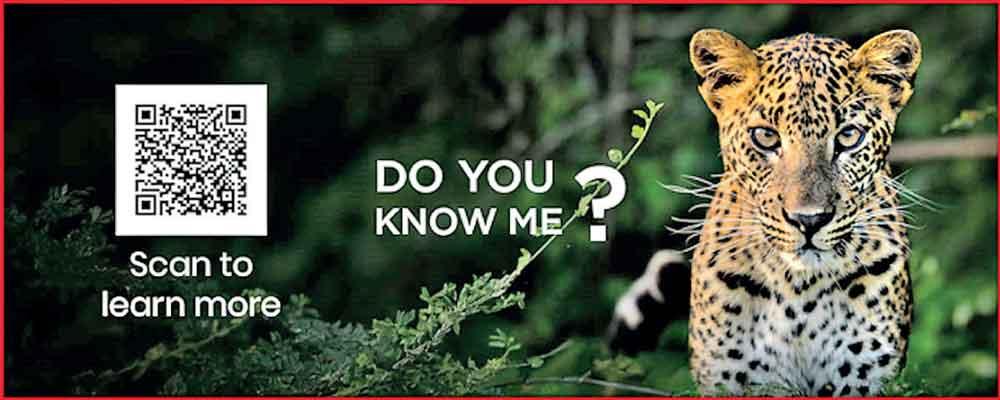
The Sri Lankan leopard is the essential messenger of the island’s ecological health. Its survival ensures the balance of forests, stabilizes watersheds, and keeps nature’s delicate machinery intact. For DFCC Bank, supporting leopard conservation is not a gesture, but a seventy-year philosophical commitment: that responsible progress must fundamentally coexist with the natural systems that sustain human life in Sri Lanka.
By DFCC Bank
There are places in Sri Lanka where the forest still holds its breath. Where a shadow moves through dappled light, soundless as a memory. Where the land pauses for a heartbeat because something ancient and essential is passing through.
That presence is the Sri Lankan leopard.
More than an icon of the wild, the leopard is the quiet engineer of balance in this island’s ecosystems. Where it lives, forests stay healthy. Where it hunts, prey species stay in check. Where it thrives, water sources remain protected, soil stays anchored, and the delicate machinery of nature keeps turning.
To lose the leopard is to loosen the threads that keep our environment whole.
The Leopard as Messenger
Every ecosystem has a messenger - a species whose wellbeing mirrors the health of the land. In Sri Lanka, that messenger is the leopard. When its movements become restricted, we know our forests are shrinking. When it strays into villages, we know its habitat has been carved apart. When it disappears, we know an entire ecosystem has begun to fail.
Leopards do not vanish by accident. They vanish because something fundamental beneath them is breaking.
And what breaks beneath them will eventually break beneath us.
A Landscape Under Pressure
Across the island, the pressures on leopard habitat continue to mount:
Each of these fractures weakens not only the leopard population, but the entire ecological web that underpins water security, agriculture, biodiversity, and climate resilience.
When the forest loses its guardian, it loses its stability.
Why DFCC Bank Stepped In
For DFCC Bank, supporting leopard conservation is not a symbolic gesture. It is an extension of a philosophy that has shaped the Bank’s identity for seventy years - that progress must be responsible, and development must coexist with the natural systems that sustain life in Sri Lanka.
That belief led to a strategic three-year partnership with the Wilderness and Wildlife Conservation Trust (WWCT), one of the country’s respected research-driven conservation organisations. Their science forms the backbone of national policy on leopard protection, and their work across Wilpattu, Yala, Horton Plains, Gal Oya and Ritigala and beyond has created the most extensive dataset on leopard behaviour and habitat in Sri Lanka.
Together, DFCC Bank and WWCT are supporting:
This is not about saving one species alone. It is about protecting the forests, watersheds, and ecological corridors that allow every other species - including our own - to survive.
A Shared Responsibility
Conservation cannot rest solely in the hands of scientists or institutions. It depends on the choices made by all of us:
• choosing not to clear land irresponsibly
• choosing not to turn a blind eye to snares
• choosing to protect forest corridors
• choosing to understand that our wellbeing is tied to the wellbeing of the land
The leopard is not asking for our sympathy. It is asking for space, enough to hunt, roam, breed, and sustain the forests that sustain us.
If the Leopard Lives, So Will We
The leopard’s future is a mirror held up to our own. When we protect its habitat, we protect our water, our soil, our climate, our biodiversity, and the natural heritage that has shaped generations.
DFCC Bank remains committed to this work - not as a saviour, but as a steward. A partner in a larger national effort to secure the wild places that help keep Sri Lanka alive.
The leopard is more than a creature of the forest. It is a reminder:
that every life depends on another,
that every forest holds a future,
and that the survival of the wild is the survival of us all.