Reply To:
Name - Reply Comment
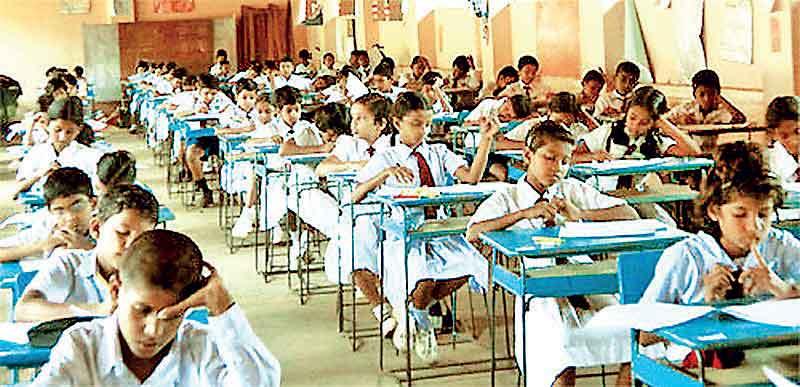
The author says the exam poses undue stress on students
 Calls for closure of schools with very poor student attendance
Entrusting teaching of religion to places of religious worship
 Well-known author of supplementary readers for Grade 5 Scholarship Exam calls for its abolition
By A. S. Fernando
|
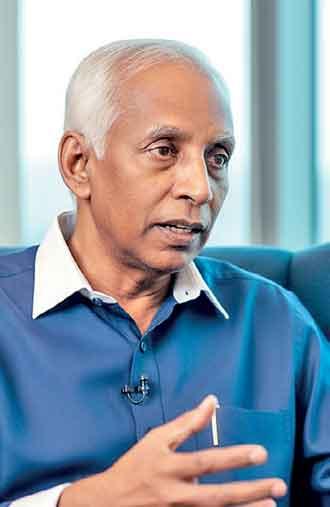
Author/publisher W.O.T. Fernando |
Well known author cum publisher of supplementary readers for the competitive Grade 5 Scholarship Examination W.O.T. Fernando has urged the Government to do away with this exam considering the mental strain and stress caused to students at a very young age affecting their physical health as well.
Fernando, a former visiting lecturer of the Moratuwa University, and a former senior lecturer at the National Apprentice and Industrial Training Authority, says in a letter sent to Prime Minister Dr. Harini Amarasuriya with copy to President Anura Kumara Dissanayake: “This examination, over the years has become so competitive that it has turned out to be a veritable scourge that robs our children not only of their mental and physical development, but also the fun and joy of playing the traditional games specific to their childhood.”
When this writer pointed out in a lighter vein that Fernando would personally lose a source of income in the event of this exam being abolished, he said with a smile: “ The wellbeing of the young generation is more important.”
Need to eliminate stiff competition to gain admission to ‘popular schools’.
Fernando explains in his letter carrying a set of proposals for giving effect to, when implementing the proposed education reforms, that the uneven distribution of vital resources among schools across the country has led to a stiff competition to gain admission to so-called ‘popular schools’ well-equipped to provide a good secondary education and only a standardised system of education could pave the way for the elimination of this unhealthy competition.
He also points out the feasibility of giving effect to his proposals through a process involving several phases over a period of five years.
Upgrading educational infrastructure
He also says children from all social strata in all parts of the country are entitled to untrammeled access to education as a human right. Therefore, upgrading the existing educational infrastructure in line with the proposed educational reforms is a top priority.
Eliminating waste of resources due to schools with very low student attendance
The letter also states: “There are many schools in our country whose student attendance is very low; some of them with about 10 on the roll. According to reports, there is an excess of teachers in some of these schools. And there are some 3500 schools across the country accounting for those with less than either 50 or 100 students on their rolls. The obvious solution for eliminating the waste of human and physical resources due to the existence of such schools is to transfer the students and teachers of schools with less than 50 or 100 to well-functioning schools in the same area after effecting the structural and other improvements necessary to accommodate the new intakes. However, such student transfers would invariably lead to these students facing two immediate problems: 1) how to travel the longer distance to reach the new school, and 2) how to manage the midday meal at the new school.
These two problems can be solved by providing free train or bus passes to travel to new school and paying the students from low-income families an allowance. Following such a procedure would enable the students from disadvantaged families equal access to education.
Benefits of eliminating small schools
The letter points out transferring Grade 1 to 5 children from schools with less than 50 or 100 students on their roll to larger schools in the same areas provides an opportunity for children from abolished schools to access new and better facilities and for the government to gainfully use the vacant premises to meet the purpose of either locating or re-locating other state-run institutions like medical centers, local hospitals, vocational training centres etc. in the same locality by using readily available buildings and their premises thus gainfully, government will be able to avoid incurring expenditure on purchasing land plots and constructing new buildings.
Use of mobile phones by children
Another proposal says that according to the general opinion of educationalists it is advisable to ban the use of mobile phones and smart phones by children until the age of 13. “Many countries have now accepted the fact that the use of mobile phones do more harm than good to children. In fact, many countries have already banned the use of mobile phones by children aged below 16 years.”
Reforms for OL and AL exams
The letter also points out under another proposal that according to educationalists the current structures of the GCE (O/L) and GCE (A/L) examinations are not at all candidate-friendly and are highly demanding, causing candidates severe mental stress and leading them to a heavy reliance on private tuition.
The proposal adds: “Nowadays practically every child facing these exams attends tuition classes, which is certainly an unhealthy trend. To cite an example to be implemented as an immediate remedial measure, 80 questions may be given in Question Paper 1 granting the option to answer only 40 questions. As regards Question Paper II, students may be given the option to answer only 5 or 6 questions out of 10 or 12. Such structural revision will give the leeway for the children to leave out difficult subject matter from the massive syllabus and concentrate on the parts they can answer more easily and thus face the exam with confidence, entirely free from anxiety.”
The letter under another proposal lays emphasis on teaching of both English and Information technology as compulsory subjects as well as on entrusting the teaching of the subject of Religion to the respective places of worship in the locality. “ Making education in Sri Lanka vernacular after Grade 6 in 1956 was a great injustice done to all children in our country…”
“Teaching in the English medium must definitely start from Grade 6 in all schools in Sri Lanka. Prescribing a suitable text book for the subject of English literature at all Grades is very important. Similarly, teaching of Sinhala language and literature should be mandatory for Sinhala children, and Tamil language and literature for Tamil children.
Also, introducing English grammar, elocution, drama, and songs to children from Grade 1 will help broaden their basic English knowledge. Appointing trained teachers for teaching the subject of English is certainly a top priority.”
“The subject of Information Technology should be taught to all children from Grade 6 onwards. All necessary facilities for this purpose have to be provided to schools starting from Grade 6. Initiating a teacher training programme expeditiously to turn out competent teachers to teach the subject is an urgent prerequisite for achieving this purpose.”
Teaching Religion
“Currently, Religion as a subject is taught in schools. However, it is feasible to entrust this responsibility to the respective places of religious worship in the locality. It should be made mandatory for every child to attend the nearest temple, church, or mosque on Sunday morning to study their religion.”
Benefits of entrusting the responsibility of religious education to the respective places of religious worship
It becomes mandatory for all children to attend their religious place on every Sunday morning.
Since parents are required to escort their children to the religious place, it will result in an increased attendance of adults and children at these places leading to a closer relationship between householders and their religious places than it is now. “This will also undoubtedly lead to an unprecedented development of Places of Religious Worship.
If there are no adequate facilities in religious places to implement this arrangement, the government should try to provide the necessary requirements.
The government should also take necessary action to provide some emolument to the teachers and clergy teaching the subject of Religion.
Shifting of teaching religion to the place of religious worship will pave the way for using the space and time once taken up for teaching the subject of Religion at schools, for the purpose teaching additional subjects of English language and Information Technology.”
The letter says in conclusion: “Implementation of these proposals will certainly raise the standard of general education of this country to the level of that in developed countries in the world and also will pave way for producing an educated, disciplined, productive and mentally and physically well-developed citizenry. “