Reply To:
Name - Reply Comment
 English is widely used in Sri Lankan navigation, but many drivers and passengers prefer Sinhala or Tamil. While Google has not yet announced full multilingual support for Sri Lanka, the shift to conversational voice interaction means there’s clear potential for expansion. When drivers no longer need to tap and type, they stay more focused on the road ahead
If your business does not appear clearly in Google’s directory, you risk being left out of the conversation and the customer’s next turn. For Sri Lankan small-businesses, from roadside cafés to tourist-friendly stores, this means proactive mapping, correct categorisation, adding photos and keeping all data up to date
 Have you ever been lost on the road, even after asking someone for directions or checking the road signs again and again? It’s something most of us have experienced, especially when driving through an unfamiliar part of the city or trying to find your way in a rural area.
For years, Google Maps has been that quiet co-pilot helping us find our way. Even with its
occasional mistakes and confusing routes, it’s been a trusted tool. But that silent map is about to change. With the introduction of Gemini in Maps, Google’s new artificial intelligence engine, Maps is becoming truly conversational ready to talk with you, answer questions, and guide you naturally along Sri Lankan roads.
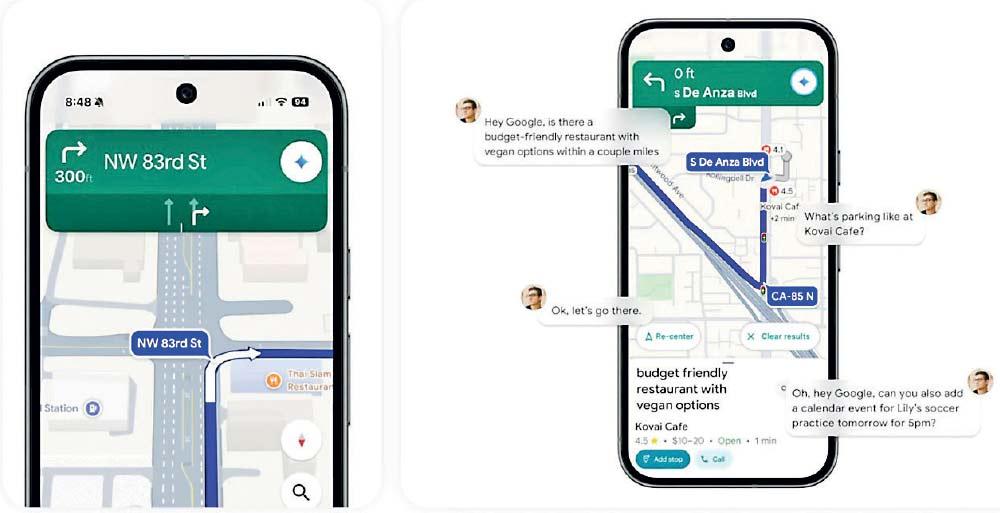
Imagine saying, “Hey Google, are there any budget-friendly cafés on my route or near by?” or “Where can I get a good matcha on my way to work?” and hearing back a clear answer complete with few outlet suggestions, menu details, opening hours, and parking information. That’s the kind of experience Google is now promising, turning your map into a travel companion who understands what you need.
On 5 November 2025, Google announced that Maps is being upgraded with Gemini’s conversational intelligence. Users will soon be able to speak naturally (“Is there a vegetarian restaurant along my route?”, “What’s the parking like at X cafe?”) and receive answers in real time, even while driving. The system also introduces landmark-based directions (“turn right after the Supermarket at Nugegoda”), live traffic alerts and it has camera-based “what’s this place?” mode, which can tell you details about the location and surroundings you’re in.
“No fumbling required - now you can just ask.” What this means for Sri Lanka
Easier navigation for local users
English is widely used in Sri Lankan navigation, but many drivers and passengers prefer Sinhala or Tamil. While Google has not yet announced full multilingual support for Sri Lanka, the shift to conversational voice interaction means there’s clear potential for expansion. When drivers no longer need to tap and type, they stay more focused on the road ahead.
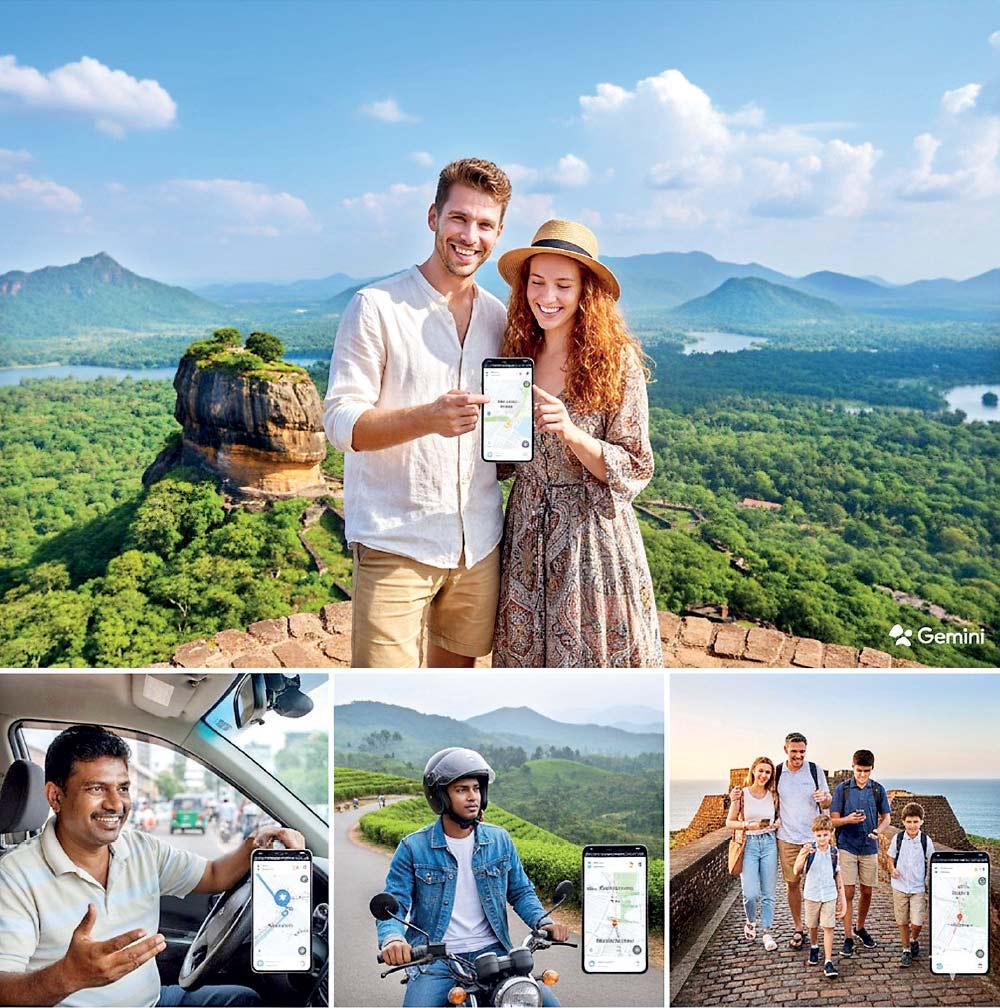
For example, a delivery motorcyclist in Kandy might ask, “Any fuel station near me before heading to Kandy town?” and get a direct spoken answer.
Landmarks over metres
Many of us know that metre-based directions often confuse: “turn right in 300 metres” isn’t always helpful when you’re hurtling past multiple lanes, shop fronts and tuk-tuks. The new landmark-based instructions promised by Google mean Maps might say: “Turn right after the Sampath Bank building” a cue grounded in what you’re seeing, not numbers.
In cities like Colombo, or in tourist-packed Galle Fort, this could reduce wrong turns, confusion and delays.
Safety and disruption alerts
Sri Lanka’s roads, particularly during the monsoon rains or in rural zones with unpredictable diversions, throw up unexpected hazards. The Gemini upgrade includes proactive alerts: if there’s a traffic incident or closure on your usual route, the system will flag it even if you haven’t opened the app yet. Imagine drivers from out of town being warned of the Peradeniya diversion before they even start their journey.
Tourism boost
Tourists in Sri Lanka will now be able to use Google Maps with Gemini to explore the island like never before. They can point their phone at an ancient temple, a colonial building, or a local café and ask, “What is this place?” The AI will provide instant details, including history, opening hours, menu options, and nearby facilities, turning every street into a guided tour.
Beyond landmarks, tourists can ask for recommendations along their route, like “Any seafood restaurants near Unawatuna beach?” or “Where can I find a quiet café on my way to Ella?” With real-time traffic alerts, camera-based insights, and conversational directions, visitors can navigate Sri Lanka confidently, discovering hidden gems without getting lost or missing key attractions. Local hotels, restaurants, tour-operators and sightseeing services should prepare for increased “AI-guided” navigation traffic.
Local businesses must be ready
As this conversational, voice-enabled navigation becomes mainstream, local shops and service providers in Sri Lanka have a fresh imperative: ensure their listings in Google Business profiles are complete and accurate. That means: listing full business details, products and services, special services (for example, parking facilities, delivery options), opening hours and any other relevant details. When the AI asks “What’s available nearby?” it will rely on that data.
If your business does not appear clearly in Google’s directory, you risk being left out of the conversation and the customer’s next turn. For Sri Lankan small-businesses, from roadside cafés to tourist-friendly stores, this means proactive mapping, correct categorisation, adding photos and keeping all data up to date. Are Sri Lankan companies and service-providers ready for this service? Many still lack full digital footprints or structured business information. This shift demands immediate action.
“Google Maps navigation with Gemini is rolling out everywhere Gemini is available.”
Challenges ahead
Of course, every tech leap brings questions and Sri Lanka’s landscape adds specific challenges.
Local data accuracy
Google says the upgrade is built on “250 million mapped places” and billions of Street View images to ground directions in visible landmarks. But many rural lanes, minor roads, informal stops and tuk-tuk routes in Sri Lanka still lack detailed mapping or accurate naming or old maps are active. A landmark might exist in reality but not in the dataset. Until local mapping is more complete, users may still face mis-directions or missing features. Did you know? Incomplete business listings can let competitors “own” your location on Google Maps.
Language and regionalisation
In India’s rollout of Maps with Gemini, nine local languages are supported, with localisation beyond translation to dialect, context and usage. For Sri Lanka to benefit fully, Google will need to support Sinhala and Tamil, and understand local patterns (traffic during Perahera, Colombo rush hour alternate routes, flood-prone areas). Localisation isn’t just about translation it’s about “how Sri Lankans talk and drive”. Without this, the tool may feel less tailored.
Infrastructure and consistency
Landmark-based instructions assume that the landmark is still visible and recognisable. But if a building has been demolished or new construction occurs, the AI may reference an old marker. Google itself notes potential “hallucinations” (AI making false statements) and says it has safeguards. In Sri Lanka, where rapid urban change, ad-hoc traffic patterns and narrow lanes are common, the system will need strong local updates and user feedback loops.
What to Do Now
Transport & Delivery Companies: Update your apps, test voice-guided routes, and train staff to use the new voice navigation features.
Tourism Operators: Make sure your business is clearly listed on Google. Add photos, correct opening hours, and complete details so visitors can find you when they ask “What’s that building?”
Road & Traffic Authorities: Share real-time updates on road closures, floods, and accidents with Google or local mapping agencies. This helps the system warn drivers before problems happen.
Drivers & Riders: Try out the new features in cities like Colombo and Kandy. Report mistakes and give feedback, your input helps improve maps for everyone, including rural areas.
Business Owners: Complete your Google Business Profile. Include services, special facilities like parking or delivery, multilingual staff, and accurate hours so AI can guide customers correctly.
Language & Digital Inclusion Advocates: Push for Sinhala and Tamil support. Help map local landmarks that people know but aren’t yet on Google Maps.
When your mobile screen no longer requires you to tap route checks and when the voice in the passenger seat says “Turn right after the big mango tree”, that’s when AI meets the real-world road. For Sri Lanka, the arrival of Google Maps plus Gemini means more than convenience: it offers safer commutes, stronger tourism support, and smarter travel across an island both modern and traditional. But the promise will be fulfilled only when the map learns our roads, our language, our landmarks and our everyday stories.