Reply To:
Name - Reply Comment
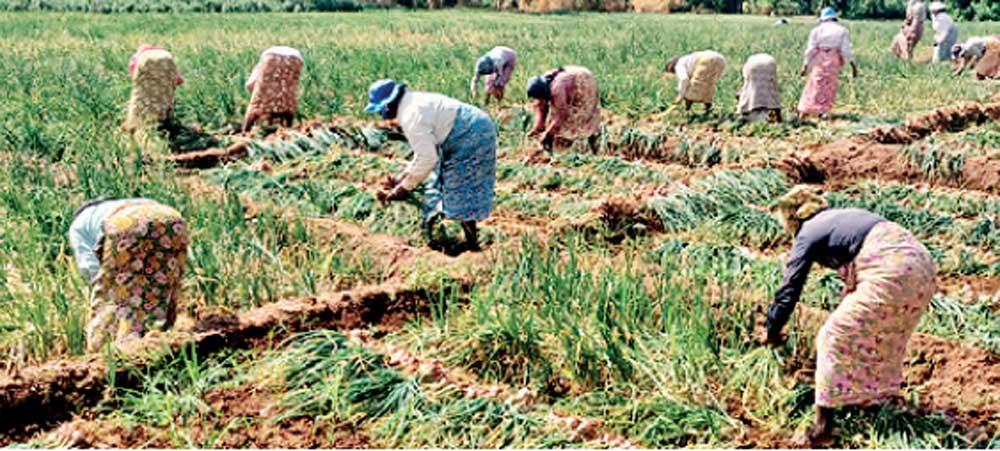
Seeds of Concern: Traditional Farming Practices Challenged by Chemical Interventions
By Kanchan Kumara Ariyadasa
Much has been discussed and written about the use of agrochemicals and their significant impact on public health and the environment. Kidney ailments, a major health issue confronting the present generation, have been attributed to the pollution of drinking water caused by agrochemicals.
Agro-chemicals have displaced traditional crop protection methods used by the Sri Lankan farmer from times immemorial and created a health hazard, suggesting that the nation is slowly being poisoned. It is precisely the point which our story reaches.
Widespread use of agro-chemicals dates back to the late 1960s, which provided a lucrative market for the chemical manufacturers but left the peasantry and the consumer at a loss while forming a formidable health hazard.
The majority of vegetable farmers all over the country attribute the vegetable prices that have skyrocketed to the heavy expenditure on agro-chemicals. They accuse the authorities of ignoring this major issue. They pointed out that the consumers have been burdened with the unbearable prices of vegetables while slowly poisoning them.
Scholars, health authorities, environmental organisations and the peasantry have also pointed out the seriousness of this issue for a long time, but to no avail. Their continual representations in this regard to the successive governments have fallen on deaf ears. Meanwhile, every politician and administrator seems to have considered it a matter of
serious concern, but questions are raised as to whether their action matches their words.

Organised groups are selling pesticides under false trade names. Every company dealing in Pesticides should register with the Registrar of Pesticides and obtain approval to import and distribute Pesticides.
- Dr. J.S. Sumith from the Registrar of Pesticides

I gave up on agriculture and joined the Economic Centre as a manual labourer to earn a pittance to keep my head above water. I incurred heavy losses as a vegetable farmer.
- Manju Sri Kumara Nugagahapola, A farmer of the Galkiriyagama area
The agricultural sector today is entirely different from that day. Seeds produced locally in the past are not available now. We have to buy imported seeds. In the past, we used insecticides and pesticides only once. Now, we must use chemicals almost every day before the harvest.
- W.M.H. Sandaruwan, a farmer from Monaragala
Farmers pointed out that several state officials of the Department of Agriculture and the Department of Agrarian Development, during their service and even after retirement, are hand in glove with the private companies providing services to agriculture.
The farmers mentioned that “Agricultural authorities attribute the increasing prices of vegetables to natural causes or the farmers abandoning vegetable cultivation and switching to other crops. However, the main factor in the increase in prices of vegetables is the exorbitant prices of weedicides, pesticides and seeds. It is compulsory to spray these chemicals at regular intervals of four days. The main grievance of the consumer is the exorbitant prices of vegetables, but they hardly feel a movement that they are buying poison as well. It should be considered as a matter of priority and work out an effective plan to save the nation from this danger of several non-communicable diseases, of which even the children that are to be born are victims. Another glaring defect of agro-chemicals is the ruin of soil fertility. The colossal expenditure of foreign exchange on imports of agro-chemicals should be cut down to the barest minimum”.
A young farmer of Monaragala, W.M.H. Sandaruwan, who brought a consignment of vegetables to the Dambulla Economic Centre, expressed concern about the ongoing exploitation of the farmer by agro-chemical traders said the production cost of vegetables is increasing in a large proportion every year, and that it is not possible to supply vegetables at affordable prices.
“I took to vegetable and fruit cultivation after my father, who was a traditional farmer in the Monaragala area. The agricultural sector today is entirely different from that day. Seeds produced locally in the past are not available now. We have to buy imported seeds. In the past, we used insecticides and pesticides only once. Now, we must use chemicals almost every day before the harvest. These are the intrigues of the agro-chemical suppliers to exploit the farmers. Ultimately, the consumer is the victim.
“When the Department of Agriculture introduced the home garden cultivation programme, the multi-national companies distributed imported seeds for free. However, it requires the use of agro-chemicals. The agricultural ministry should at least work out a mechanism to supply high-quality seeds that bring about a bumper yield to cut down the production cost”.
A farmer of the Galkiriyagama area, Manju Sri Kumara Nugagahapola, has given up vegetable cultivation and taken to manual labour to make a living.
“I gave up on agriculture and joined the Economic Centre as a manual labourer to earn a pittance to keep my head above water. I incurred heavy losses as a vegetable farmer. When we give an interview to the media regarding our issues, the officials take us to task without the least concern about the issues that concern us. Farmers have fallen prey to the agro-chemical importers. Poor quality seeds are imported in almost unlimited quantities and sold for exorbitant prices. When the crops failed, these officials attributed it to some lapse on our part. Agriculture in the country has been caught in the grip of the multi-national companies supplying agro-chemicals and pesticides. My request to the present government is to look into these issues,” He said.
A farmer from Mihintale, Sarath Abeynayake and Namal Madusanka from Mihintale expressed similar grievances facing the farmers. Their main request to the government was to look into the issues affecting them due to the intrigues of agro-chemical and seed traders.
Meanwhile, Registrar of Pesticides Dr. J.S. Sumith said the Pesticide trade is subject to the Control of Pesticides Act, No. 33 of 1980, and it is monitored by his department.
He, however, said that “Organised groups are selling pesticides under false trade names. Every company dealing in Pesticides should register with the Registrar of Pesticides and obtain approval to import and distribute Pesticides. However, the monitoring system of Pesticide import and distribution could break down due to the supply of unauthorised and adulterated pesticides by unscrupulous businessmen. It is illegal to mislead the farmers by supplying chemicals regardless of efficiency and safety aspects. The attention of the authorised officers under the
Pesticide Control Act is drawn to the issue and to take legal action against unauthorised productions,” He said.