 CHATURANGA PRADEEP SAMARAWICKRAMA
 Reply To:
Name - Reply Comment

People affected by climate change and in return finding engaging in agriculture a challenge expressing their views
Sri Lanka, a lush island famous for its scenic landscapes and fertile soil, has always thrived on agriculture. From its picturesque tea plantations to the vast rice paddies, farming is not just a livelihood, but a deeply rooted cultural tradition. However, changing weather patterns are threatening this way of life, putting farmers in a tough spot.
Impact of climate change on farming
Deforestation, pollution and unsustainable land use are taking a toll on Sri Lanka’s environment. Trees are being cleared for urban development, large-scale farming and logging, which weakens the land’s ability to recover naturally. Pollution adds to the problem, disrupting weather patterns and making rainfall unpredictable.
Farmers in Siyambalanduwa, a region in the Monaragala district, have witnessed drastic changes in the climate. The once-consistent weather cycles have become erratic, with sudden downpours, prolonged droughts, and shifting monsoons. For instance, the “Hath Dohe Duruththa,” a traditional seven-day rainfall in January, has transformed into short, heavy bursts of rain. This change has caused severe soil erosion and frequent floods, damaging crops and livelihoods.
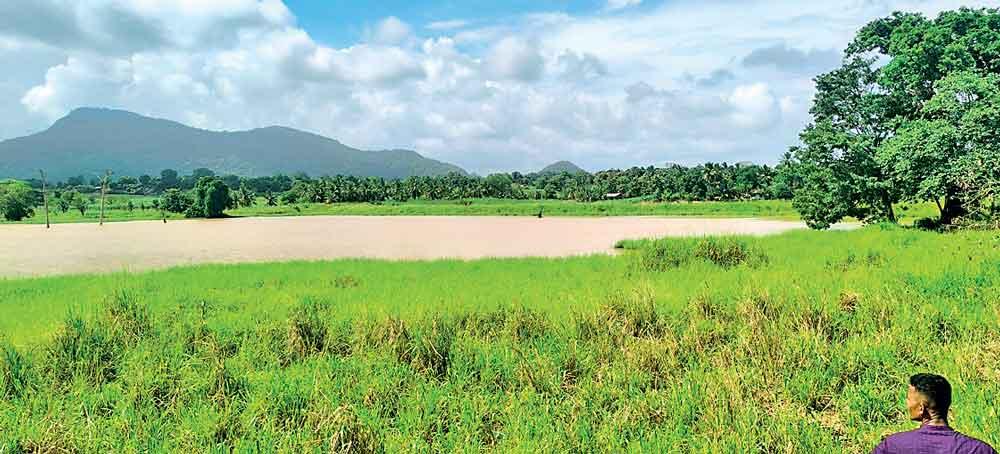
Miya Ketu Wewa
A community struggling to adapt
In Namaluwa village, farmers have been particularly hard-hit. Development Officer D.M.P. Dissanayaka explained how these sudden weather changes delay the planting season, while heavy rains in November led to flooding in the Heda Oya River and submerging fields. “Farmers, already grappling with shrinking yields, find it increasingly difficult to make timely decisions about irrigation, pest control, and harvesting” said Development Officer D.M.P. Dissanayaka Sugarcane farming, which requires large amounts of water and land, has further worsened the problem. Excessive cultivation has disrupted water sources and contributed to environmental degradation. Meanwhile, inadequate irrigation systems mean that rainwater often dries up during droughts, leaving fields parched.

 “Farmers, already grappling with shrinking yields, find it increasingly difficult to make timely decisions about irrigation, pest control, and harvesting”-
D.M.P. Dissanayaka, Development Officer
Human-elephant conflict on the rise
Adding to the woes of farmers is the escalating human-elephant conflict. Villagers report that elephants, driven by hunger due to deforestation, now roam into farmlands, destroying crops and posing threats to lives. Grama Niladhari H.M. Kasun Jagath Kumara said, “Chena farming, a traditional slash-and-burn method that once kept elephants at bay, has been abandoned due to economic challenges and restrictions on forest access”.
The problem is further exacerbated by cattle herds from neighbouring areas grazing on wild plants in elephant habitats. This leaves elephants with no food in the forest, forcing them into villages. Farmers have called for stricter measures to prevent cattle from encroaching on elephant territory.

 “Chena farming, a traditional slash-and-burn method that once kept elephants at bay, has been abandoned due to economic challenges and restrictions on forest access”-
H.M. Kasun Jagath Kumara- Grama Niladhari
Adapting to a new reality
Organizations like the Centre for Environmental Justice (CEJ) are stepping in to help farmers adapt. CEJ has launched projects in Siyambalanduwa to promote sustainable farming practices.
Their programmes educate farmers on the effects of climate change and provide tools and techniques to mitigate its impact.
“We are working with government officials and farmer organizations to address the challenges of climate change,” said U.G.A. Darshika Sewwandi, an environment officer with CEJ. “Our goal is to minimize the effects of climate change on agriculture in the Monaragala district and implement sustainable practices to build resilience,” she said.

 “Our goal is to minimize the effects of climate change on agriculture in the Monaragala district and implement sustainable practices to build resilience”
- U.G.A. Darshika Sewwandi, Environment Officer working for CEJ
The way forward
Despite these efforts, the challenges remain steep. Villagers like M.A. Nishanthi Senarathne shared how their farming schedules have been disrupted. “We used to start preparing the land for the Maha season in August, but now heavy rains destroy our crops before they’re ready for harvest. Even adjusting our schedule hasn’t worked,” said Senarathne.
Farmers also face declining yields due to irregular rainfall and the destruction caused by wild animals. Economic Development Officer M.S.H. de Soyza underscored the need for better water management, such as improved tank systems, to store rainwater for use during droughts.
Call for collective action
The changing climate in Monaragala is not just a local issue; it’s a warning of what unchecked environmental damage can lead to. While farmers are trying to adapt, there’s an urgent need for coordinated efforts from government bodies, environmental groups, and local communities.
Sustainable farming, better water management, and stricter policies to protect wildlife habitats are vital to securing the future of agriculture in Sri Lanka. With the right support and practices, the farmers of Siyambalanduwa and beyond can weather these challenges and protect their way of life for generations to come.