Reply To:
Name - Reply Comment

The exploration of Sri Lanka's complex political and social landscape reveals a nation grappling with its past while striving for reconciliation. In this context, the role of organisations like the National Fisheries Solidarity movement (NAFSO) is vital.
NAFSO is a fisherfolk movement in Sri Lanka dedicated to advocating for marginalized communities, including internally displaced persons, women, and youth. NAFSO focuses on promoting human rights and fostering genuine sustainable development, particularly in the agriculture and fisheries sectors, within the context of post-conflict Sri Lanka.
NAFSO works to bridge divides among communities that have been affected by ethnic and religious tensions.
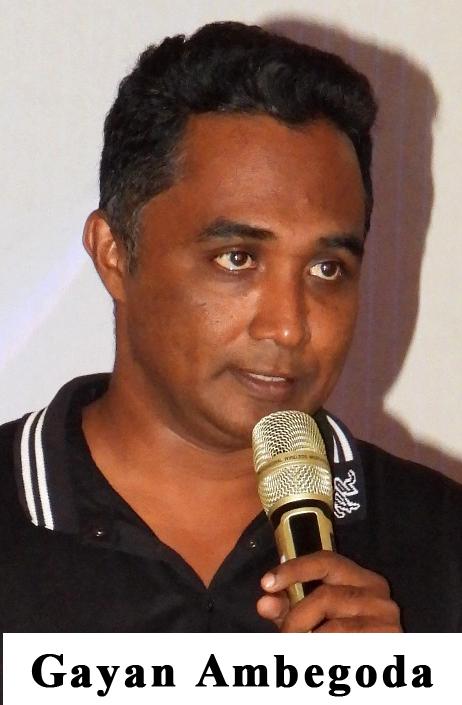
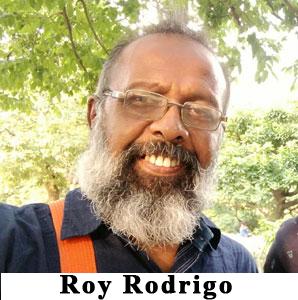 In this context Gayan Ambegoda's My Story and Roy Rodrigo’s Disgraceful Political History, highlighting how they reflect the ongoing struggle for unity in Sri Lanka while showcasing NAFSO's work that tries to bring reconciliation between various communities.
Gayan Ambegoda's My Story and Roy Rodrigo’s Disgraceful Political History and the Fate of Sri Lanka offer strikingly different perspectives on the journey of Sri Lanka’s political and social landscape.
While Ambegoda’s work reflects a hopeful vision of reconciliation and unity, Rodrigo’s narrative casts a critical eye on the deeply ingrained political and ethnic divisions that have shaped the country for nearly a century.
Ambegoda’s My Story stands as a testament to the potential for peace and coexistence in Sri Lanka, especially after 16 years since the end of the civil war.
Through firsthand accounts of young people from diverse ethnic and religious backgrounds, Ambegoda documents the transformative impact of reconciliation programs in eight districts.
 The youths involved in the initiative, which was spearheaded by the National Fisheries Cooperation, participated in activities that encouraged them to visit different places of worship, live together, and embrace cultural and religious differences.
This collective experience, as described in My Story, demonstrates how mutual trust and cooperation can bridge the gap between communities that have been segregated by ethnic and religious lines.
Ambegoda’s book is filled with optimism, showing that even in a society that has been marred by conflict, hope for a united future is not lost.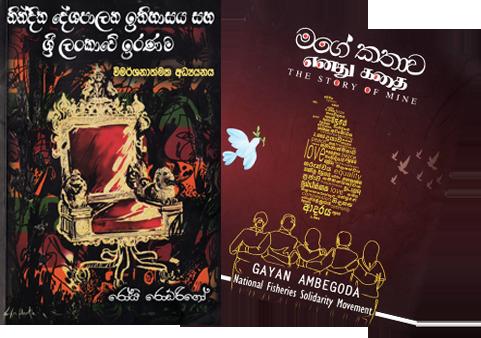
In stark contrast, Roy Rodrigo’s Disgraceful Political History and the Fate of Sri Lanka offers a more sobering critique of the country’s political evolution.
Rodrigo, a seasoned political commentator, dissects the selfish and opportunistic behaviors of politicians from both the North and South, who have, according to him, prioritized power and personal wealth over national unity.
He explores the deep-seated ethnic divisions that have hindered the creation of a cohesive Sri Lankan identity. The book covers not just the political history of the island but also its anthropological roots, diving into the ancient past and providing insights into the formation of the country’s multi-ethnic, multi-religious society.
Rodrigo’s work is a call to reflect on the missed opportunities and shameful actions of political elites that have perpetuated the cycle of distrust, preventing the nation from healing and thriving.
While Ambegoda’s book emphasizes the power of grassroots reconciliation, Rodrigo’s book highlights the systemic challenges that need to be addressed at the political level for true national unity.
Ambegoda’s My Story speaks to the possibility of healing through personal interaction and shared experiences, whereas Rodrigo’s Disgraceful Political History calls for a deep reckoning with the political structures that have perpetuated division.
Both books reflect a profound desire for peace, but they approach the issue from different angles: one from a personal, grassroots perspective and the other from a political, historical standpoint.
Ambegoda’s narrative offers a hopeful pathway forward, while Rodrigo’s serves as a cautionary tale of the risks of perpetuating a divided national identity.
Together, these works underscore the complexities of Sri Lanka’s journey toward unity, highlighting both the potential for change and the obstacles that remain.
In the end, both books urge readers to reconsider the idea of unity, pose the question whether it is possible in a nation that has been divided for so long—yet each, in its way, leaves room for hope that the dream of coexistence and mutual respect is achievable if all Sri Lankans work together.
Tam Harikaran, from Jaffna, reflects on a life overshadowed by the painful history of Sri Lanka's civil conflict.
His father, a militant, is one of the countless individuals who have disappeared in the country, leaving a profound impact on the Sri Lankan Tamil community.
Since the 1980s, tens of thousands have vanished, plunging families into perpetual grief and uncertainty.
Thanks to NAFSO's work the growing up in poverty after his father's disappearance, Tam and his family struggled against the backdrop of war and loss.
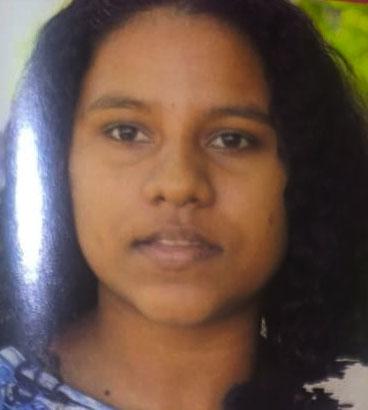
Ashani Pramodika, a 17-year-old from Negombo, recounts a transformative journey shaped by tragedy and her exposure to the NAFSO organization.
Initially unaware of NAFSO's work, she joined by chance and grappled with her deep-seated Catholic faith and reservations about other religions.
The 2019 Easter attacks in Negombo, which claimed the life of her best friend Shakya, left her consumed by grief and anger, particularly toward the Muslim community. This painful experience marked a turning point in her understanding of faith, empathy, and coexistence.
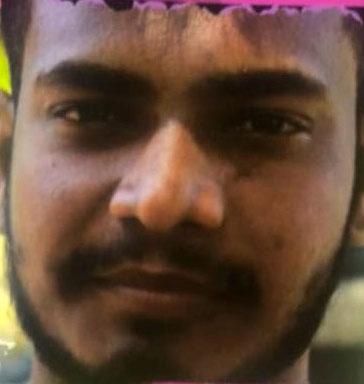
Tam Antony Jayakumar, a 25-year-old from Kilinochchi, envisions a Sri Lanka where love, respect, and equality transcend religious and ethnic divides.
Hailing from a region scarred by war and economic hardship, his community—largely dependent on farming and fishing—continues to struggle.
Amidst these challenges, Antony pursues undergraduate studies, dreaming of a future where social and economic disparities no longer hinder progress or unity.