 Kamanthi Wickramasinghe
 Reply To:
Name - Reply Comment
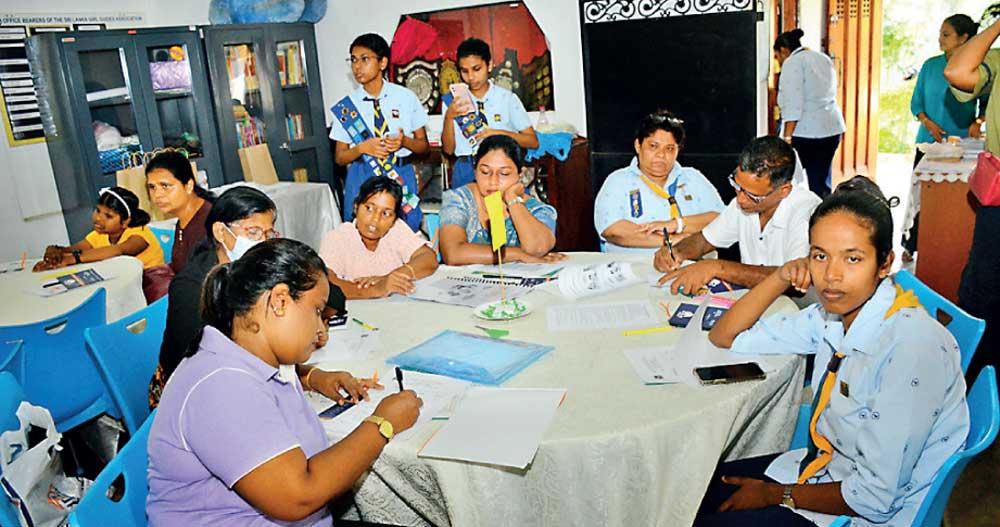
SLGGA’s Branch for Differently-Abled Guides works very hard to provide equal opportunities and activities for girls and young women with disabilities
Pix by Waruna Wanniarachchi
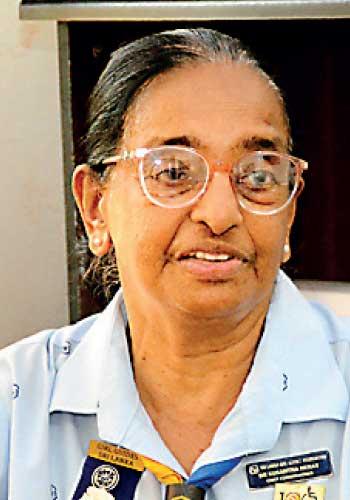 |
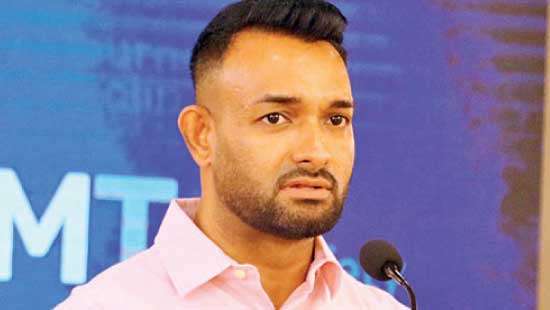
| Dr. Kusantha Herat |
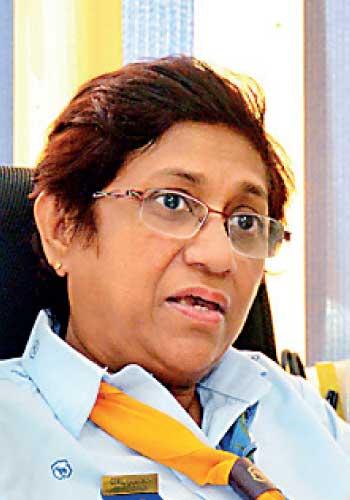 |
| Saumya Jayasekera |
In their efforts to champion a world of inclusivity and diversity, the Branch for the Differently Abled Guides at the Sri Lanka Girl Guides Association (SLGGA) recently concluded a workshop for caregivers and parents who are primarily looking after differently-abled children titled ‘Every Step Counts’. The programme was held in view of this Branch reaching its 100-year milestone, while the SLGGA celebrates its 108th year of serving society.
Branch for Differently Abled Guides
Established in 1924 at the School for the Deaf and Blind in Ratmalana to provide equal opportunities and activities for girls and young women with disabilities, the Branch is active across the country and offers tailor-made programmes, workshops, and resources to support members with hearing and sight impairments, Down Syndrome, and other learning difficulties.
Today this branch has expanded to all provinces, institutions and schools spanning from Kaithady, Jaffna, to the South, to Uva and Sabaragamuwa Provinces, to Kandy, Nuwara Eliya and the recent addition in Anuradhapura. What is quite unique about this branch is that during the tenure of each successive commissioner, it has improved and expanded to reach out to more differently-abled children, caregivers and parents.
Speaking to the Daily Mirror, SLGGA Chief Commissioner Dr. Kusantha Herat said that there aren’t many organisations that have a separate branch for the differently-abled individuals, and therefore, this Branch is unique in that sense. “We are proud of the fact that it has stood the test of time and has done a marvellous job. We have Guide associations from overseas reaching out to us so that they can also start a similar branch. We also carried out a successful reach-out programme, following which a differently-abled branch was commenced in Singapore,” Dr. Herat said.
Workshops for caregivers
“What inspired the SLGGA to initiate the Caregivers Workshop was to provide the know-how for caregivers who look after differently-abled children,” said Saumya Jayasekera, former director of the Branch, in an interview with the Daily Mirror. “Some individuals are clueless in this aspect. They need some kind of assistance and knowledge to look after these children. Most parents are breadwinners, and they have no way of leaving these children behind. They face harsh realities in life,” she added.
The recently concluded programme, conducted by Dr. Asiri Hewamalage, Consultant Community Physician at the Family Health Bureau, aimed to create awareness on the detection of disabilities during early childhood and provide guidance on how parents, caregivers and teachers could work together to overcome challenges. The participants of the workshop were parents of children aged between 5-10 years with diagnosed disabilities, as well as teachers from special needs units of government and private schools in the Western Province.
Some of the topics covered during the workshop included managing challenging behaviours in children with disabilities, activities to detect behaviour, introduction to speech and language therapy, nutrition and feeding in children with special needs, supporting children in academic and examination settings and caregiver wellbeing and stress management.
Advocating for change
Jayasekera further said that their intention now is not to confine these programmes to the Association but to go beyond these premises so that we create more awareness. “Sometimes these caregivers are challenged, as it could be their first time looking after a differently-abled child. We have to be grateful for these parents and caregivers because it’s a tremendous task. We will be able to provide them with more help, and we have had a lot of committed people to sustain the branch. It’s comforting to have been given the opportunity to work with these children. None of us is here for any personal recognition. I have been in this branch for a long period, and we don’t want to abandon it. Over the years, there have been amazing people who have improved this branch and taken it further. With each tenure of commissioners, we have tried to expand. Now we will continue to do that depending on the resources we have,” she further said.
Dr. Herat underscored the need to have more facilities in terms of accessibility for differently-abled persons. “We need to campaign for facilities such as ramps, hand railings and other infrastructure in supermarkets and other public places. It’s a mission we need to take seriously. We need to empower these children to be able to take care of themselves and become self-sufficient at some point so that they don’t become a burden to their families or to society,” she added.
Jayasekera stressed on the fact that children with invisible disabilities do well in exams, but conditions such as dyslexia get in the way of the educational progress of a student. “Foreign universities have separate rooms to accommodate these children because they can’t handle noise and people, but unfortunately, these facilities are not available. But we should slowly move towards introducing such services for differently-abled children here in Sri Lanka,” she suggested.
Even though Sri Lanka’s employment quota mandates that 3% of vacancies should be allocated for differently-abled persons, there is, in fact, a long way to go in this regard. Except for a handful of workplaces, many public and private institutions across almost all sectors have ignored this fact. “People need to accept these children, have more empathy, recognition and cooperation with them so that they would be treated equally. They need to be given equal opportunities. We have hope for them, and we hope we can provide them with opportunities in our capacities to succeed in life,” Jayasekera said in conclusion.