Reply To:
Name - Reply Comment
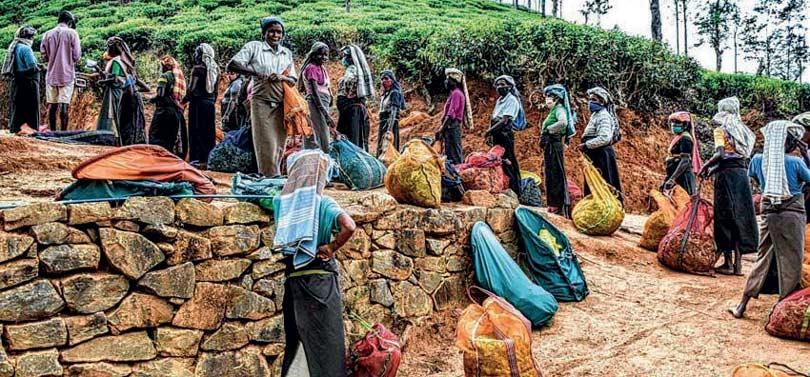 Tea pluckers in estates continue work with little hope despite the government maintaining that discussions with companies and trade unions are in progress to offer a better daily wage
By Mirudhula Thambiah
For years, plantation workers’ demands for fair wages have been dragging through negotiations, court rulings and collective agreements. Yet many like Janaki remain uncertain whether any promised increase will reach them. She worries, but her need is urgent. She had to support an unwell husband and help her son continue his studies. Fifty-two-year -old Sivalingam Janaki, plantation worker from Holyrood Estate in Talawakelle, carries responsibilities of supporting her whole family. Every day, she faces the challenge of making ends meet with wages that barely cover the rising cost of living. “We really need this increment. Something is better than nothing, but even Rs.1700 may not be enough with the current prices of essentials. And will the companies actually pay,” she asked, her voice heavy with both hope and doubt. Her words reflected the reality of thousands of plantation workers in Sri Lanka, for whom promised wage increases are critical, but uncertain. Janaki’s doubts arise as the government has proposed raising plantation workers’ wages up to Rs. 1,700.

“With the current cost of living, we at least need Rs.50,000 to balance our expenses. Sometimes, we need more than that. The current government said they will get us a pay hike to make the salary Rs.2000. But in reality, they are even unable to get us Rs. 1,700”
- Sivalingam Janaki,
Plantation Worker
Government response and promises
Minister of Plantation and Community Infrastructure, Samantha Vidyaratna told parliament last week that this increment is intended to address long standing wage issues in the sector. He assured, “The government is determined implement the promised wage increase. A new system will be adopted to ensure that the increase reaches workers. We will continue negotiations and take the necessary steps. You provide the necessary cooperation”. He made these remarks when Deputy Leader of Tamil Progressive Alliance (TPA) Parliamentarian Palani Thigambaram pressed the minister of how and when the increment would actually be delivered to the plantation workers.
Life on the estates
While debates over the wage increase continue in parliament, plantation workers on the ground are already feeling the pinch of rising living costs and inadequate pay. Many express both hope and caution about the proposed Rs.1700 increment. Janaki continues to share her grievances and harsh realities of daily work, “With the current cost of living, we at least need Rs.50,000 to balance our expenses. Sometimes, we need more than that. The current government said they will get us a pay hike to make the salary Rs.2000. But in reality, they are even unable to get us Rs. 1,700. How will they get us Rs. 2,000 with the increments,” said Janaki describing the daily toll of her work. She has only two meals a day, skipping lunch. “When there are no tea leaves it is very difficult to earn. We must pluck 24 kg of tea leaves. They (companies) take 2kg of tea leaves for all three times which means they take 6kg of leaves. We have to pluck 18Kg per rules, but they take 6kg separately, therefore if we pluck 24kg only we can achieve 18kg apart from the 6kg reduction. They tell various reasons like it will cut off at the factory and reduce 2kg. If we don’t achieve the 18kg target, we would run to the tea estates to pluck more leaves. If we do not pluck 18 kg of tea leaves, we will not be paid Rs. 1,350. It is very sad that we work really hard and our job is not easy. But at the end of the day if we do not achieve 18kg, we will face a loss. We have addressed this issue many times, but it will be spoken about for some time, but they’ll do it again. They will pay half salaries if 1kg is less than the target,” she said.
 We do not decide an amount. We have to come to a conclusion with the discussions. Beforehand if we decide an amount and go to the discussion that will be unfair. This is not only our proposal, because for a long time there was a proposal to increase the salary up to Rs.1,700”
- Deputy Minister of Labour, Mahinda Jayasinghe
Her concerns are echoed by Ramadas Shanthini (42) from Wattagoda Lower Division Estate, who underscores that the challenges must go beyond mere numbers. She details the long hours, strict quotas and doubts system change adding that, “By 7.45am-8am we should go to the hills to pluck tea, we return between 5.30-6pm. We take a lunch break in between. The amount (kg) will vary from company to company, and we have to pluck 18kg and on Sundays we pluck 20kg. Now at Madakumbura Estate it is different, on Sundays. Our estate has three divisions and what I mentioned are the rules. From Monday to Saturday, we have to pluck 18kg, and on Sundays we pluck 20kg and it is a must. There are instances when they pay only for half day. So, we argue with the employers. We work 8 hours and getting a half-day wage is not right, just because it is less than the targeted amount and therefore, we request them to pay fully. But they will not pay. We work with many difficulties. Leech bite is a big problem. Managing the family with this pay as a woman is very difficult. This government came to power assuring a system change. So far, we have not seen it. The issue is prices of goods are increasing every day.”
Durairaj Vishwaraj (44) from Kahawatte Foundation Estate described the delicate balance he maintains between supporting his family and meeting daily working demands. He stated that although the proposed pay hike is inadequate, receiving at least that amount would balance his financial status. “In the current situation this proposed pay hike of Rs. 1,700 is inadequate. However, I also feel providing this amount is at least good. Now they are paying Rs.1,350. We feel like it would be good if they increased the wage by another Rs. 350. We also must listen to companies. They are properly paying Rs.1,350 in our estates, but see they deduct for EPF and ETF, in that case we don’t get the full amount,” he said.
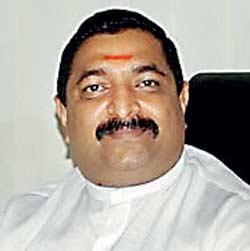 “They will either have to call another Wages Board meeting or come to an understanding with the Regional Plantation Companies (RPCs). Otherwise, it will have to go back to the Collective Agreement”
- Vadivel Suresh, General Secretary of Lanka Jathika Estate Workers Union
Long-standing struggle
For Menaha Kandasamy, Advisor of Ceylon Workers Red Flag Union, the issue of plantation wages is not a new or temporary dispute, but a long-standing struggle stretching across decades. She pointed out that the plantation companies have historically undervalued the labour of their workers and that wage negotiations have often failed to meet even the basic cost of living needs. “This is not just now or just a collective agreement period. Companies never value the plantation workers’ labour. Their labour value is always underestimated. Once in two years, they discuss the collective agreement, but every time there is drama. The wage increment is minimal, never fixed according to the cost of living or what workers actually need,”
Kandasamy traces the roots of the current system to the 2003 collective agreement, which established guidelines not just for wages, but for management-worker relations, norms and trade union negotiations. Every subsequent wage discussion focused only on incremental raises while main agreement remained in effect. “In 2019, the discussion was about increasing the wage to Rs.1000, but the Employers’ Federation of Ceylon (EFC) refused any increment. It was also a political agenda because of the election period. When no agreement was reached, the issue went to the Wages Board. In March 2021, the Board set Rs.1,000 as the daily wage. The EFC challenged this decision in courts. However, the government won and Rs.1,000 became the daily wage of the workers. But even after the court order many companies refrained from paying the exact amount. Some companies increased the norm. When the norm also increases it won’t be a wage increment. Some companies didn’t pay back wages. They didn’t punish the government or trade unions, but the workers were directly punished,”
Kandasamy recounted how political promises and gazette announcements often failed to materialise. “During the following election campaign they proposed Rs.1,750 wage increment. This was just before 2024 when they announced Rs.1,750 and also gazetted it. Later it was withdrawn,” Kandasamy said. She continued to describe the Wage Board process in 2024, when the Rs.1,350 daily wage was approved despite opposition from her union and others. “In September 2024 they fixed Rs.1,350 as the daily wage. But the Red Flag Union, Janatha Vimukthi Peramuna (JVP) and Ceylon Federation of Trade Unions (CFTU) voted against this decision. There were nine trade unions that participated in the voting and out of which three voted against it. Since the six trade unions, EFC and others voted in favour of Rs. 1,350, thus that amount was decided and adopted,” she recalled.
 “The parties will have to bargain and finally come to an agreement. But the collective agreement will be for a specified period. Thereafter again, they have to go for another collective agreement”
- Prof. A. Sarveswaran, Faculty of Law University of Colombo
Even after approval, unions continued to challenge the inadequacy of wages, writing letters to the Commissioner General of Labour, meeting the Minister of Labour in July 2025 and filing a case in August 2025 to press the government to ensure fair payments. “We are awaiting a positive ruling from the court,” she added. Kandasamy highlighted the outcome of a workers’ tribunal held in June 2025, where judges from India, Nepal and Sri Lanka heard testimonies and recommended the government acts to prevent companies from manipulation norms or reducing working days. “When you talk about wage increment, it is not about increasing rupees, but valuing their labour thus dignifying them. If their wage is increased, they will buy whatever they want. It is their right,” she noted.
Union leaders weigh in
Picking up from this long struggle, General Secretary of Lanka Jathika Estate Workers Union Vadivel Suresh said, “They will either have to call another Wages Board meeting or come to an understanding with the Regional Plantation Companies (RPCs). Otherwise, it will have to go back to the Collective Agreement,” he explained. From the union’s side, he pointed out that the government itself had promised Rs. 2,000 as the daily wage. “Naturally, workers are expecting Rs.2,000. But, even that is not enough with the cost of living today. They have increased the salaries for government employees, pensioners and private sector. Plantation workers also represent the private sector. Whatever is implemented in the private sector should be implemented in the plantation too. Whatever is directed at the private sector should apply here as well via RPCs,” Suresh noted.
While Suresh framed the wage debate around government promises and parity with the wilder private sector, Deputy Leader of Tamil Progressive Alliance (TPA) and Leader of National Union of Workers Palani Digambaram’s solution is not to wait for another Wages Board meeting, but to restructure the entire plantation model itself. “I requested to divide the tea estates and make them small tea holders. They can sell 1 kg of tea for Rs.100 so for 20kg they can earn Rs.2,000 per day. Government has not responded to us properly,” he noted. Digambaram accused the authorities of dragging their feet. “They have been talking about discussions for almost a year. Nothing has happened,” he said.
He told Daily Mirror that companies will not give the increment stating, “I have spoken to them directly, they are not ready to give it. This government is lying”.
Meanwhile, Former Minister and General Secretary of Ceylon Workers Congress Jeevan Thondaman noted, that the daily wage model does not work. “If it is Rs.1,700 now, tomorrow it will be Rs.2,000, after that it will be Rs.2,500. It will be never be ending. When I got the Rs.1,000 wage increment in 2020 and Rs.1,350 basic wage in 2023. I was clear on both occasions that a productivity-based model is needed. Today we have a government that has come to power and has opposed the Rs.1350 wage that I had proposed. It is not easy to increase the wage of estate workers even by Rs.1. I know the difficulties,” he added.
Providing a reality check, Activist Nelson Mohanraj from Ratnapura added a pragmatic angle to this wage issue stating, “There are fewer chances of getting an increment of Rs.1,700. If the government presses, there may be a chance for companies to agree. But even the government might not press, given the country’s financial situation,” He too noted that the proposed Rs.1,700 is insufficient given the rising cost of living. “Two years ago, this was proposed, but now it should at least be Rs.3,000. Even a Rs. 1,350 daily wage was not the government’s responsibility and companies agreed to it. So, the chances are low,” he said. Mohanraj also highlighted indirect methods companies might use to avoid paying full wages, such as reducing working days or deducting fertiliser costs from salaries.
Planter’s perspective and economic reality
Roshan Rajadurai, a veteran planter, offered a rare perspective from the other side of the tea estate gates, stressing the economic realities. He recalled the May 2023 announcement by then-President Ranil Wickremesinghe of a Rs.1,700 daily wage which, he said, “is completely beyond the realm of practicalities.” “It is not that we are unwilling to give. Since we have privatised, we have given 28 times of the wage, even though the price has not increased. You are selling a product at Rs.1,000, but you can’t give a wage increase of Rs.1,700 because the cost of production is nowhere,” he explained. “We are not contemplating any increase. Any business can pay employees only from revenue earned. We cannot print money or borrow endlessly. The reality is that some companies perform better than others, and on average the cost of production is about Rs.1,200 with the sale price also being around Rs.1,200,” he added.
Rajadurai argued that the estate sector has been managed over decades, “We have given a 35% wage increment, but prices have come down by about Rs.100 compared to last year. Workers resist, saying they can’t pluck more, but they can. It is not unwillingness, but the unaffordability of the industry. Tea prices are not controlled by us,” he argued.
 “It is not that we are unwilling to give. Since we have privatised, we have given 28 times of the wage, even though the price has not increased. You are selling a product at Rs.1,000, but you can’t give a wage increase of Rs.1,700 because the cost of production is nowhere”
- Roshan Rajadurai,
Veteran Planter
He contrasted plantation wages with other sectors. “National minimum wage in the government sector is Rs.27,000. We have been paying Rs. 34,500 since October 2024; long before the government considered it. Even the garment sector minimum wage was Rs.24,000. The Plantation sector wages are among the highest, plus we provide benefits: child care, health, sanitation, housing, for the entire community,” he added. Rajadurai also highlighted the fragile economics of tea estates and stated, “In the low country, 75% of tea comes from smallholders. Tea prices have fallen, some factories are shutting down. We provide 300-plus days of work, double name and run the industry. We must be realistic. Promising what we don’t have will bankrupt us.”
He further compared the productivity between smallholders and estate workers by adding, “Smallholders get Rs.50 per kg, without EPF, ETF, or customary benefits. They pluck only 60 perches per person. Plantation workers have 3–4 hectares each. Our tea has better growth, standards and cover. In Assam-India, despite poorer conditions, pluckers manage 34kg daily. Our revenue is low and cost of production often exceeds it. Our productivity is the lowest in the world. It is not economical or viable.”
However, attempts made to contact Director General of EFC Vajira Ellepola for an official comment on the perspectives of the employers was unsuccessful.
Legal context and labour rights
Meanwhile, Prof. A. Sarveswaran from the Faculty of Law of the University of Colombo, explained the legal frameworks governing plantation workers’ wages and labour rights. He said that there are two main mechanisms to determine wages and allowances for plantation workers, the Collective Agreements and Wages Boards. Historically, wages were set through collective agreements between employers and trade unions, which depend on the bargaining power of the parties. “The parties will have to bargain and finally come to an agreement. But the collective agreement will be for a specified period. Thereafter again, they have to go for another collective agreement,” he said. In cases where the parties fail to agree, conflict may arise, sometimes leading to strikes or other industrial actions.
The second mechanism, the Wages Board, is a tripartite body comprising representatives of employers, workers, and nominees of the minister. Decisions are made through discussion, and if consensus is not reached, voting determines the outcome. Wages Boards operate under the Wages Board Ordinance, part of Sri Lanka’s labour legislation, and once a decision is made, it legally binds all parties. Employers cannot go against the Board’s decision, and non-compliance constitutes an offence. Technical challenges can be presented in court, but generally, courts do not intervene unless there is a procedural violation or illegality.
According to Prof. Sarveswaran there are challenges in using these mechanisms, thus he explained, “In the past, both parties have not got any satisfactory result. But I think in future the trade unions in the plantation sector, the government, and all these stakeholders will have to think of going for a formula based on the cost of living, price of the tea at the market, national minimum wages of the workers, and other factors.” He cautioned that the plantation sector is unique and cannot be compared with others. Without reasonable wages, the industry risks losing young workers to urban employment or migration, and professional growth within the estates is declining.
He added that the government has a responsibility to protect the sector. “If there is a reasonable decision and the companies cannot comply with that, then the government will have to make the decision to take over from the companies. If they cannot pay the reasonable salary decided by all parties, then those companies will have to give it to the government, and the government will have to deliver the alternative,” he said.
Prof. Sarveswaran emphasised the need for legal reform. He noted that the laws relating to the plantation sector were enacted during the British period. Many of these laws have become obsolete now. “The government will have to consolidate all these laws into one law applicable to the plantation sector. They will have to introduce a new act, for example, housing is an issue. To compensate their issues, there should be some allowances. But that will take time. In the meantime, the immediate solution is to go to the Wages Board and implement the decision,” he added. Safeguarding rights, he sais, “If the Wages Board has made the decision, then the parties are bound by it. If not, the Labour Department will have to act against employers who violate the decision.”
Meanwhile, the government maintains that discussions with companies and trade unions are ongoing, with no final decision yet. For workers like Janaki, Shanthin and Vishwaraj the outcome is more than numbers. It is the difference between survival and dignity.
While workers and unions stress the inadequacy of current wages, the government says the matter is still under discussion. Deputy Minister of Labour, Mahinda Jayasinghe told Daily Mirror, “We had several discussions. Last year also we had discussions with the Ministry of Plantation. During the second week of September, another meeting is scheduled to be held between both ministries. Following which we are planning to hold meetings with the plantation union, the RPCs and the ministries,” he said.
When queried about the ministerial meeting outcomes, he added that there were discussions about the matter. “We could not come to a conclusion. But both ministries are in a position where the wages should be increased. But we have to come to an agreement with the companies,” he added.
When asked whether the companies would be ready to provide an increment of Rs.1,700, he noted “I cannot say exactly. Anyway, we will have a meeting with them. We do not decide an amount. We have to come to a conclusion with the discussions. Beforehand if we decide an amount and go to the discussion that will be unfair. This is not only our proposal, because for a long time there was a proposal to increase the salary up to Rs.1,700,”