Reply To:
Name - Reply Comment
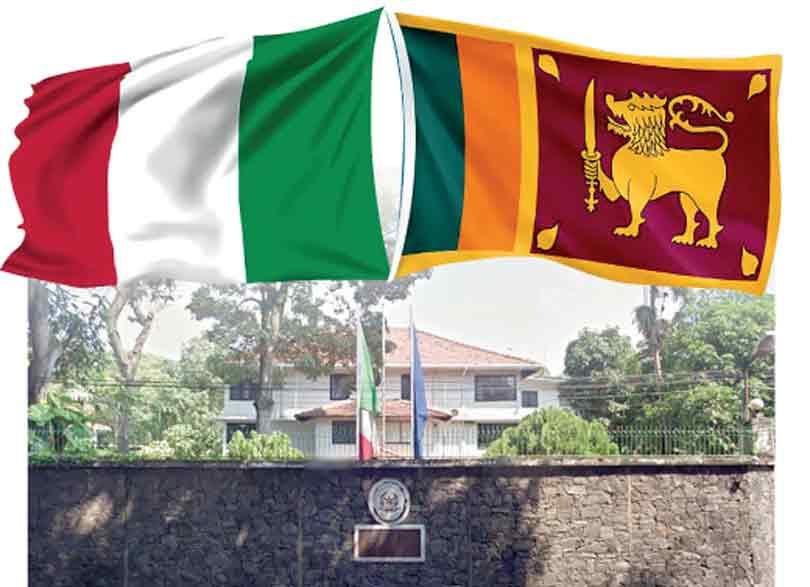
 The opening of the Embassy of Italy in Colombo marks a pivotal chapter in the annals of Sri Lankan-Italian relations—a testament to the resilience, vision, and mutual commitment of two nations united by shared values
The opening of the Embassy of Italy in Colombo marks a pivotal chapter in the annals of Sri Lankan-Italian relations—a testament to the resilience, vision, and mutual commitment that has defined two nations separated by geography yet united by shared values. As we commemorate 75 years of the opening of the Embassy of Italy in Colombo , this milestone invites us to reflect on how institutional frameworks, built with deliberation and nurtured with care, become the scaffolding upon which genuine friendships between peoples are constructed. This article traces the trajectory of Italian-Sri Lankan relations from their formal inception through the present day, examining how a single embassy has evolved into a bridge of cultural, economic, and humanitarian exchange. We shall explore the pioneering ambassadors who laid the foundation, the statistical evidence of flourishing bilateral ties, and the contemporary celebrations that underscore the vitality of this enduring partnership.
The Foundation: From First Ambassador to Present Leadership
The establishment of the Italian Embassy in Colombo represented more than a mere diplomatic formality; it signified Italy’s commitment to engaging with the emerging nations of South Asia during a transformative post-independence era. The embassy’s opening coincided with a period when both nations were charting their own courses in an evolving international landscape, and the presence of an Italian diplomatic mission became instrumental in facilitating dialogue and cooperation.
Among the notable figures in this institutional history, Italo DI MUCCIO served as ambassador beginning 1st March, 1995, followed by Maurizio TEUCCI from 21st October, 1997. These diplomats, and their predecessors, worked methodically to establish the infrastructure of bilateral engagement that would sustain relations across decades. Their efforts were not confined to ceremonial exchanges; rather, they engaged in substantive negotiations that laid the groundwork for economic partnerships, cultural initiatives, and humanitarian cooperation. Today, the embassy is helmed by Damiano Francovigh, born in Udine on 29th November 1966 and a graduate of the University of Venice (1991), whose tenure represents the continuity of Italian diplomatic excellence while bringing contemporary perspectives to the bilateral relationship. The progression from the embassy’s founding figures to its current leadership exemplifies how institutional memory, combined with fresh vision, enables diplomatic missions to remain relevant and impactful across generations.
Economic Vitality and Multifaceted Cooperation: The Architecture of Mutual Benefit
The bilateral relationship between Italy and Sri Lanka has evolved into a robust economic and cultural partnership, underpinned by impressive statistical indicators and substantive cooperation frameworks. In 2022, the trade exchange between the two nations reached 826 million euros, representing the highest value recorded in the preceding seven years. This figure underscores not merely commercial activity but the deep integration of Italian and Sri Lankan economies across sectors ranging from textiles and apparel to technology and services. Italy has established itself as the fifth-largest single buyer of Sri Lankan exports, commanding a market share of 4.85%, while simultaneously serving as the 21st-largest supplier to the island nation with a 1.1% share. These metrics, though expressed in percentages and currency units, translate into tangible employment, innovation, and prosperity for citizens on both sides of the Indian Ocean.
Beyond the ledgers of commerce, the relationship has been characterized by what might be termed “liberal cooperation”—an approach that transcends traditional state-to-state engagement to encompass civil society, cultural institutions, and humanitarian initiatives. The aftermath of the devastating 2004 tsunami exemplified this principle, as Italy extended substantial relief assistance, demonstrating that diplomatic relations are ultimately grounded in human solidarity. In more recent developments, Sri Lanka and Italy have undertaken their inaugural Political Consultations, held on September 4, 2025, marking a significant escalation in institutional dialogue.
During these consultations, both parties reviewed the progress of their bilateral agenda and identified avenues for increased institutional cooperation in sectors relating to workforce development, tourism, migration, and air connectivity. The consultations revealed a shared commitment to strengthening ties across political, economic, commercial, scientific, technological, and cultural domains—a comprehensive vision that reflects the maturity and sophistication of contemporary diplomatic relations.
Moreover, discussions have centered on enhancing bilateral cooperation in trade, investment, and tourism, signaling a forward-looking partnership that acknowledges the interdependencies of the modern world.
The 75th Anniversary Celebration: Digital Innovation and Community Engagement
The commemoration of 75 years of Italian diplomatic presence in Colombo was marked not by convention alone but by an innovative and inclusive celebration that exemplified Italy’s commitment to cultural diplomacy in the digital age. The embassy organized a digital opera—a creative fusion of traditional Italian cultural expression and contemporary technological platforms—that transcended geographical boundaries and brought the celebration into the homes and digital spaces of communities across Sri Lanka and beyond. This artistic initiative served multiple purposes: it honored the classical traditions that Italy has gifted to world civilization, demonstrated the embassy’s engagement with modern forms of communication and community outreach, and created accessible pathways for ordinary citizens to participate in the milestone celebration.
The event attracted distinguished guests and dignitaries, reflecting the significance accorded to this bilateral relationship by both governments. The chief guest, Hon. Hiniduma Sunil Senevi, Minister of Buddha Sasana, Religious and Cultural Affairs and H.E. Damiano Francovigh addressed the audience at the opening, underlining the importance of the cultural and artistic exchange that characterizes Italian-Sri Lankan relations, recalling the significant presence of the Sri Lankan community in Italy, describing it as a living bridge between the two states.
The choice to employ digital opera as the centerpiece of the celebration was particularly symbolic: it demonstrated Italy’s willingness to innovate while remaining rooted in its cultural heritage, and it illustrated how diplomatic missions in the contemporary era can leverage technology to foster genuine human connection and understanding. The event resonated with audiences precisely because it was neither exclusively elite nor purely ceremonial; rather, it created spaces for diverse populations to engage with Italian culture and to reflect upon the contributions that Italian-Sri Lankan cooperation has made to their own lives and communities.
A Partnership Rooted in History, Oriented Toward the Future
The 75th anniversary of the Italian Embassy in Colombo serves as a natural inflection point at which to assess both the achievements of the past and the possibilities of the future. From the pioneering ambassadors who established the initial frameworks of diplomatic engagement, through the decades of steady institutional development, to the contemporary leadership that navigates the complexities of the twenty-first century, the embassy has remained a constant and reliable presence—a physical and symbolic manifestation of Italy’s commitment to Sri Lanka and the broader South Asian region. The statistical evidence of economic partnership, the humanitarian initiatives that have emerged during moments of crisis, and the cultural exchanges that have enriched both societies all testify to the substantive nature of this relationship.
As the world becomes increasingly interconnected, and as both Italy and Sri Lanka face shared challenges ranging from climate change to technological disruption, the diplomatic infrastructure represented by the embassy becomes ever more valuable. The inaugural political consultations of 2025 suggest that both nations are prepared to deepen their engagement across multiple domains—from workforce development to tourism to cultural preservation. The digital opera that marked the 75th anniversary was not merely a nostalgic glance backward but a declaration of intent: that this partnership will continue to evolve, to innovate, and to serve the genuine interests of the peoples of both nations.
In the final analysis, the Embassy of Italy in Colombo represents something far more profound than a bureaucratic institution or a symbol of state power. It embodies the possibility of sustained, mutually beneficial cooperation between nations; it demonstrates that diplomatic relations, when grounded in genuine respect and shared values, can endure and flourish across decades; and it offers a model of how cultural, economic, and humanitarian cooperation can be woven together into a tapestry of genuine partnership.
As Italy and Sri Lanka look toward the next chapter of their relationship, they do so with the confidence that comes from seven and a half decades of proven commitment, and with the optimism that the future holds even greater possibilities for collaboration, understanding, and shared prosperity.