Reply To:
Name - Reply Comment
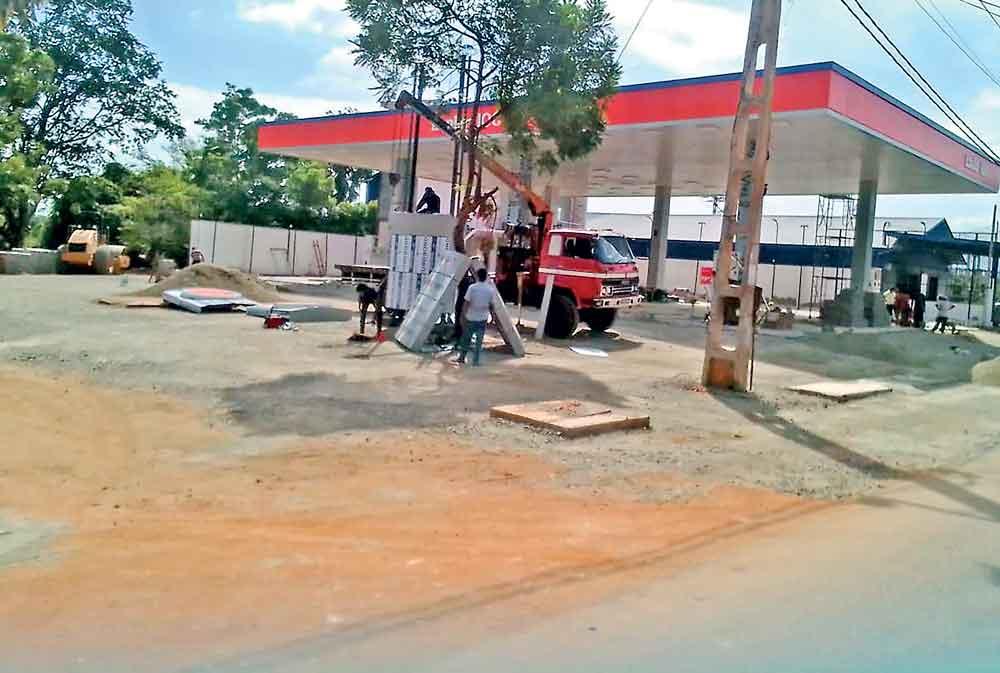
The picture shows the controversial private fuel station that is being built in Dambulla by a businessman with the help of politicians
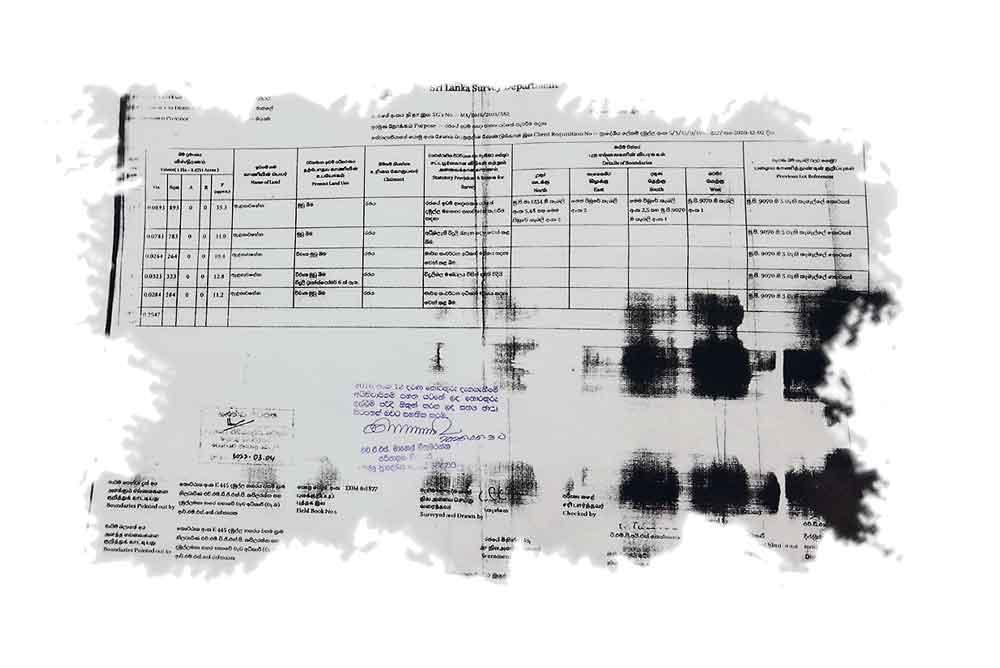
A document showing details of the land
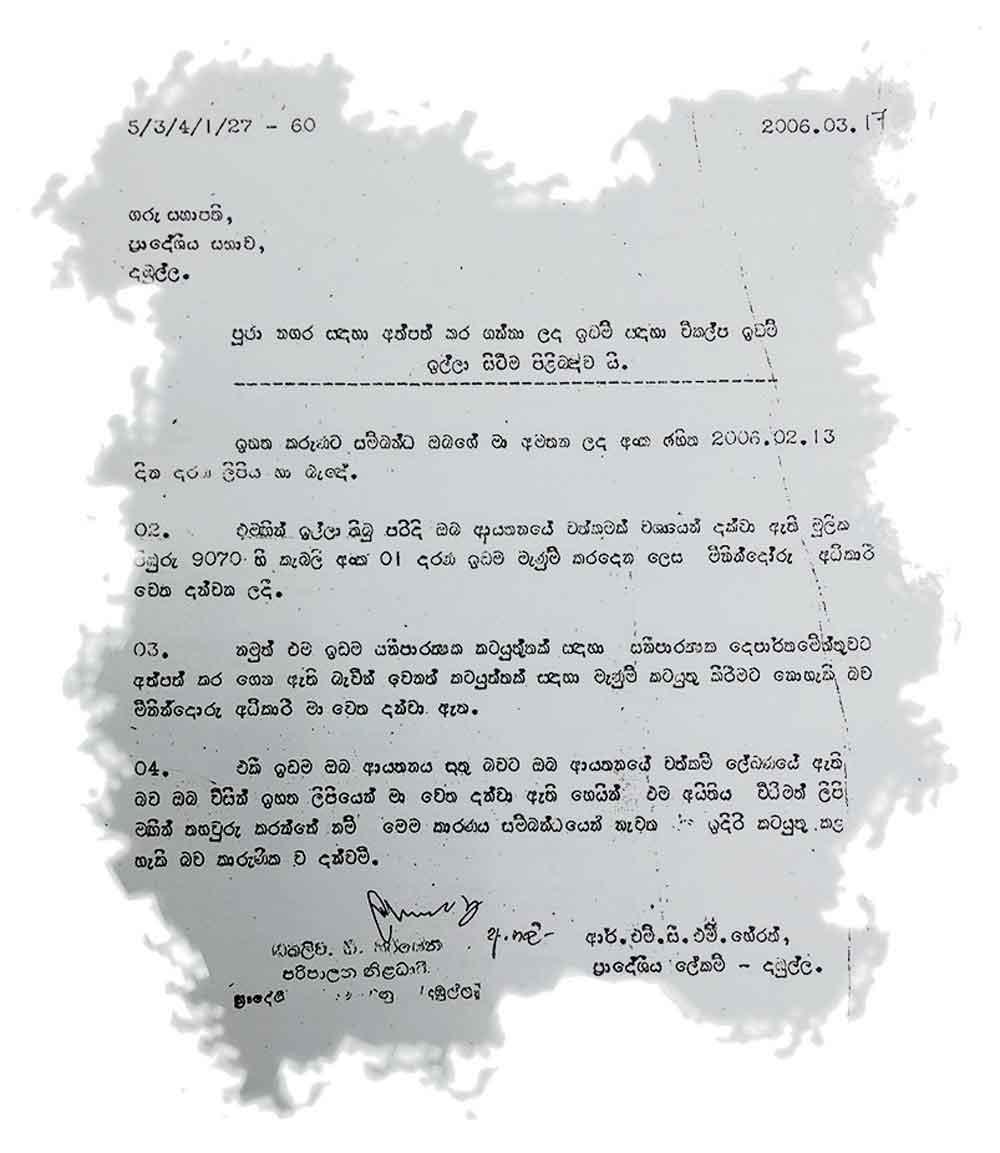
Letter sent by Hearath to the Chairman of Dambulla Local Council
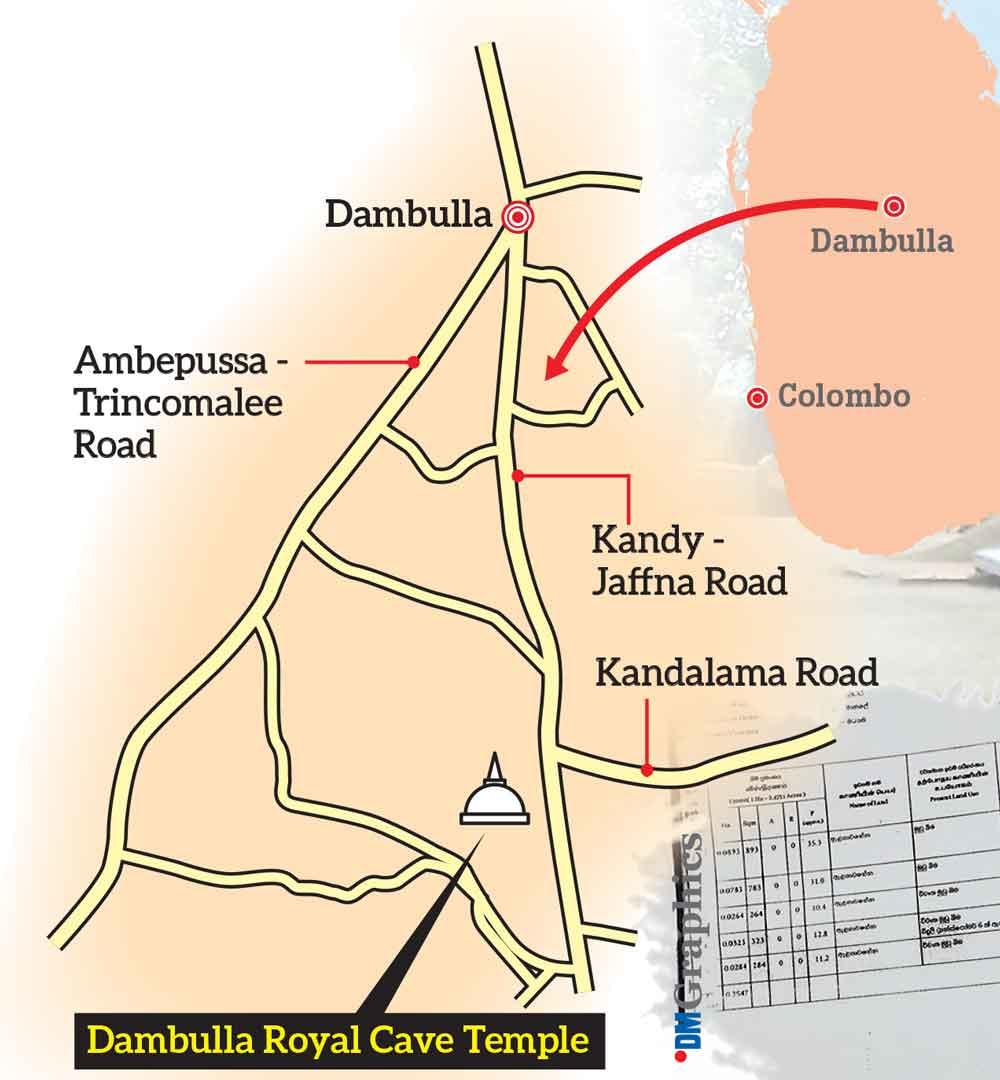
By Prageeth Sampath Karunathilaka
This newspaper made inquiries from Dambulla Divisional Secretary, N.M. Upeksha Kumari regarding this issue. She stated that she assumed office on 02.06.2025 and would investigate the issue before providing a response.
When we contacted former Divisional Secretary, R. M. C. M. Herath, she said she was currently unavailable for comment as he was receiving medical treatment.
Despite multiple attempts to reach the businessman responsible for constructing the fuel station, this writer was unable to contact him. This newspaper also approached the Commissioner General of Lands, Chandana Ranaweera Arachchi, but he was engaged in an official meeting.
Crimes committed with technical expertise and professionalism are known as white-collar crimes. Such crimes have been observed in the process of disposing of government lands. In these cases, officials bypass existing land laws by engaging in the drafting of misleading official documents. They often gain undue benefits, making these deliberate and well-planned offences. A network engaged in land rackets is involved in these activities.
Currently, a fuel station is being constructed in Dambulla sacred area. This has become a major concern for the local residents. How can a fuel station be allowed in a place where every inch of land within the plot of land- where they were born- is supposedly reserved for the development of the sacred grounds, especially when land has been acquired through gazette notifications and low compensation? There is no opportunity to dig a toilet pit on this land without the permission of the Urban Development Authority. Yet, a private fuel station is being built right before their eyes. To them, this seems like a challenge to the law and they have good reason to feel that way. Since birth, they have known this land as the “public land”.
Systematic land grabbing
The land where the fuel station is currently being built was originally intended to be included in the city development plan; separating it from the sacred grounds, according to an amended proposal. However, due to the intensity of systematic land grabbing, a different mechanism was set in motion to achieve those objectives in another way. Accordingly, on 04.04.2014, a certain Minister of Lands initiated plans to include the land where the fuel station is being built in the tracing under the Land Acquisition Act and later abandon the land by 13.12.2022 as part of that strategy. Residents claimed that a powerful local politician is behind the construction of the fuel station. It is no secret among the people of Dambulla that the businessman who purchased the land has initiated several joint ventures with that politician in the area.
The illegal land grabbing racket in Dambulla was recently exposed by our sister paper Sunday Lankadeepa. Following this revelation, Matale Land Registrar lodged a complaint with the Matale District Special Crime Investigation Unit. Investigations revealed that a local businessman had been forging documents and operating a fake land kachcheri. An employee of the Land Registrar’s Office was arrested in connection with the scam. However, the investigation was abruptly halted due to political interference. It was later reported that an officer who had been involved in the investigation was promoted to a senior position in Laggala. After that, the investigation into the fake land kachcheri came to a standstill.
In 2012, the Mahanayaka Thera of the Rangiri Dambulla Chapter, Ven. Inamaluwe Sri Sumangala, accused a powerful government minister at the time of being involved in a land grabbing scheme within the Dambulla sacred area. This led to a massive public uprising that same year, aimed at protecting the Dambulla heritage. What fuelled this unrest was the minister stating to then Defence Secretary Gotabaya Rajapaksa that the boundaries of the sacred area were limited to Kandalama Junction. Ven. Inamaluwe Sri Sumangala was informed of these changes in a letter dated June 6, 2012, which claimed that the plans had been revised. According to the letter, the original sacred area plan numbered PL/490/89 had been revised as D/PL/08/93.
Reports suggest that millions of rupees were exchanged during this land transaction, and the government lost millions in tax revenue due to the fraud. Critics point out that it is therefore the responsibility of the authorities to address the irregularities in this transaction and ensure the recovery of the taxes owed.
The land on which the fuel station is being built had been included in the sacred land as a property owned by the government. This acquisition was made under Gazette No. 346/16, published on 26.04.1985. Advance Tracing No. Ma/A/80/29, prepared by the Surveyor General for identification purposes, is available. According to the tracing, the land where the fuel station is currently under construction is marked as “Public Market Land – Government” in terms of land boundaries.
Letter No. 5/3/4/1/2760 dated 17.03.2006 from Dambulla Divisional Secretary R. M. C. M. Herath confirms that this land belongs to the government, based on records in the land administration system. A survey order to recognise the land was issued to the Matale Surveyor on 20.02.2006, also under the same reference number. Government Surveyor W. I. Damayanthi carried out the survey and submitted a report under number Ma/DMB/2006/152. According to this report, Lot No. 01 (Rood 01, Perch 16.4) of Preliminary Plan No. 9070 was acquired by the Department of Sanitation for sanitary purposes. Therefore, it was stated that the land could not be surveyed for any other purpose.
The Divisional Secretary responsible for this matter informed the Chairman of the Dambulla Pradeshiya Sabha regarding this. That was when consideration was being given to allocating the land to a person named G. K. Rosalyn Nona as an alternative plot, regarding it as property belonging to the Pradeshiya Sabha. The letter clarified that land owned by the government cannot be allocated as an alternative.
Notably, after reviewing the relevant documents, the Divisional Secretary confirmed that this land is owned by the Department of Sanitation. The first survey of the land was conducted in 1930, which was 95 years ago, for the use of the Sanitary Board. The plan is listed under number P.P. 9070 and is divided into four lots (No. 1, 2, 3, and 4), each showing a specific usage pattern. The total area of the land is 1 acre and 36 perches. It is noted in the special remarks that, prior to the acquisition of the Elagawa Hena land, this land was included in the Dambulu Viharaya title plan No. 87076 and was also marked as “to be acquired”.
This land was re-surveyed in 1933 under plan No. 419032. A key detail in this plan is the absence of any mention that this land was included in the Dambulla Temple title plan, even though it was noted in the previous plan. In other words, the Elagawa Hena plot had been fully acquired by the government.
Historical background
Understanding the historical background behind the acquisition is essential. During British rule, the A9 road was constructed through the historic village of Padeniya, which fell under the jurisdiction of the Rangiri Dambulla Temple. At that time, the concept of “small town development” existed, and the Sanitary Ordinance was enacted to ensure proper urban sanitation. The land acquisition was carried out to enforce the regulations of that ordinance. This is confirmed by Gazette No. 7283, published on May 10, 1922.
It is reported that by the time the land was surveyed in 1930, a drying shed and incinerator had already been constructed on the site. These structures remained visible until recently. M. U. Samarasinghe, a local resident, said: “We used to call it the market land. There were some old pit latrines that the British had built in Padeniya. Waste from those toilets was collected in buckets and buried in the land, where the fuel station is now being built. During the time of the Urban Council, the weekly market was held there. They even used to show movies on screens set up on that land. And now, a fuel station is being built on it.”
In the Land Administration System, a change in identifying the land as government land occurred in 2023. On 05.11.2023, a resident of Iramadagama, Kahawatta submitted a request to construct a building on the property. The Divisional Secretary gave his recommendation in a letter dated 06.11.2023. Based on the details in that letter, the Divisional Secretary identified the land as Elagawa Hena. Deed of Sale No. 4929, pertaining to the land, was also examined. The land is situated along Kandalama Road, adjacent to the Old Market land. The land area indicated by the deed corresponds to the advance tracing number Ma/DMB/2014/328, which shows a land extent of 1 rood and 5.3 perches, marked as Lot No. A.
While investigating further, the Divisional Secretary noted that the Minister had decided to abandon the land under the Land Acquisition Act. This decision was communicated in a letter dated 13.12.2022, bearing reference number 43/10/2013/UDA/78, issued by the Secretary to the Ministry of Lands. When land was acquired for the sacred area in 1983, all plots under preliminary plan (Ma.931) were surveyed. In this context, the Minister’s order on 04.04.2014 to reacquire only a specific portion of government land raises serious questions. This act reflects the misuse of the minister’s discretionary power to dispose of government land as private property by misusing the term ‘abandonment’—a clear example of white-collar crime.
It has also been claimed that this parcel of land falls under the Dambulla Temple’s title deed No. 87076. However, the advance tracing No Ma/DMB/2014/328, drawn on 31.03.2015, does not mention that the land is part of that title deed. The document states that the individual who applied to construct a building on the land is “unauthorizedly occupying” it. Plan No. 419032, drawn on 25.01.1933, also does not reference title deed 87076. Therefore, the letter granting permission to construct a building on the land shows clear signs of being part of a fraudulent land deal.
On 15.07.2024, the Divisional Secretary issued a letter to the Director of Lanka Indian Oil Company, recommending the establishment of a gas filling station in the names of two individuals residing at 596/6/A, Poharanwewa, Dambulla. The land is identified as Lot Nos. 1 and 3 of Elagawa Hena, as per plan Mu.PI.MA.9070.
Beyond the individual found to be in unauthorised possession of the land, the Divisional Secretary informed Lanka Indian Oil Company about two other parties by letter dated 06.11.2023. The letter investigated matters using Sale Deed No. 4928. According to the investigation, a first deed was issued on 02.01.1970, a second deed on 26.03.1995, and a declaration deed on 19.05.2023 claiming that the land belongs to Title Deed No. 87076 of the Dambulla Viharaya.
A registered deed dated 05.08.2006—though not directly related to the current transaction—is linked to the illegal occupant of this land. It was written by the occupant’s elder sister and states that she transferred the land inherited from their father to her brother for a sum of money. However, this deed is not used in the current transaction, as it specifies the land area as 30 perches. The deed that states the illegal occupant received the land directly from the father, dated 26.03.1995, records the land area as half an acre (80 perches). By using the more advantageous deed, an additional 50 perches of government land were wrongfully claimed. This constitutes a gain obtained through the registration of false documents.
The most significant transaction involving the Elagawa Hena government land took place on 07.12.2023 and 06.08.2024. A land area of 1 rood, and 10 perches was sold for 50 million rupees. The land was purchased by the parties constructing the fuel station.
Document forgery
Upul Ranjan, who was a resident of the sacred area, stated that since this land is government-owned, issuing a deed is not acceptable. He also added that no deed for buying land can exist connected to the title deed of the Dambulla Rajamaha Viharaya. He further claimed that he lodged a complaint regarding these fraudulent activities with the former District Secretary of Matale. As a result, the District Secretary called for a report on the matter on 01.01.2024.
While investigating the claims made by Ranjith, a deed was uncovered and that involved another piece of government land within the city, linked to title deed No. 87076 of the Dambulla Viharaya. This was in relation to the sale of Lot No. 22 of plan P.P.B. 968—a plot confirmed as government land by a government survey report in 2012. Upon examining the deeds, it was found that both the deeds for government lands under preliminary plans 9070 and 968 (Lot No. 22) were written by the same holders of Vihara Praveni Pangu. This points to an interconnected and organised racket of document forgery.
A racket involving the use of fraudulent documents to link deeds for government land to extracts from the Land Registrar’s Office—commonly known as “inserting” deeds into extracts—is taking place in the Dambulla area. In 2024, the Matale Special Crime Investigation Unit launched an investigation into this racket. An employee of the Matale Land Registrar’s Office was arrested under suspicion after investigating a complaint from the Land Registrar.
When examining the notarial deeds related to the land where the fuel station is being constructed (preliminary plan No. 9070), deeds written by a young notary who had trained under a known notary, already accused of writing fraudulent deeds for government lands, were discovered. He had his trainee draft, a deed for a piece of government land purchased by an individual, as part of his training. Higher authorities have been informed through security units about forged deeds registered on 07.05.1980 and 24.07.2002 under the name of a deceased notary.
The land on which the petrol station is being constructed was identified as government land by R. M. C. M. Herath through the Land Administration System on 17.03.2006, challenging the related documents by 06.11.2023. R. M. C. M. Herath, a first-grade officer in the Sri Lanka Administrative Service, held the position of Divisional Secretary and later served as the Commissioner General of Lands. She authored the book Guidelines for Government Land Management, which clearly states that the management of government land falls under the authority of the Commissioner General of Lands. The custody of such land is entrusted to Divisional Secretaries, who act on behalf of the Commissioner General to protect these lands according to existing land laws. Therefore, it appears that these administrative procedures were not followed in the case of the fuel filling station built on the land area under P.P.B 9070, which had already been recognised as government land.
Regarding the management of government lands, Circular No. SP/RD/02/10, issued by the Presidential Secretariat on 03.02.2010, affirms that the President holds the ultimate authority to dispose of government lands in the country. This authority is delegated to officials under the Land Development Ordinance. The land on which the fuel station is being built was disposed of through notarial deeds in violation of this procedure. There was no formal confirmation of ownership through the Land Administration System. It appears that questionable notarial deeds were used to alter the extent of the land and engage in the fraudulent preparation of documents.