Reply To:
Name - Reply Comment
 The passing of David Buell Sabapathy Jeyaraj (72) on May 17, 2026, in Toronto, Canada, has snatched away a great personality not only from the field of journalism but also from the Sri Lankan Tamil community.
Jeyaraj dedicated his life to analysing and writing fearlessly, and to documenting the complex dimensions of Sri Lankan politics—especially Tamil politics—as they unfolded in real time. It can be said that he stood as a monumental figure in the field of political analysis for several decades, not only in Sri Lanka but across the South Asian region as well.
Jeyaraj’s writings serve not just as contemporary reports, but as indispensable historical documents. Due to his unparalleled ability to unravel and explain complex geopolitical issues, regional conflicts, and domestic power dynamics, his political analysis columns were, for a long time, considered “required reading” by various quarters, including government leaders, politicians, diplomats, and politically conscious citizens.
In a Sri Lankan society that is ethnically polarised like two different worlds, Jeyaraj’s work was anchored in precise fact-checking, a deep memory, transparency, and steadfast dedication. The tribute we pay to Jeyaraj is a grand honour bestowed upon the lifetime work of a journalist who was defined by intellectual courage and meticulous description.
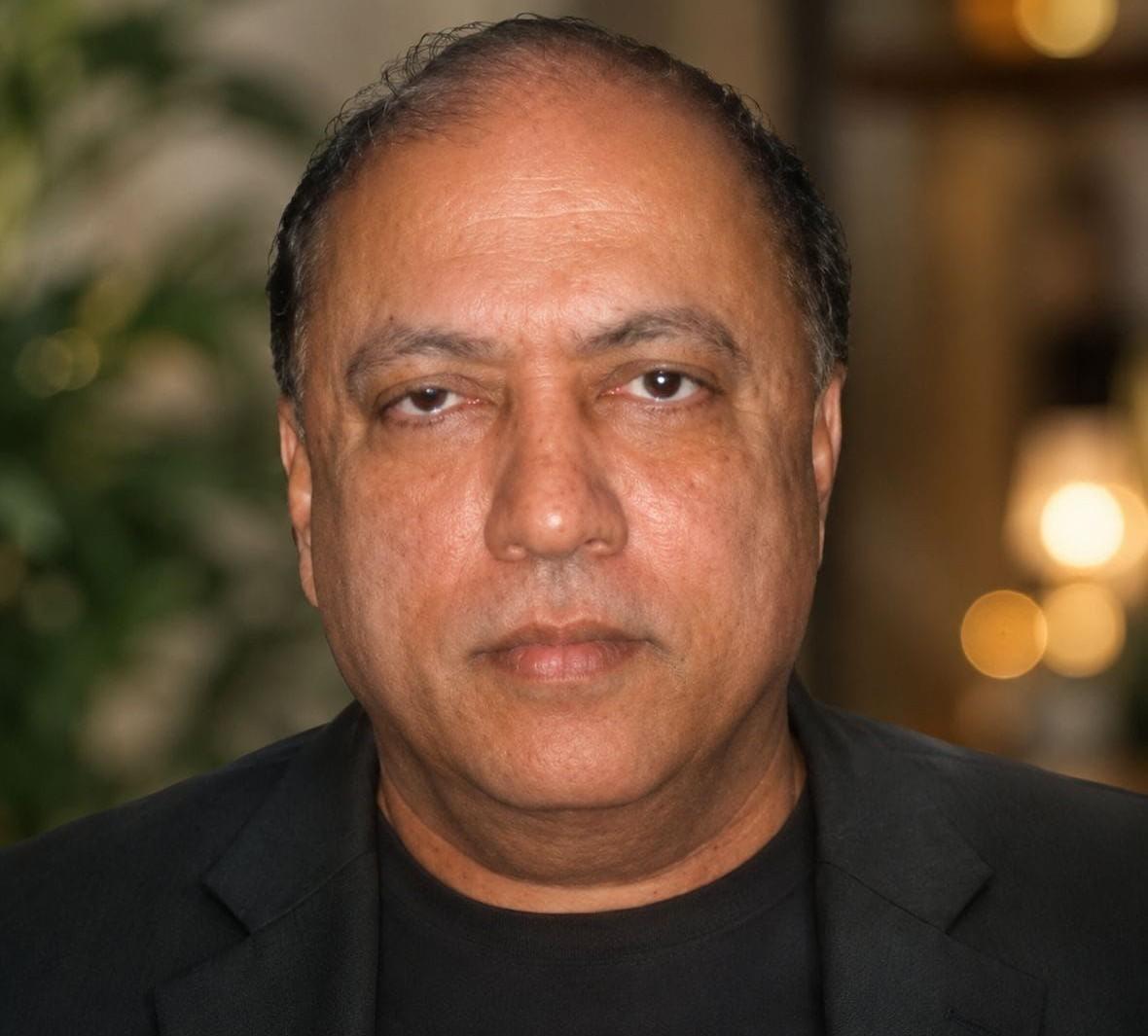 Jeyaraj’s pen did not merely record the trends of history; it also helped us understand the depths from which those trends flowed. For journalists, writers, observers, and future generations who believe that the true duty of the media is to speak truth to power and to voice opposition against injustice with clarity, dignity, and unyielding integrity, Jeyaraj’s contribution to journalism will remain an everlasting guide.
Historically, the political writings of Tamil-speaking English journalists in Sri Lanka have been subjected to pressure from various factions of a polarised society. Amidst decades of ethnic conflict, they had to navigate their path while facing intense state surveillance, foreign diplomatic interventions, and threats from armed Tamil militant groups.
In such a challenging environment, Jeyaraj’s political writings stood entirely apart due to his exclusive approach and unique perspective. For instance, his style was completely different from the positions expressed in the political writings of his contemporary, ‘Taraki’ Sivaram.
He migrated to Canada in 1989 and he was able to continuously maintain an uninterrupted information network through the deep connections he had already forged in the North, East, and Colombo.
Jeyaraj’s passing marks the end of an era in the documentation of the Tamil nationalist struggle in Sri Lankan journalism. It is impossible to fully understand Sri Lankan journalism and the documentation of the Tamil nationalist struggle without appreciating Jeyaraj’s globally recognised contributions.
Throughout his long journalistic journey spanning more than four decades, and even within the most intensely polarised environment of Sri Lanka’s ethnic conflict, Jeyaraj carved out a unique place for himself as a foremost political chronicler, a sharp analyst, and a fearless voice.
Culture and Cinema as
Social History
Although politics and war dominated Jayaraj’s professional life, he possessed a deep love for the cultures of both Sri Lankan Tamils and South India. His profiles of personalities from all spheres of cinema—ranging from M.G. Ramachandran, Sivaji Ganesan, and Jayalalithaa to local artists—were written with fascinating reminiscent reflections. He could write a full-page article in English even about the movie songs he loved to listen to.
Jayaraj entered journalism in April 1977 by joining Virakesari, Sri Lanka’s leading Tamil newspaper, as a staff reporter. While working in Colombo, he also served as the Jaffna correspondent for Virakesari for five months and as the Batticaloa correspondent for three months.
In 1981, he entered English journalism by joining The Island newspaper, quickly rising to become its Deputy News Editor. Jayaraj’s political column, “Behind the Cadjan Curtain,” became highly popular.
Jayaraj also served as the Colombo correspondent for The Hindu, one of India’s influential English dailies, and Frontline magazine. Additionally, he briefly held the position of Deputy Editor for The Saturday Review, an English weekly published from Jaffna.
After migrating to Canada, he started two Tamil weekly magazines, Senthamarai and Manjari, and served as their editor.
In 1988, Jeyaraj was admitted as a Nieman Fellow for journalism at Harvard University in the United States. He received the D. R. Wijewardene Award, presented by The Editors Guild of Sri Lanka, once, and the B. A. Siriwardena Award for the Columnist of the Year (English) twice.
My friendship with Jeyaraj spanned nearly half a century. I joined Virakesari four months after he did. However, I never actually worked alongside him. Initially, I worked as a proofreader. By the time I joined the Virakesari editorial board in January 1985, Jeyaraj was no longer there; he had moved to English journalism four years prior. Yet, the bond of friendship between us endured until the very end.
We never called him by his full name; to us, he was always just ‘D.B.S.’ Having moved to Canada 38 years ago, he returned to Sri Lanka only once, in 2013, accompanied by his wife.
Nevertheless, he would connect with me at least twice a week. Our conversations would sometimes stretch for an hour and a half or even two hours. He would reach out at midnight or even in the early hours of the dawn.
He would frequently ask, “We wrote so much for so many years—was it all in vain?” Toward the end of his life, he avoided writing about Sri Lankan Tamil politics. I say this as the person who, for the past four years, translated his political articles into Tamil and ensured their publication in Virakesari.
Recently, I published my own journalistic experiences as a book titled ‘Pathirigaithuraiyil En Kathai’ (My Story in Journalism). Jeyaraj wrote a foreword for it in English and sent it to me on March 9, 2026. Without translating it into Tamil, I published it in the book exactly as it was in English. I believe that the foreword was likely the last thing he wrote before falling severely ill.
The launch of my book took place on the evening of May 17, 2026, at the Colombo Tamil Sangam. Just as we were preparing to commence the event, his wife sent me a shocking message via WhatsApp informing me that Jeyaraj had passed away.
“My friend DBS, your departure from us on the very day of the launch of my book—which bears your foreword—is a profoundly painful moment in my life.”
The writer is former chief editor of Colombo based Tamil daily, Thinakkural