Reply To:
Name - Reply Comment
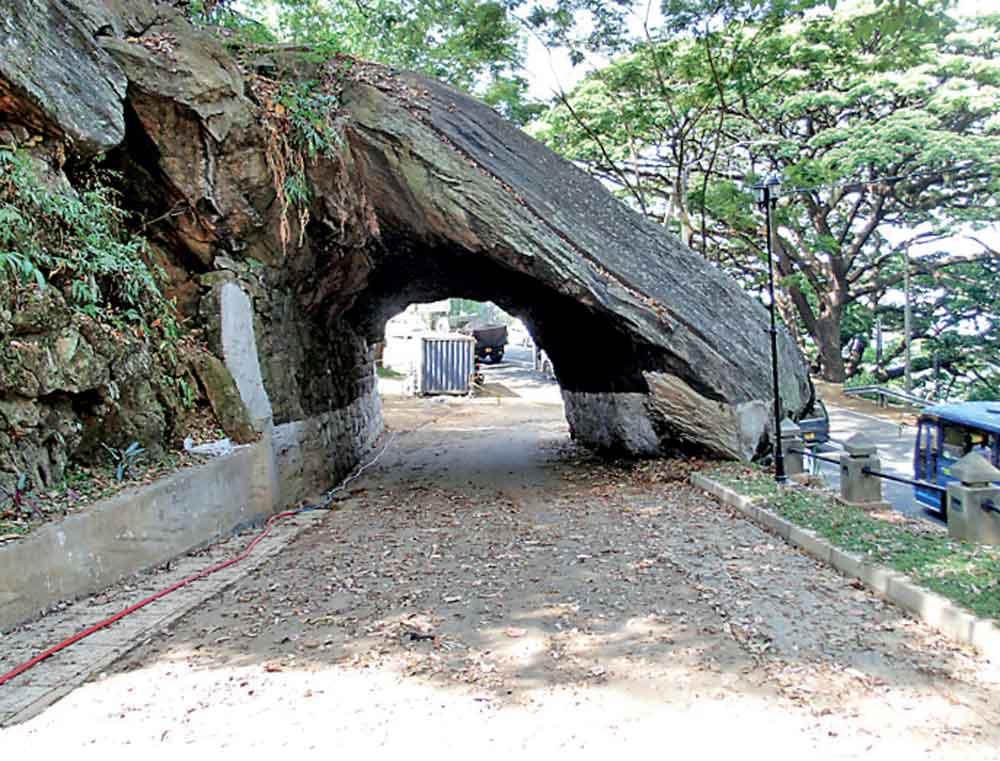
Tunnel made by Capt. Dawson
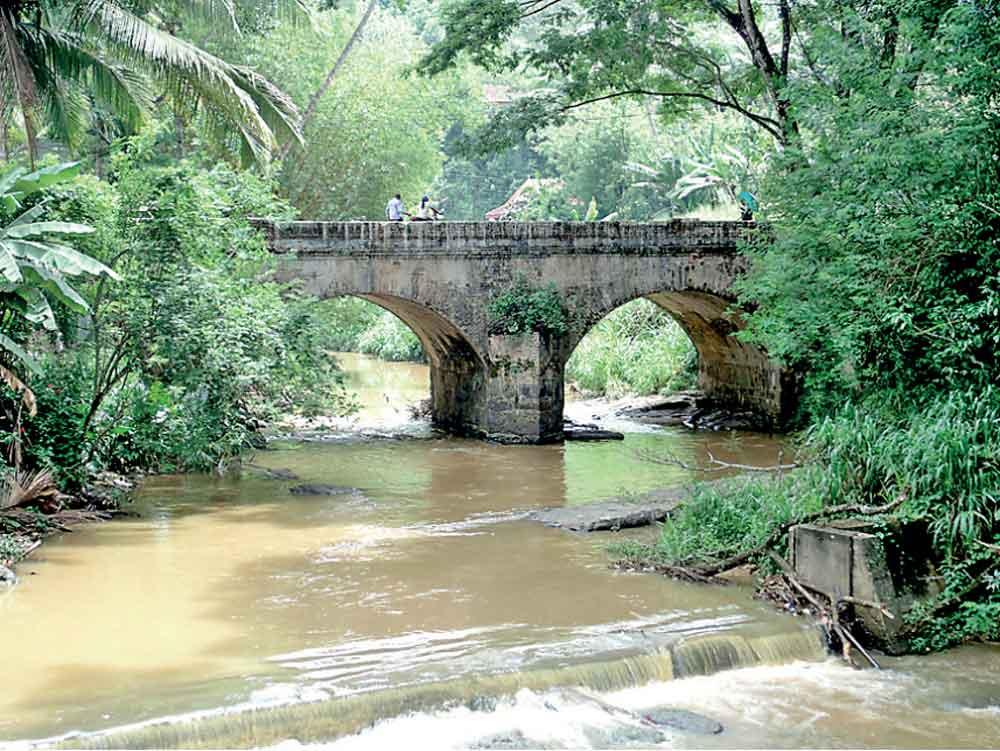
The Old Brick Bridge - Nanuoya
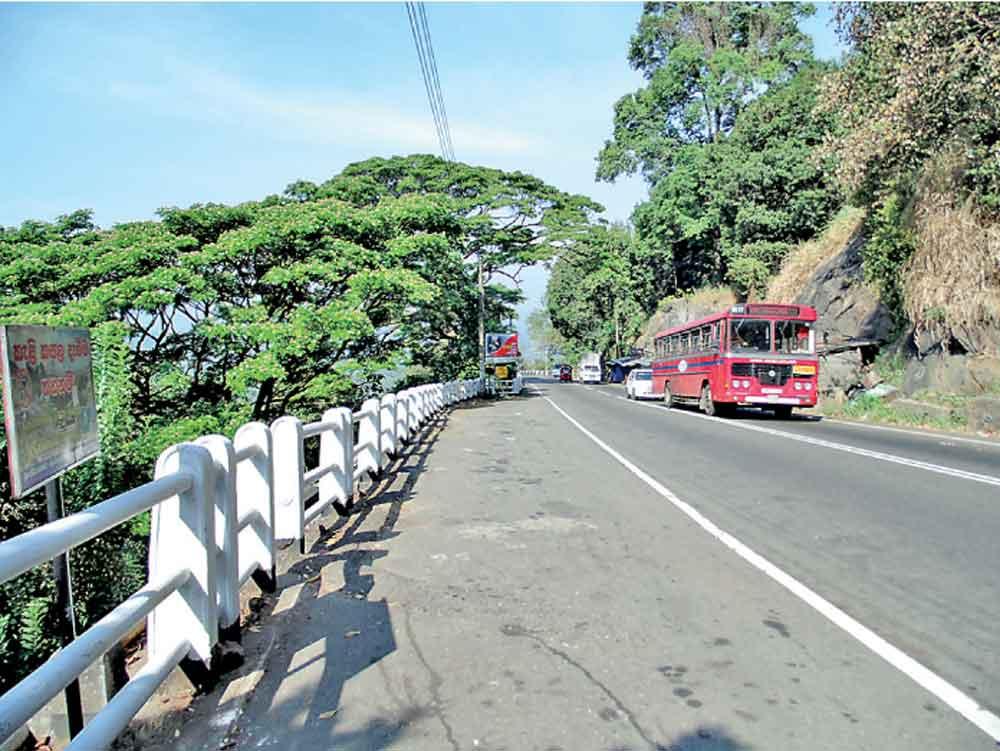
View from Kadugannawa
 |
| Dawson Tower |
By Shantha Chandrasiri
Governor Sir Robert Horton who succeeded Governor Sir Edward Barnes erected the 125 ft high Dawson tower with permission of the imperial government in appreciation of Engineer Capt. Dawson
The road network that had its origin in foot paths through hard terrain has developed to an expressway today. The first highway in the country is the enchanting Colombo– Kandy highway which was designated route number one or A1. The Colombo–Kandy highway of which the construction work commenced in 1820 was completed in 1824; it is is 201 years today.
The old Colombo-Kandy road along the Kelany Valley through Ruwanwella to Maoya Valley and Gampola covered a much longer distance. The British rulers felt the need to construct a new road after the conquest of Kandy, but it was an arduous task in view of virgin forests teeming with wild animals, and difficult terrain including huge boulders, crevices and steep hills.
However, Governor Edward Barnes was determined to construct a new highway to Kandy. The task was undertaken by Government Engineer Maj. Thomes Skinner, and he entrusted it to his assistant Capt. William Francis Dawson. Stage one of the project from Colombo to Ambepusssa commenced in 1820 and it was follwed by Stage II from Ambepussa to Kadugannawa. The first 20 miles of the road was through the plain, and then it began to climb. The most formidable challenge facing Capt. Dawson was to proceed beyond Kadugannawa Pass, which challenged his technical expertise and egineering skills.
It was a hazardous project for the Englishmen and the Ceylonese (as Lankans were then called) engaged in the construction amidst wild animals, venomous snakes. rivers, waterfalls, deep precipices and malaria epidemics. It is said the Capt. Dawson died of a snake bite and that he was not fortunate to see the completion of the project.
The most fantastic achievement of Capt.Dawson was the winding road with elbow bends at Kadugannawa pass, and the rock tunnel made by piercing a huge rock. Capt. Dawson’s creative imagination resulted in the rock tunnel instead of blasting the entire rock. However, the strech of road through the rock tunnel is now closed for traffic and the tunnel is conserved as a monument of British rule in Sri Lanka.
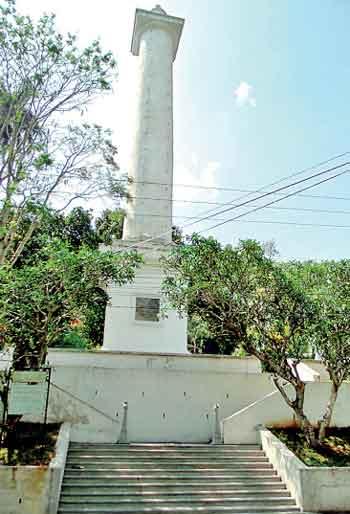 |
| Dawson Tower |
According to legend, the Sinhalese strongly believed that the Kandyan kingdom could not be seized or the Sacred Tooth Relic taken in possession until the rock at Kadugannawa Pass was pierced and a road built. It is said that the British pierced the rock and made a tunnel to negate this belief as mythical folk-lore. However, this tunnel added beauty to the Colombo- Kandy highway which runs through hills, a wealth of vegetation and is a monument of the British rule in Lanka.
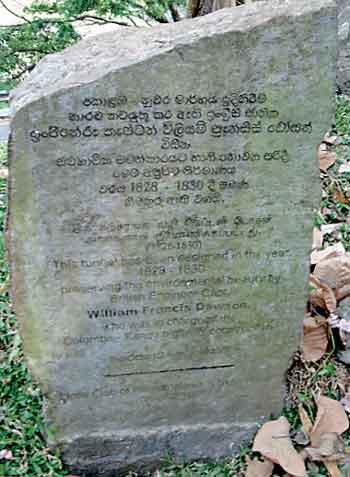
The plaque attached to the tunnel reads as “This tunnel has been designed about 1828-1830 preserving the environmental beauty by British Engineer Capt. Francis Dawson who was in charge of the Colombo-Kandy Highway construction.”
Traffic through the tunnel was suspended in 1980 and a wider by-pass road constructed to facilitate the passage of heavy vehicles for the Accelerated Mahaweli Project. Transport of vehicles through the tunnel is not allowed today, and it has been conserved as a mounument of archaeological importance.
The Dawson Tower built in memory of Capt. Dawson is located at the highest point in Kadugannawa Pass at an elevation of 1730ft above mean sea level. The scenery of deep hues and tints surprises and intoxicates the traveller. The incline is so steep that the vehicles run very slowly uphill at the Kadugannawa Pass.
However, Capt. Dawson had not the opportunity to see the completion of Colombo- Kandy Highway which was his brain child. He died on March 28, 1829.
Governor Sir Robert Horton who succeeded Governor Sir Edward Barnes erected the 125 ft high Dawson tower with permission of the imperial government in appreciation of Engineer Capt. Dawson. It is said the metal removed by piercing the rock to make the tunnel was used to erect the Dawson towner. The oldest bridge on the Colombo-Kandy road is 28 metre long Nanuoya Bridge near Pilimathalawa town which is no longer used. It was built in 1826 by a British engineer Capt. Brown.
The first coach service on the Colombo – Kandy road started in 1832 and It was the first coach service in Asia as well.
The Colombo- Kandy highway has gone down in the annals of history as the origin of the present network of highways in Sri Lanka, which led to the new Expressways.